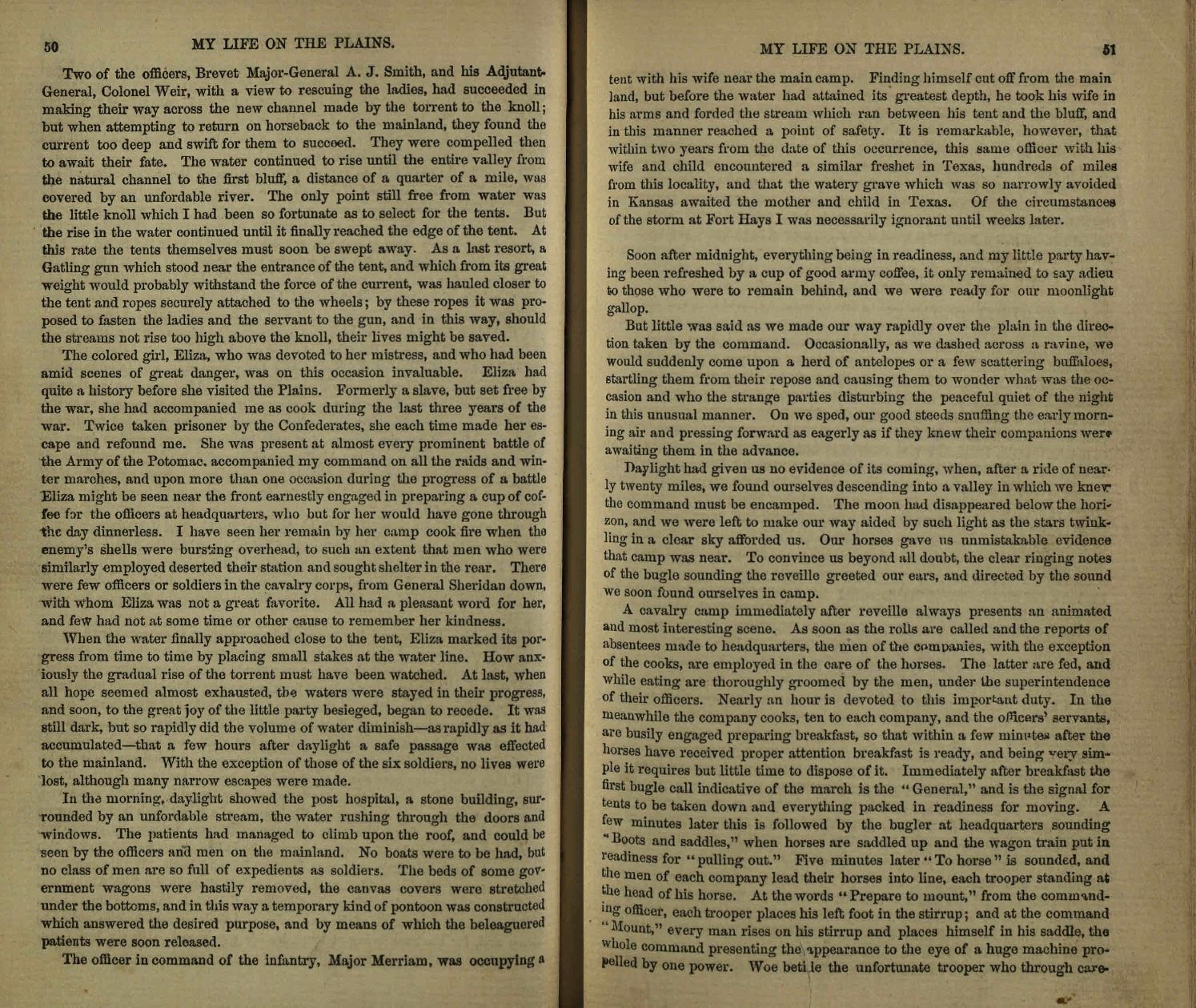
Two years before he rode to the Little Bighorn, George Armstrong Custer published a book.
My Life on the Plains, or, Personal Experiences with Indians came out in 1874. It collected articles he had written about his campaigns, and it sold well. It is one of the best records we have of Custer speaking in his own voice about the people he fought. The text is in the public domain, and anyone can read it free on Project Gutenberg. This is what it says.
“The Noble Red Man” Is A Myth
Custer opens his discussion of Native people with an attack on a popular idea. He blames the novelist James Fenimore Cooper for what he calls a false picture of the Indian, a figure of romance who is “freed from the passions and vices” of other men.
When you meet Native people on the war path, he writes, the Indian “forfeits his claim to the appellation of the ‘noble red man.'” He calls Native people “savage in every sense of the word.” He also adds that they are “not worse, perhaps, than his white brother would be similarly born and bred.” To him, the problem was the myth, as much as the people.
These are the harshest words in the book, and they were common in his time. Many readers saw them as a statement of fact, and modern readers see them as prejudice.
He Also Wrote Admiringly
But Custer was not simply contemptuous. He described Native men as “the fearless hunter, the matchless horseman and warrior of the Plains.” He wrote that, even though he was “shocked and disgusted by many of his traits and customs,” he found “much to be admired.” And he said that Indian life, with its ceremonies and mysteries, was “a book of unceasing interest.”
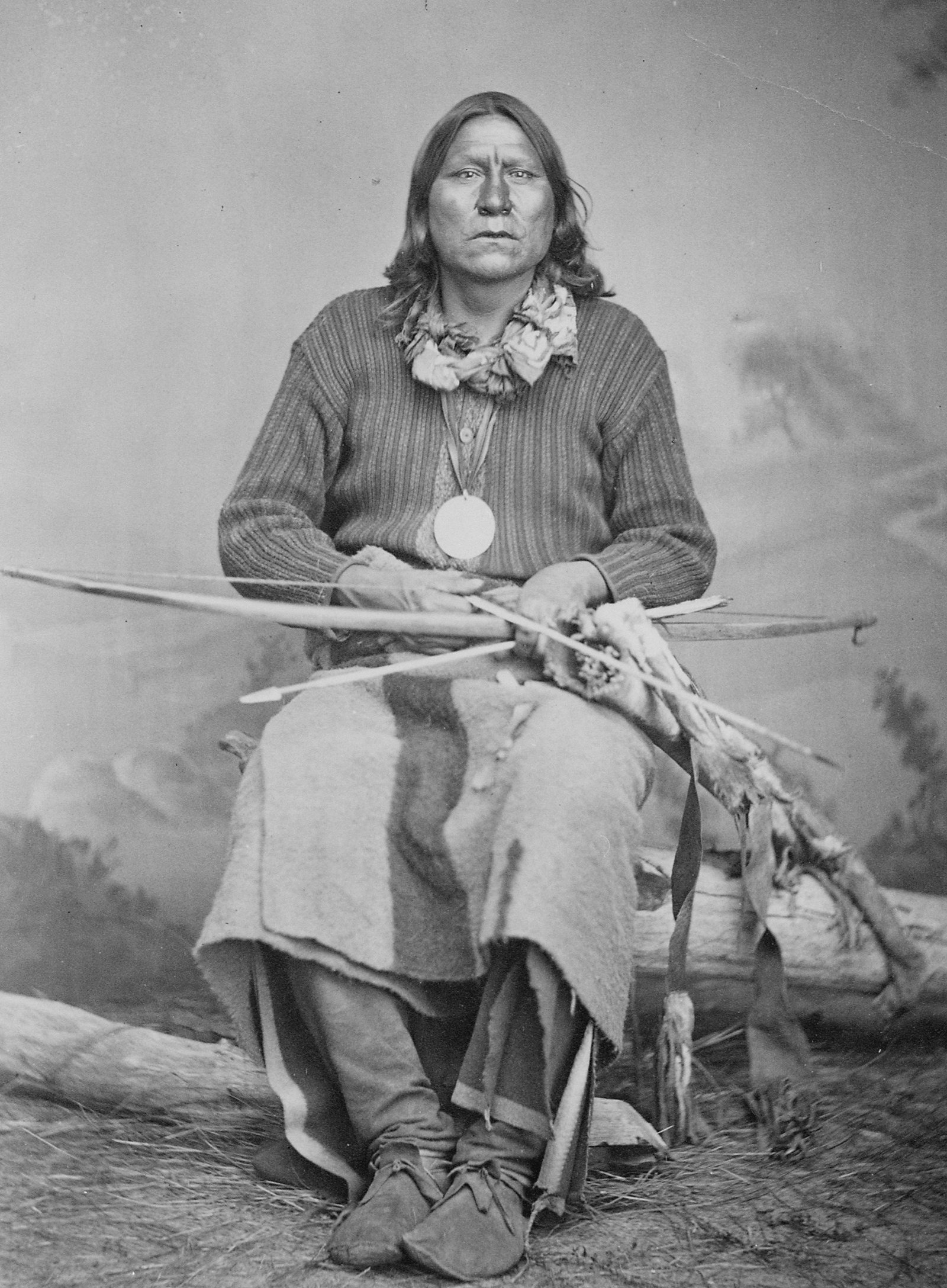
He praised the oratory of leaders such as Tecumseh, Osceola, Red Jacket, Red Cloud and the Kiowa chief Satanta, whom he called eloquent.
“He Fades Away And Dies”
The most striking passage is about civilization. Custer argued that “Nature intended him for a savage state,” and that a Native person “cannot be himself and be civilized; he fades away and dies.” He said that no tribe had ever adopted the white man’s road by choice. Tribes gave up their old life, he wrote, because wars and disease had left them too weak to resist.
That part is revealing. He admits that contact with white society brought disease and loss. But he draws the opposite conclusion from the one a Native reader would. For Custer, the Native way of life was doomed, and it was no one’s fault.
The Washita, In His Words
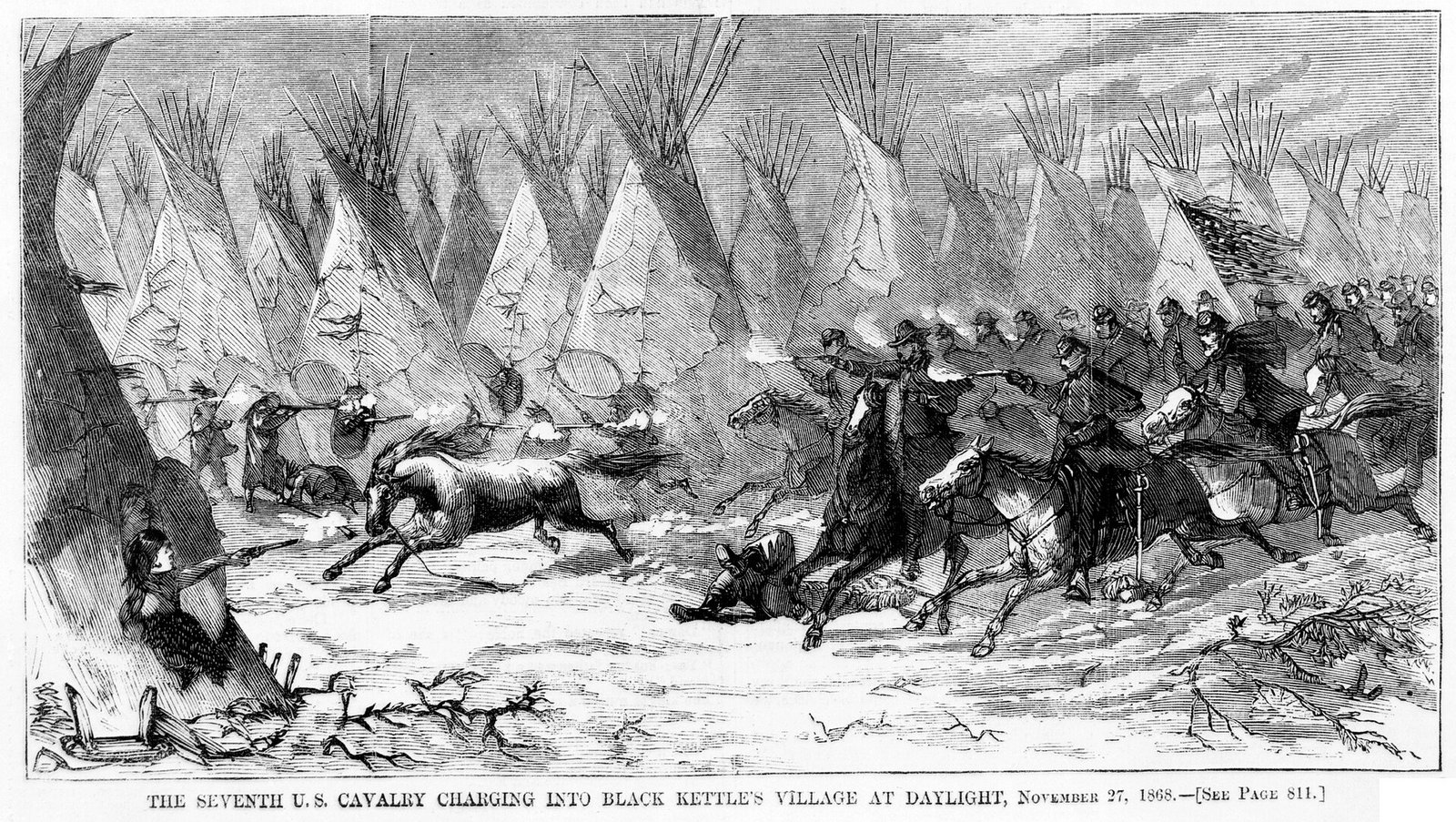
The book includes Custer’s account of the attack on Black Kettle’s camp on the Washita in November 1868. He describes the captives and the speech of Black Kettle’s sister, Mah-wis-sa. According to him, she said that Black Kettle had “fallen that morning almost the moment the attack was made.” In his telling, she blamed the warriors who raided settlements. Custer wrote that the warriors “had brought this fate upon themselves.” That is his judgment, not hers, and the Cheyenne have always told the story differently. Read more about the captive woman Monahseetah here.
Mo-nah-se-tah
Custer also describes a young captive, the daughter of the Cheyenne chief Little Rock. He writes that she was “an exceedingly comely squaw,” with “a bright, cheery face” and hair “rivalling in color the blackness of the raven.” He gives her name as Mo-nah-se-tah, “the young grass that shoots in the spring.” He talks about her as a member of Cheyenne “royalty.”
Historians read the passage as a warm portrait that hints at more. He never says what their relationship was. For the controversy over what the Cheyenne and others say it was, see our article Did Custer Have A Cheyenne Child?
On Government Policy
Custer also criticizes the government. He writes that the Indian Department armed Native people by supplying them with breech-loading rifles and revolvers, and he sarcastically calls this the “wonderful liberality of our Government.” He complains that Indian agents profited from trade, and that peace commissioners did not understand the people they dealt with because they saw them only in times of peace.
It is a mix of attitudes. Custer did not see himself as an enemy of Native people. He saw himself as a soldier telling the truth about them, as he understood it.
How To Read It Today
- It was written to sell. The book began as magazine articles, and it was designed to entertain readers and to make Custer famous.
- It is one man’s view. It was written by a soldier who was fighting the people he describes, and who often depended on translators.
- The language is of its time, and often offensive. Words like “savage” and “squaw” appear throughout.
- It leaves out the Native side. For that, read the accounts of Wooden Leg, Red Horse and Low Dog.
Custer’s book shows both things at once: a man who admired Native courage, and a man who believed their way of life was finished. Two years after it came out, he rode to the Little Bighorn.
Related Stories
- Who Really Killed Custer? His Two Wounds And The Conflicting Accounts
- 10 Things You Didn’t Know About George Armstrong Custer
- The Sacred Cheyenne Warning Custer Ignored Seven Years Before The Little Bighorn
- 8 Native Chiefs Who Fought At The Little Bighorn
- St. Clair’s Defeat Vs. Custer’s Last Stand: Which Was Worse? Counting The Dead Side By Side