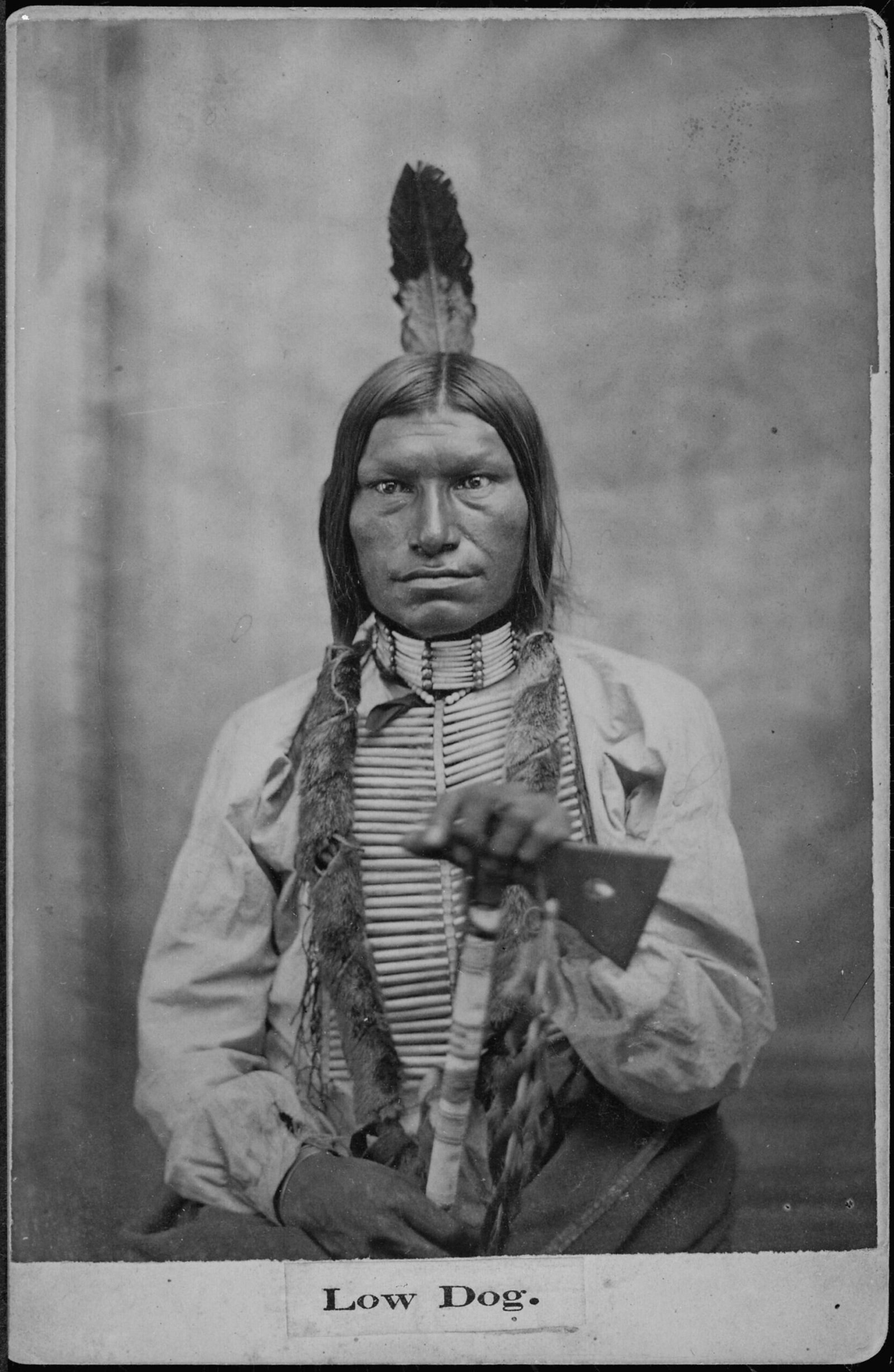
In July 1881, at Standing Rock in Dakota Territory, a Lakota war chief sat down with an interpreter and an army captain and began to talk about the Battle of the Little Bighorn. As he spoke, other officers drew near. Some belonged to the 7th Cavalry. Some had been with Captain Benteen on the Bighorn five years earlier.
The man was Low Dog. A reporter wrote down what he said, and it was published in the Leavenworth Weekly Times on August 18, 1881. It was later reprinted in Colonel W. A. Graham’s source book The Custer Myth.
Who Was Low Dog?
Low Dog was a Lakota war chief born around 1846. Most sources call him Oglala, and some call him Hunkpapa, so even that is not settled. He is said to have become a war chief at 14. By 1876 he was in the great camp on the Little Bighorn. By 1881 he had surrendered and was living at Standing Rock, and he told the officers he wanted to learn the white man’s ways because he saw that the whites were stronger.
The Alarm
Low Dog said the camp was huge, with Cheyenne, Arapaho and seven Lakota divisions. Some horses had gone missing, and a rider who went to look for them saw soldiers approaching. Scouts tried to head him off. Low Dog was asleep, and at first he thought the alarm was false.
The attack began at the Hunkpapa camp, where Sitting Bull’s people were. According to Low Dog, the warriors held their ground while the women and children fled, and then they fell back once their families were safe. Herders drove in the horses, and the Lakota pushed back the first attackers, who retreated to a high hill.
“Like A Thunderbolt”
Then, he said, a second group of soldiers attacked from the other side. He called them the bravest he had ever seen and said they came “like a thunderbolt.”
Low Dog called his men to charge, and they rushed the soldiers. He said the troopers dismounted to fire, but shot poorly. Their frightened horses pulled them about, and many shots went high. None of them tried to run. He said that all but two of that group were killed, and that he captured two horses. Historians note that the group Low Dog describes may have been a detachment led by Captain Yates, and that he arrived after the main Custer fight had ended, so he is not describing all of it.
What He Said About Custer
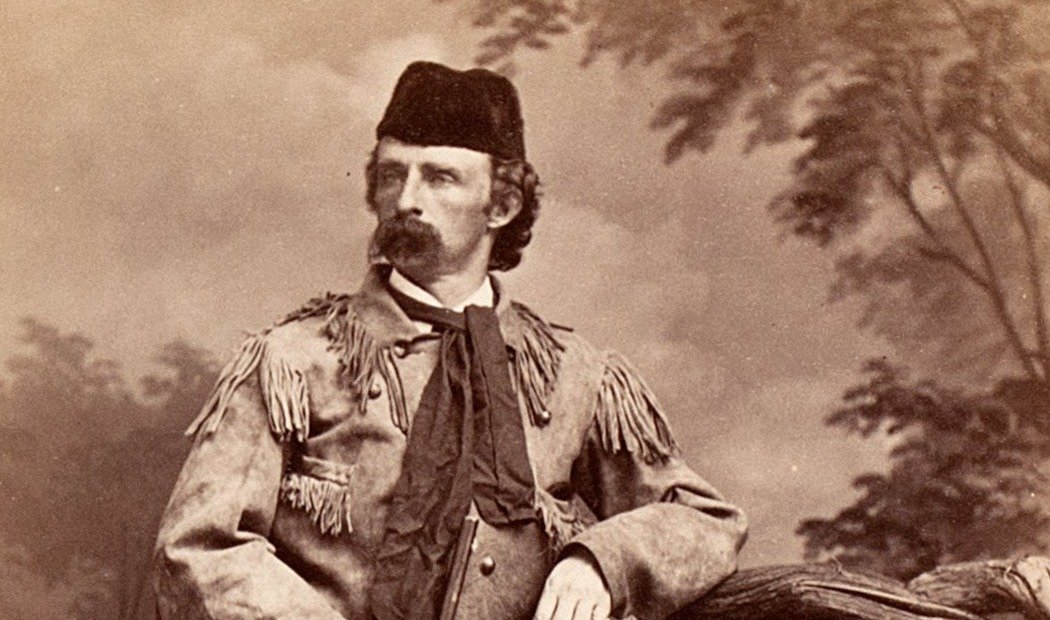
When Low Dog returned to the main camp, he said, the Custer soldiers were already dead. He did not see Custer fall, and he did not know who killed him. He said he learned that the white chief had been among them only after the fighting was over.
But he told the officers that no soldier or Indian had ever fought more bravely than Custer and his men.
The Order About The Body
The officers asked him about mutilation. Low Dog replied that the wise men and chiefs had ordered that the dead white chief not be mutilated, because he had been a brave warrior, and his remains should be respected. Other Native accounts say that some bodies were mutilated, and that the Lakota and Cheyenne did not all follow the same rules. Historians have long debated what happened to Custer’s body, and you can read what we know in Who Really Killed Custer?
The Cost
Low Dog said that 38 Indians died in the fight and that many more were wounded and died later. He said that eight chiefs were killed, including his own brother. Officers asked him about dead warriors found in two tepees, five in one and six in the other, dressed in their best clothes and lying near their dead ponies. His answers to those questions are recorded only in fragments.
He spoke respectfully of Major Reno’s men, saying that Reno “fought well.” But he said that if Reno had fought the way Custer’s men did, the outcome might have gone against the Indians.
The Day After
On the second day, according to Low Dog, the Lakota fought Reno’s men again and killed many. Then the chiefs decided that these soldiers had been punished enough and let them go. When word came that Terry’s column was approaching, the chiefs advised against fighting unless attacked, and the great camp broke up and moved away with the women and children.
How Reliable Is It?
- It was told to a white audience. The interview was held in front of army officers, and the reporter set the scene. One writer argues it may have been shaped for that audience, praising soldiers in a way listeners wanted to hear.
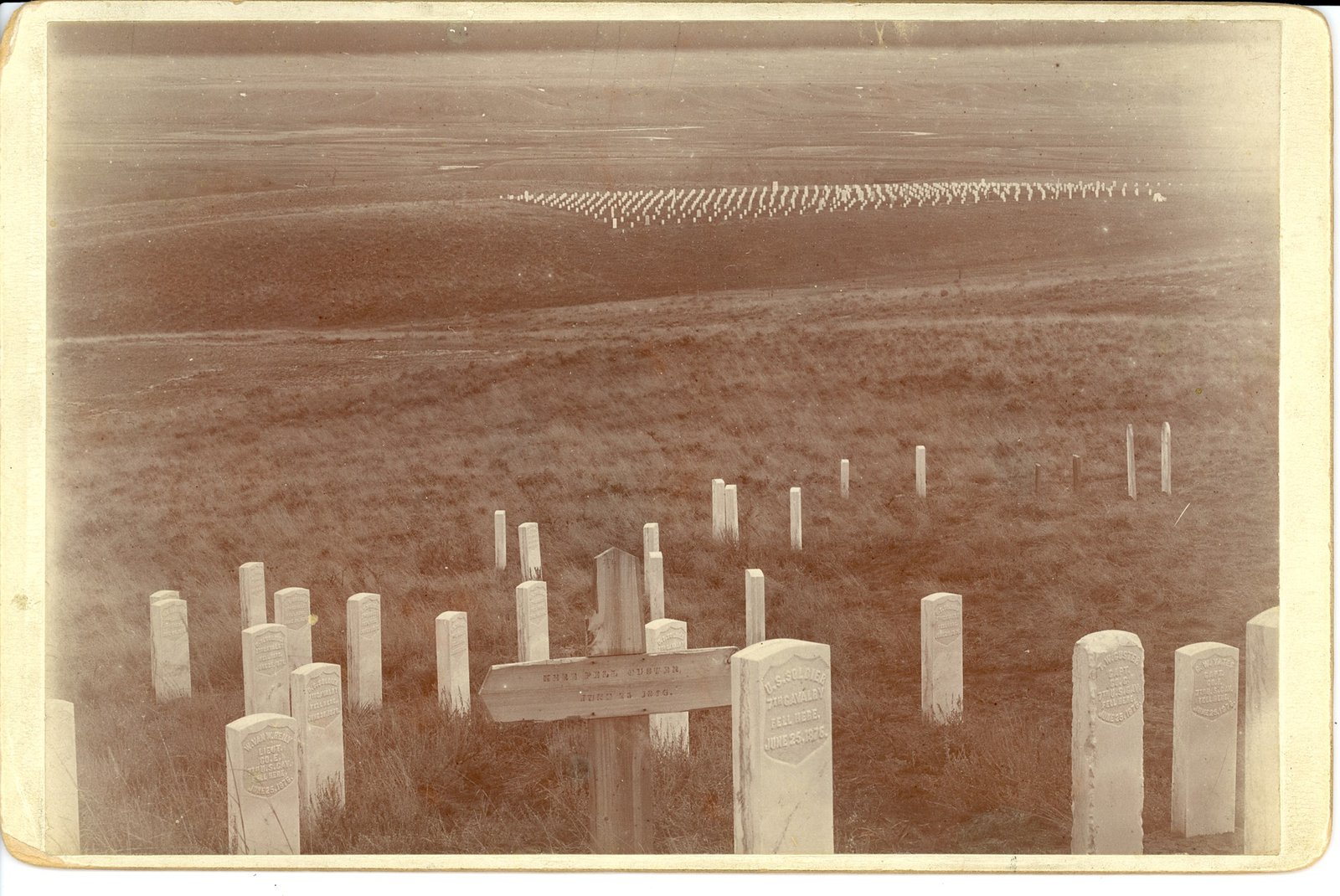
- He was not present for all of it. By his own account, he arrived after the Custer fight was over, so his picture of the final fight is secondhand.
- Other accounts differ. John Stands In Timber’s account describes Low Dog killing a soldier who almost escaped, and several Lakota and Cheyenne witnesses describe the last minutes differently.
- It was recorded five years later. That is close to the event, but it still came through an interpreter and a newspaper reporter.
Even so, Low Dog’s words are among the earliest firsthand Lakota statements about the battle. Few Lakota chiefs spoke openly to the Army so soon after, and most of what Americans first heard about the Little Bighorn came from soldiers. For other voices, read Red Horse’s account, Wooden Leg’s account and Iron Hawk’s account.
Low Dog died on November 14, 1894.