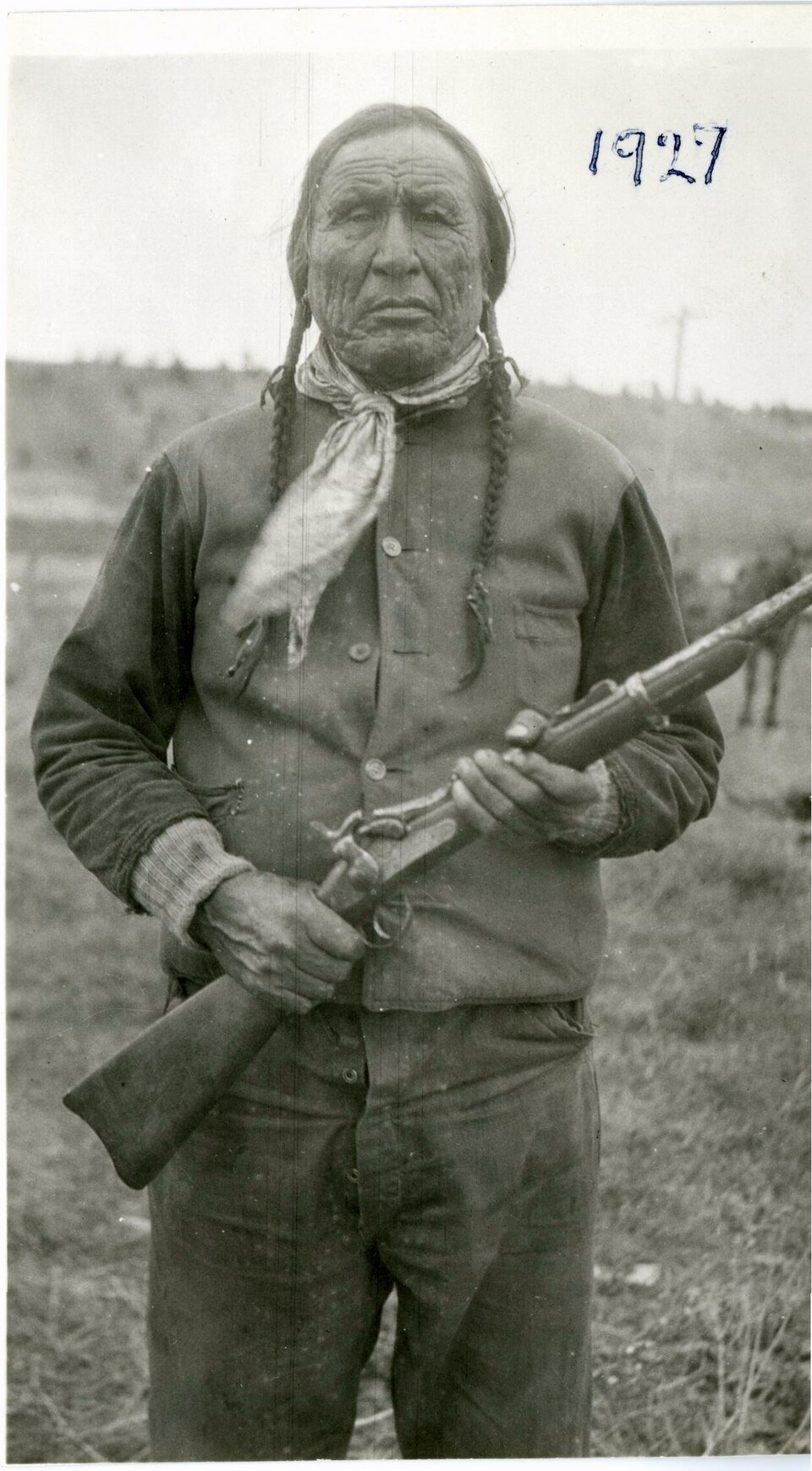
On the afternoon of June 25, 1876, an eighteen-year-old Northern Cheyenne warrior was asleep in the shade of the trees beside the Little Bighorn River. He had been up late at a dance the night before.
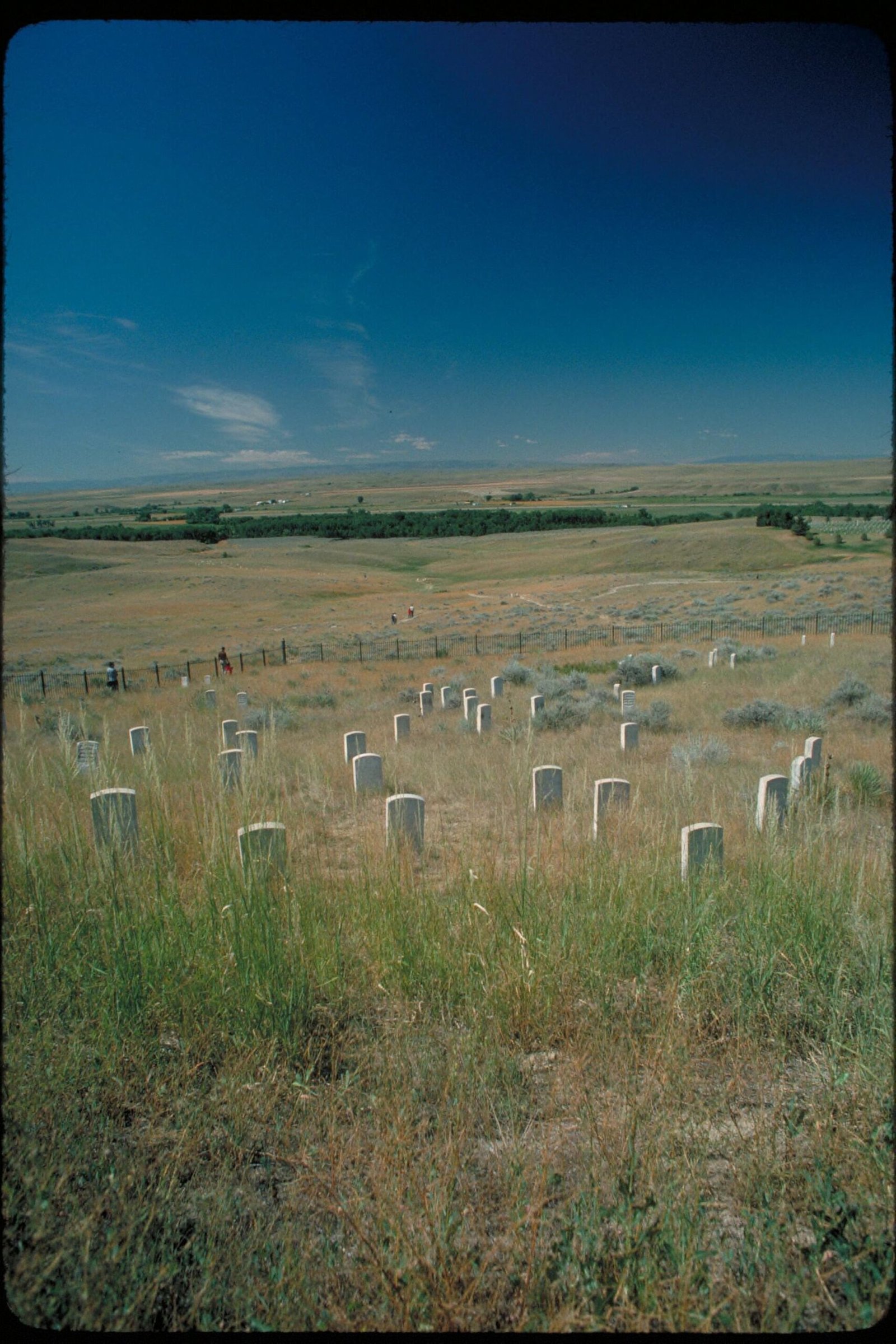
He woke to the sound of gunfire. A few hours later, he was fighting soldiers of the 7th Cavalry. By evening, Custer and every man with him were dead.
His name was Wooden Leg. Fifty-five years later, his story was published in a book, and it remains one of the most important and most disturbing Native accounts of the battle.
Who Was Wooden Leg?
Wooden Leg was born around 1858 and grew up in the Northern Cheyenne camps along the rivers of Montana and Wyoming. He took the name of an uncle, also called Wooden Leg, whom he followed on long walks as a boy. By his own account, he grew to be one of the tallest men in the tribe. At fourteen, he joined the Elkhorn Scrapers, one of the Cheyenne warrior societies.
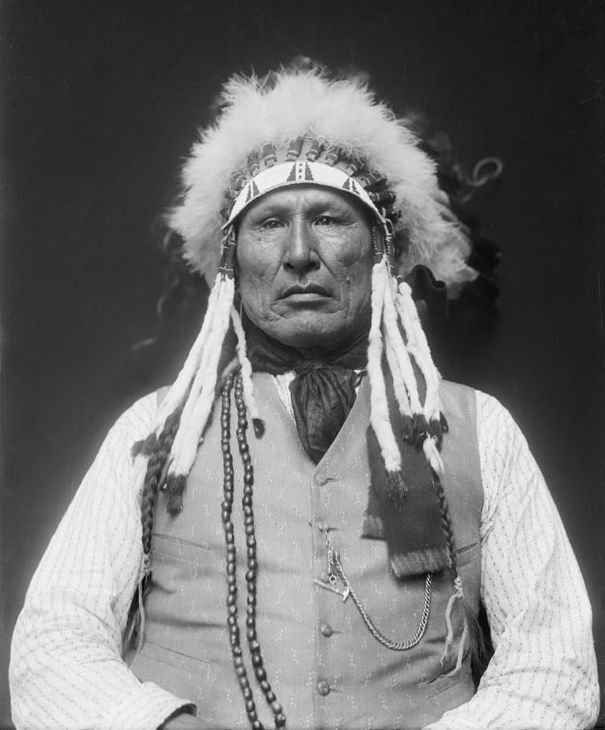
After the wars ended, he surrendered with his people and later served as a U.S. Army scout at Fort Keogh. He died in 1940.
The Book
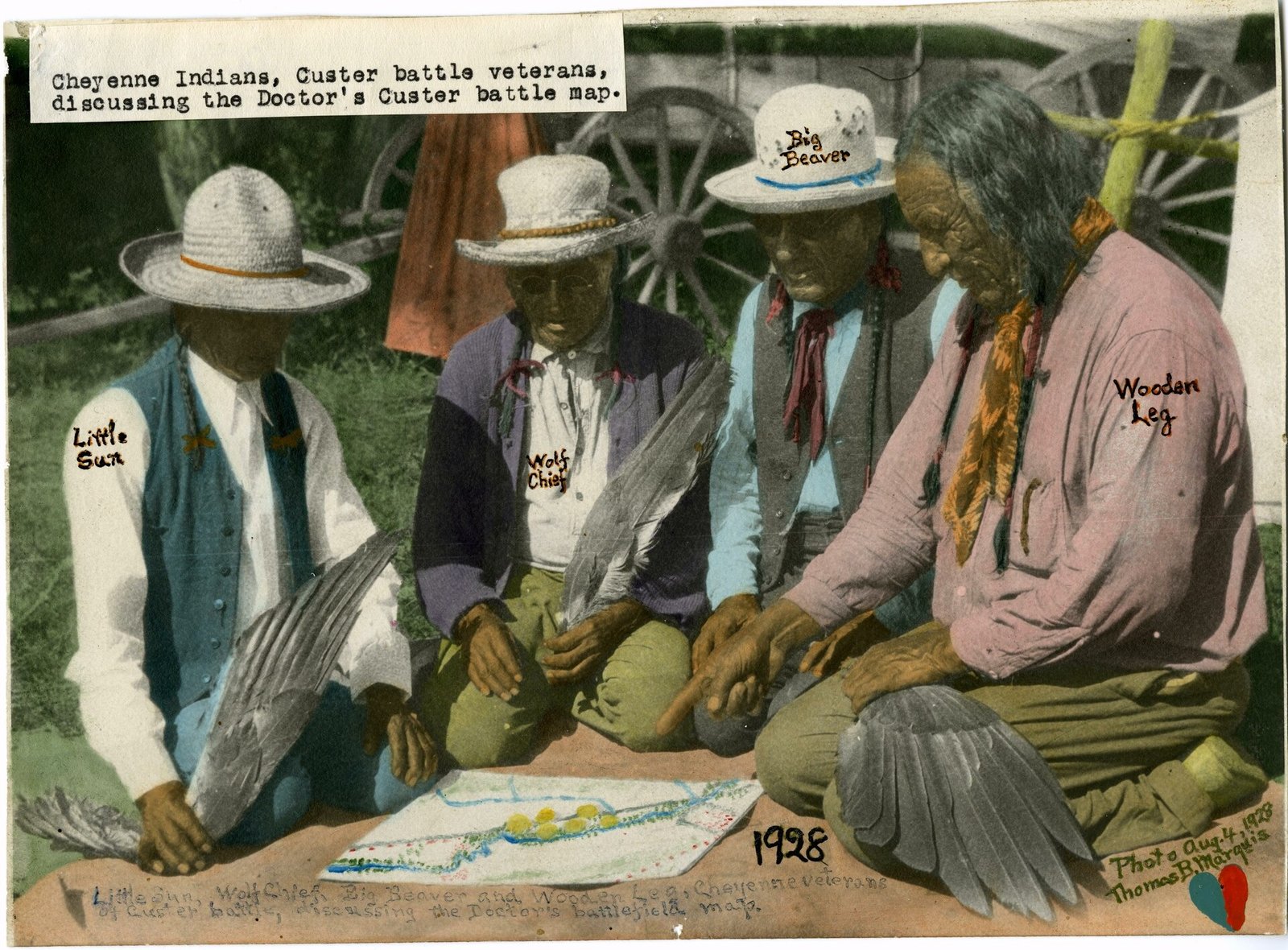
In 1931, a doctor named Thomas B. Marquis, who had worked among the Northern Cheyenne, published Wooden Leg’s story as A Warrior Who Fought Custer. The two men had no language in common but sign language, so Wooden Leg told the story in sign, and Marquis wrote it down.
Marquis said he checked the details with other Cheyenne veterans of the battle. Some of them, including Big Beaver, are named in the book as helping with details.
Also read: What Happened To The Native Warriors After The Little Bighorn?
“Soldiers Are Here!”
Wooden Leg said the great camp was relaxed that day. He and his brother had been splashing in the river, then fell asleep in the shade.
“Women were screaming and men were letting out war cries,” he remembered. Through it all he heard old men calling: “Soldiers are here! Young men, go out and fight them.”
His father told him to hurry. Wooden Leg painted his face, tied back his hair, and rode toward the fighting. He joined the warriors attacking Major Marcus Reno’s soldiers at the south end of the village. He fired his pistol, and he said he saw soldiers fall to arrows and war clubs.
The Fight On The Ridge
When the warriors turned to Custer’s battalion, Wooden Leg went with them. He described a slow fight that lasted about an hour and a half. The warriors crept through gullies and sagebrush, where the soldiers could not see them. Arrows fell on the soldiers and their horses. He said many horses, struck by arrows, bolted and knocked soldiers to the ground.
Then, according to Wooden Leg, about forty soldiers rode down toward the river. A Southern Cheyenne chief named Lame White Man called to the warriors: “Come. We can kill all of them.”
The Claim That Still Divides Historians
Here, Wooden Leg made a claim that shocked readers in 1931 and is still debated today.
He said that, as the warriors closed in, many of the soldiers “went crazy” and turned their guns on themselves. “Almost before we could get to them,” he said, “every one of them was dead.”
But Wooden Leg was honest about what he could and could not see. About the last group of soldiers, he said: “I do not know. I could not see them. But I believe they did so.”
Historians and archaeologists have argued about this claim ever since. Some think a few soldiers may have taken their own lives rather than be captured, while others think Wooden Leg saw only part of what happened through the smoke and dust. No firm conclusion has ever been reached.
Also read: 10 Mistakes That Led To Custer’s Last Stand
What He Saw Afterward
Wooden Leg did not hide the cruelty of that day, including his own part. He said Native warriors took the soldiers’ guns, clothing and cartridges. He also said that after the battle, the bodies of the soldiers were abused, some of it by warriors and more by grieving women whose relatives had been killed. He admitted that he himself fired a shot into a soldier who was already dead.
He also described what the fighting did to people on his own side. He saw a wounded Lakota man staggering away from the field, and the sight made him ill. “I had to vomit,” he said.
Three soldiers, he said, drew special attention from the warriors: a man in a buckskin suit with marks on his chest and arms, a Black man killed among the first soldiers in the valley, and a man with gold in his teeth. Historians generally identify the Black man as Isaiah Dorman, a scout and interpreter who traveled with Reno’s command.
Who Was “Long Hair”?
The most surprising part of his story is what he did not know. Wooden Leg said that on the day of the battle he had never heard of “Long Hair,” the Lakota name for Custer.
That night, a young Lakota man told him the soldiers’ big chief had been named Long Hair. At a great council held in the camp, a Hunkpapa war chief said he had killed him. Wooden Leg said he never heard anyone else claim to know who Custer was or who killed him.
He wrote that when he heard the name, “the story seemed not very important.” To the warriors in that camp, it was a battle to protect their families. They did not yet know it would become famous.
Why His Account Matters
For decades after the battle, America’s version of Custer’s Last Stand came from newspapers, paintings and the claims of people who were not there. Wooden Leg’s book gave readers a view from the other side of the ridge: a young man’s fear, excitement and grief, told in plain words.
It is not a perfect record. Wooden Leg was a teenager in the middle of a huge, smoky battle, telling his story more than fifty years later through sign language and a translator. Some of what he said is still debated, and he admitted what he could not see. But it remains one of the few detailed accounts of the battle by someone who was there.
After reading Wooden Leg’s account, find out who really killed Custer. Then read about the Cheyenne warning Custer ignored.
Related Stories
- How Crazy Horse Destroyed Custer’s Command At The Little Bighorn
- Who Really Killed Custer? His Two Wounds And The Conflicting Accounts
- 10 Things You Didn’t Know About George Armstrong Custer
- 10 Mysteries Of Crazy Horse That Historians Still Can’t Answer
- 7 Battles Where Native Nations Defeated The U.S. Army