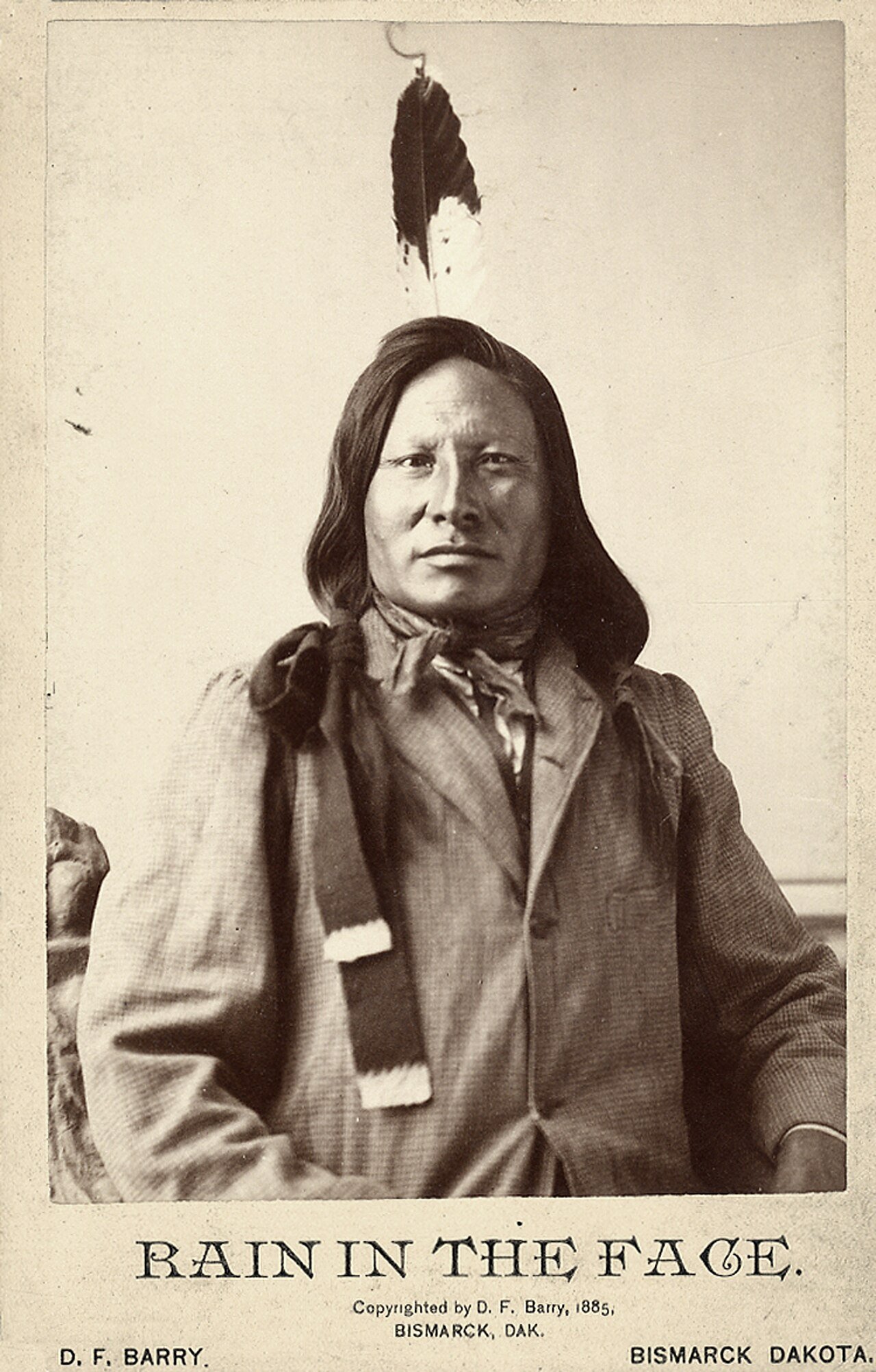
In 1878, two years after the Little Bighorn, Henry Wadsworth Longfellow, the most famous poet in America, published a poem called “The Revenge of Rain-in-the-Face.”
It told the story of a Lakota warrior who escaped from an Army prison, swore revenge on the Custers, and took it at the Little Bighorn. Millions of Americans read it. For the rest of his life, Rain-in-the-Face was known as the man who killed Custer.
But when he finally told his own story, near the end of his life, he said it was a lie.
How He Got His Name
Rain-in-the-Face, in Lakota Ité Omáǧažu, was born around 1835 near the forks of the Cheyenne River in what is now South Dakota. He was a Hunkpapa, the same Lakota band as Sitting Bull.
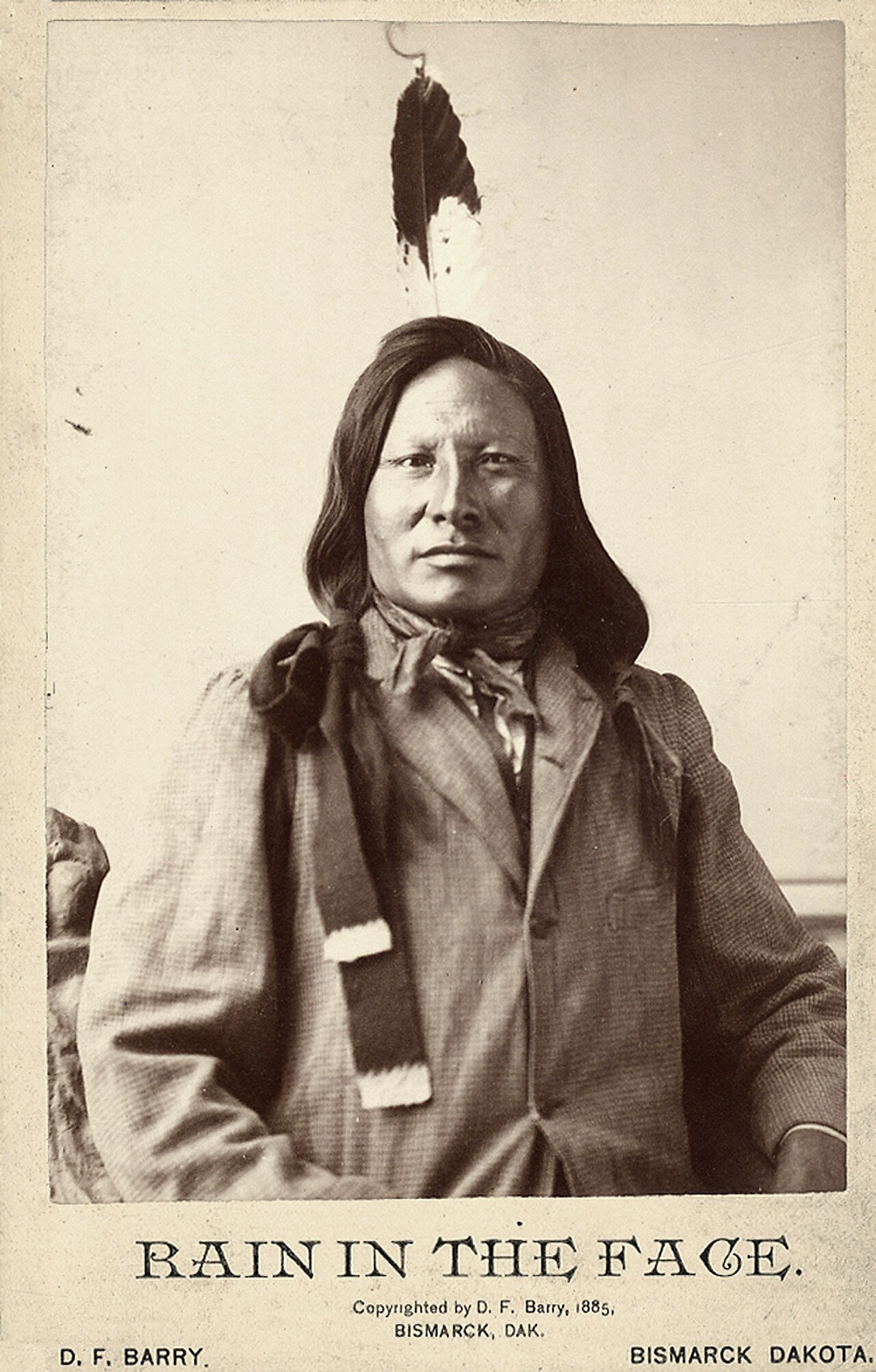
He told the Lakota author Charles Eastman how he got his name. As a boy of about ten, he fought an older Cheyenne boy in a play battle and was hit hard in the face, and the other boys laughed at his streaked, bloodied face. Later, as a young warrior, he painted his face half black and half red, and fought through a heavy rainstorm against the Gros Ventres. The rain streaked the paint down his face, and the name stuck. He was proud of it.
The Arrest That Started The Legend
In 1873, during a clash with the Army along the Yellowstone River, a regimental veterinarian named Dr. John Honsinger and a civilian were killed. Rain-in-the-Face was accused of the killings, and he was said to have boasted about them.
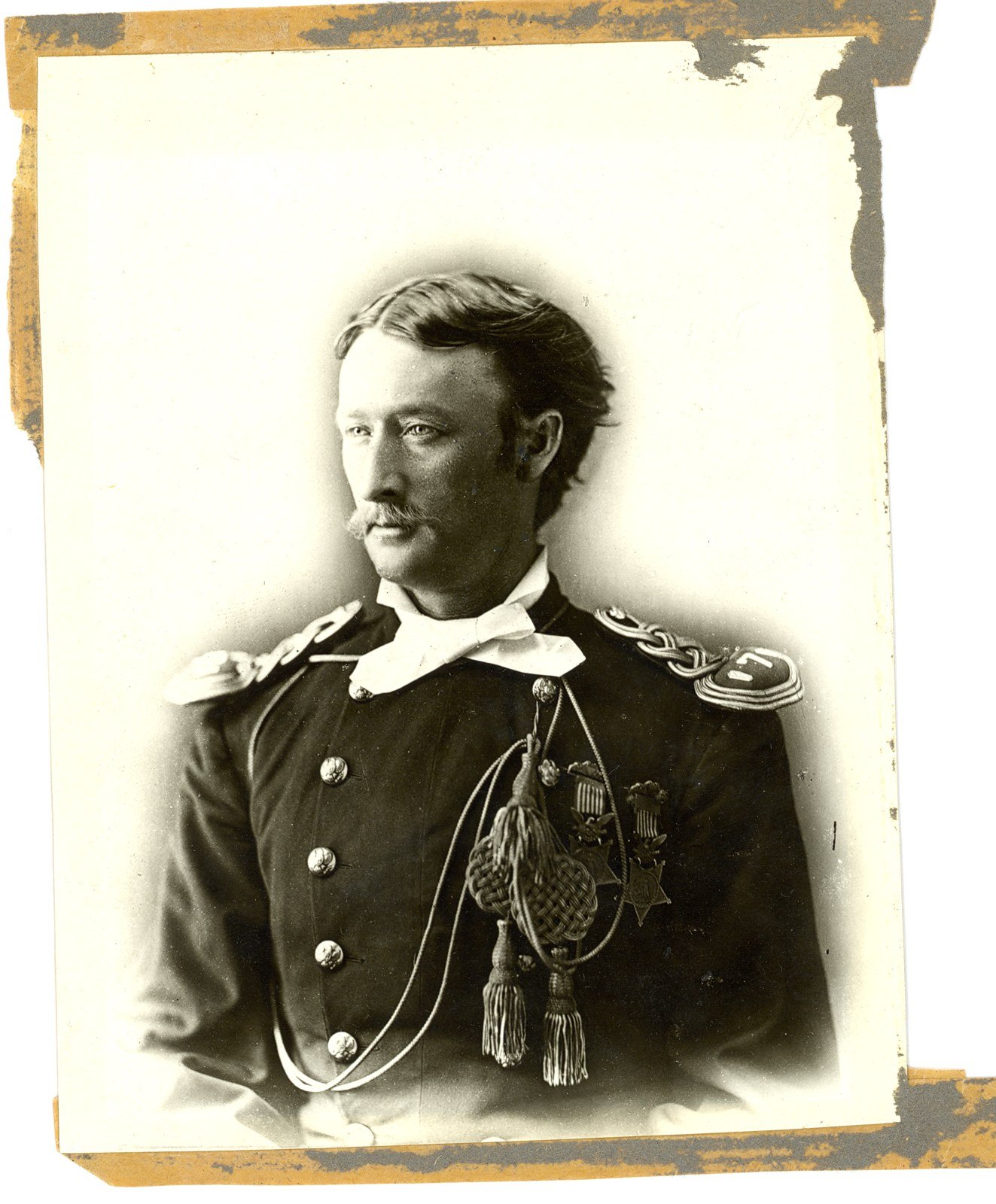
In late 1874, on George Armstrong Custer’s orders, Custer’s younger brother, Captain Tom Custer, arrested Rain-in-the-Face at the Standing Rock Agency and took him in chains to Fort Abraham Lincoln.
He did not stay long. According to the story he told Eastman, an old soldier guarding him unlocked his chains one night and let him go, then fired his gun to make it look like an escape. Rain-in-the-Face slipped away, hid with relatives, and soon joined the free Lakota bands in the Powder River country.
The legend says he swore revenge on Tom Custer for his imprisonment. Historians call that story doubtful.
The Poem
Rain-in-the-Face was at the Little Bighorn on June 25, 1876, when Custer and every soldier with him were killed. Soon after, stories spread that he had killed Custer, or had taken revenge on Tom Custer’s body.
Longfellow turned the story into poetry. His poem “The Revenge of Rain-in-the-Face,” published in 1878 in his book Keramos and Other Poems, imagined the warrior escaping from prison and swearing vengeance, then riding off from the battlefield in triumph.
The poem made Rain-in-the-Face famous across America. It also branded him, for the rest of his life, as the killer of Custer.
The Interview At Coney Island
After the war ended, Rain-in-the-Face surrendered with his band in 1880 and lived on the Standing Rock Reservation.
Because of his fame, he later appeared at public exhibitions back East. In 1894, a journalist named W. Kent Thomas interviewed him at Coney Island, New York, and published a story in which Rain-in-the-Face supposedly boasted of taking revenge on Tom Custer. But according to historians, the journalist had gotten him drunk before the interview, in order to get a dramatic story. Most historians do not trust it.
“Many Lies Have Been Told Of Me”
In 1905, shortly before he died, Rain-in-the-Face told his life story to Charles Eastman, a Dakota doctor and writer who spoke his language. Eastman later published it in his book Indian Heroes and Great Chieftains.
Rain-in-the-Face denied the legend. “Many lies have been told of me,” he said. “Some say that I killed the Chief, and others that I cut out the heart of his brother, because he had caused me to be imprisoned. Why, in that fight the excitement was so great that we scarcely recognized our nearest friends!”
No one, he said, could really know who killed the man the Lakota called Long Hair.
A Final Twist
Rain-in-the-Face died on September 15, 1905, at his home at Bullhead Station on the Standing Rock Reservation, after a long illness.
Even his death added to the mystery. According to one account, on his deathbed he told a missionary that he might have shot Custer at close range after all. Like so much about Custer’s death, it can never be proven.
What is certain is that a poem written by a man who never met him decided how America remembered Rain-in-the-Face, and that when he was finally asked, he told a very different story.
After reading about Rain-in-the-Face, find out who really killed Custer. Then, read about the Custer family who died together at the Little Bighorn.