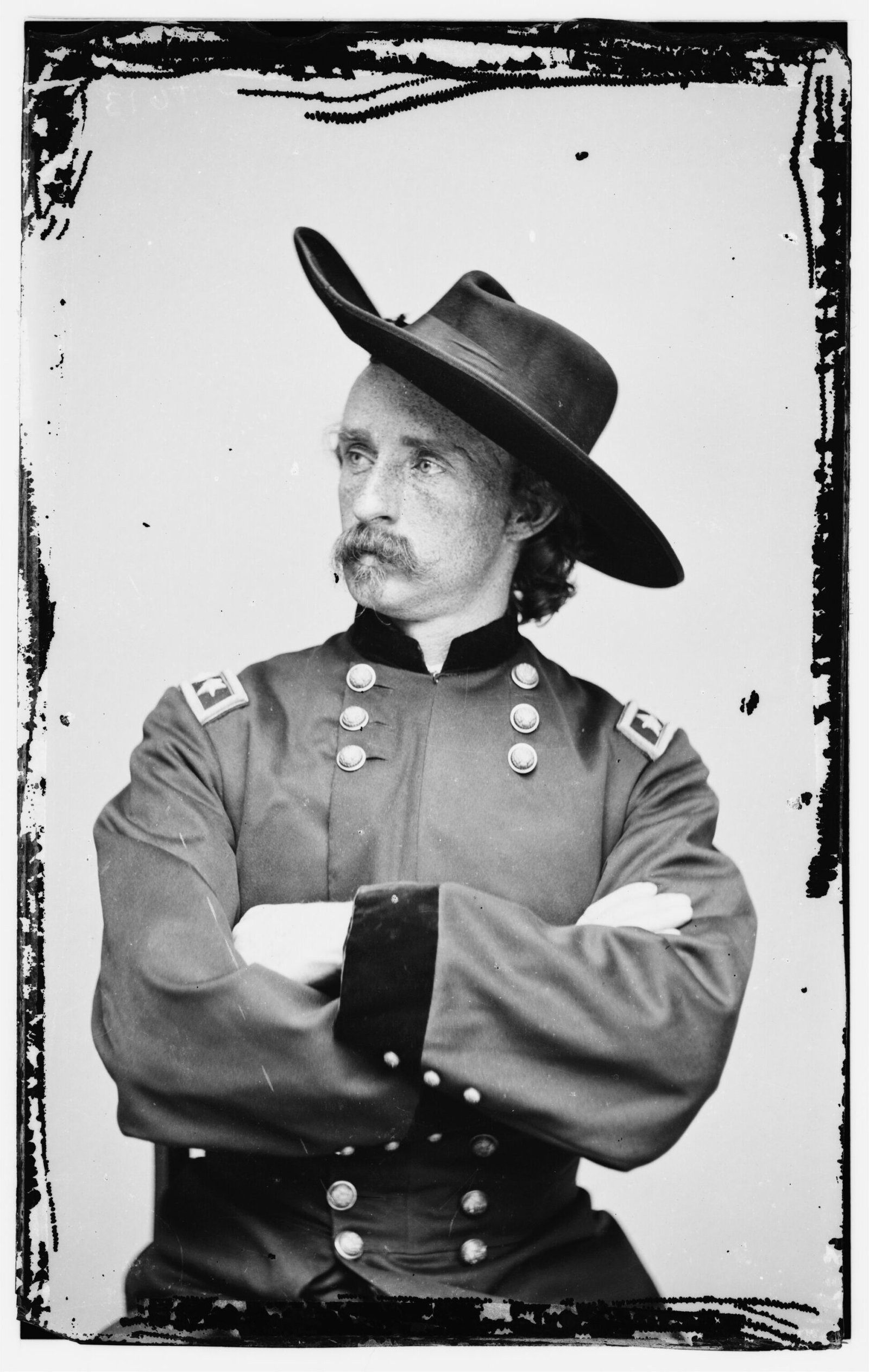
On June 25, 1876, Lieutenant Colonel George Armstrong Custer died on a ridge above the Little Bighorn River in Montana, along with every soldier in the five companies he led. Lakota, Cheyenne and Arapaho warriors defending their camp had destroyed his command in less than an hour.
Everyone agrees on that much. But one question has never been settled: who actually killed Custer?
Over the years, at least a dozen warriors were named as the man, or woman, who struck him down. Some claimed it themselves. Some were credited by others. Some later denied it. And the only physical evidence, Custer’s own body, raises questions of its own.
What His Body Showed
Two days after the battle, on June 27, soldiers of General Alfred Terry’s column reached the ridge and found the dead. Custer’s body lay near the top of what is now called Last Stand Hill, among the bodies of his men.
According to the National Park Service, his body had been stripped of its clothing but was not scalped or mutilated like many of the others. He had two bullet wounds: one in the left side of his chest and one in his left temple. Either one could have been fatal.
Lieutenant Edward Godfrey, who helped bury the dead, wrote in his journal that Custer’s “face & expression was natural.”
Two Wounds, Many Questions
Those two wounds have fueled debate for nearly 150 years. Which came first? Was he already dying from the chest wound when he was shot in the head?
Because the head wound was in his left temple, a few writers have suggested that Custer may have taken his own life rather than be captured, and some later Lakota accounts said the same. Most historians are doubtful, and there is no way to prove it either way. The truth may have died on the ridge with him.
There is another problem. According to historian David Humphreys Miller, who interviewed dozens of Native survivors, only a handful of the warriors had ever seen Custer before, and none of them knew “Long Hair” was even on the field until after the fight. He was wearing buckskin like several of his officers, and he had cut his famous long hair short before the campaign. In the dust and smoke, almost no one could have known which soldier was Custer.
The Lakota Accounts
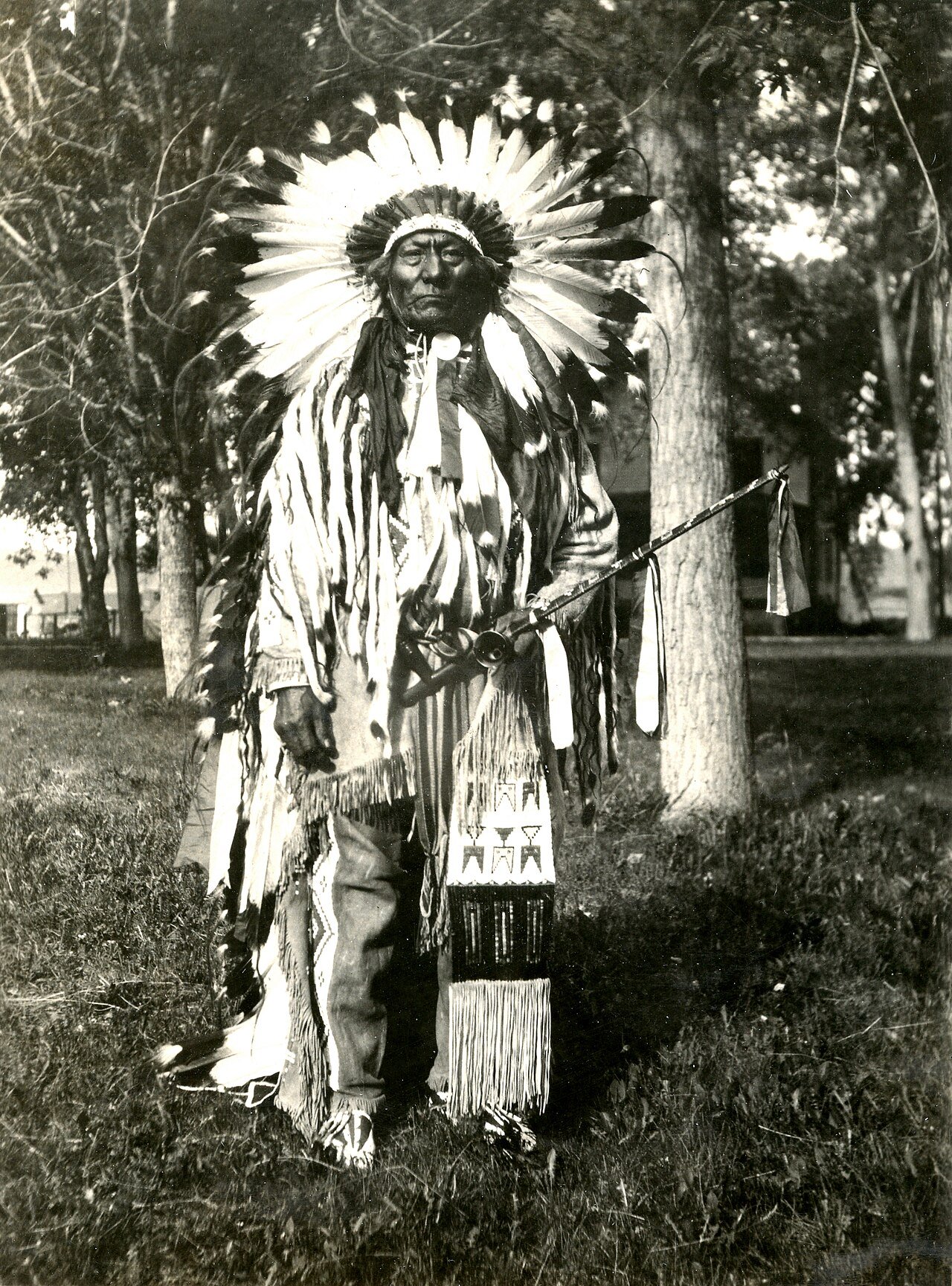
White Bull. White Bull, a Lakota warrior and nephew of Sitting Bull, was one of the most decorated fighters of the battle. Decades later, he described fighting a soldier in a buckskin coat who seemed to be a leader. The soldier fired his revolver at him twice and missed, White Bull said, and then White Bull shot him. He told much the same story to the writer Stanley Vestal. Many readers took it as a confession that he killed Custer, but even White Bull could not be sure the man was Custer.
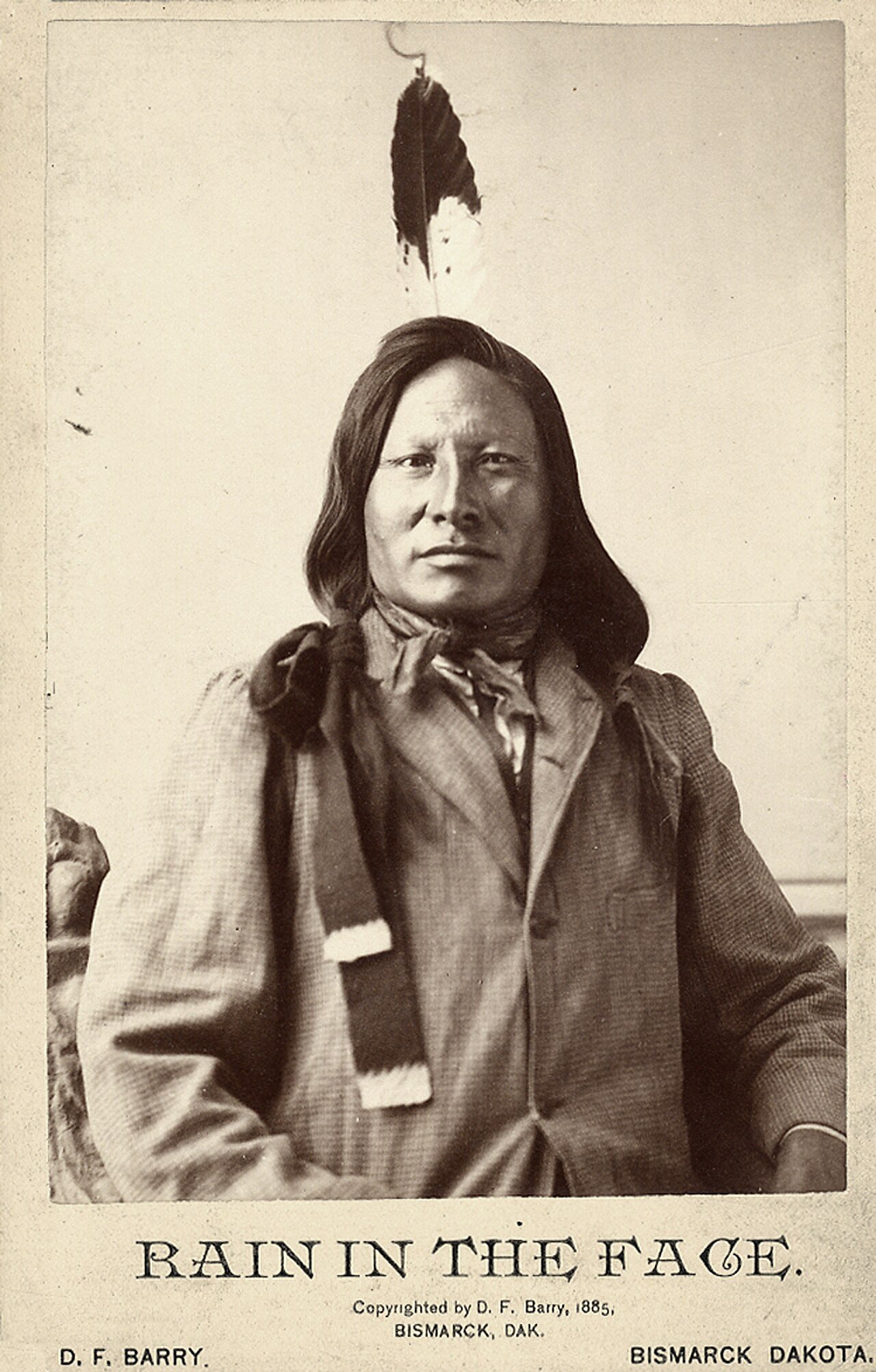
Rain-in-the-Face. For years, the most famous name was Rain-in-the-Face, a Hunkpapa warrior who had once been arrested by Custer’s brother Tom. In 1878, the poet Henry Wadsworth Longfellow even published a poem, “The Revenge of Rain-in-the-Face,” built around the legend. In an 1894 newspaper interview, given by many accounts after a journalist had gotten him drunk, Rain-in-the-Face boasted about his part in the battle.
But later in life, speaking with the Lakota author Charles Eastman, he denied killing Custer. In that fight, he said, the excitement was so great that warriors scarcely recognized their nearest friends.
The early “kill talks.” In the years right after the battle, several more warriors were said to have killed Custer, including Red Horse, a Minneconjou; Flat Hip, a Hunkpapa; and Walks Under the Ground, a Santee. According to Miller, Walks Under the Ground was probably credited because he ended up with Custer’s horse. Miller himself believed a young Oglala named White Cow Bull may have fired the fatal shot.
The Cheyenne Accounts
Buffalo Calf Road Woman. For more than a century, the Northern Cheyenne kept their own account private. In 2005, Cheyenne storytellers shared it publicly for the first time: the blow that knocked Custer from his horse, they said, was struck by a Cheyenne woman named Buffalo Calf Road Woman, the same woman who had saved her brother at the Rosebud eight days earlier.
Brave Bear. In 1909, at a gathering of Native veterans on the Little Bighorn organized by the department store heir Rodman Wanamaker, the chiefs held a council to decide who should be honored as Custer’s killer. They chose Brave Bear, a Southern Cheyenne war chief who had also fought Custer at the Washita in 1868. It was an honorary title, not proof.
Yellow Nose. A 1912 newspaper report said many old Southern Cheyenne and Arapaho warriors believed the killer was Yellow Nose, a Ute-born warrior who lived with the Cheyenne. Yellow Nose himself said only that he had killed an officer whom others told him was Custer.
The Cheyenne also remember what happened after the battle. According to Kate Bighead, a Cheyenne woman who spoke with historian Thomas Marquis in the 1920s, two Cheyenne women recognized Custer from the Washita and pierced his ears with a sewing awl so he would hear better in the spirit world. He had not listened, she said, when the chiefs warned him in 1869 never to fight the Cheyenne again.
The Crow Version
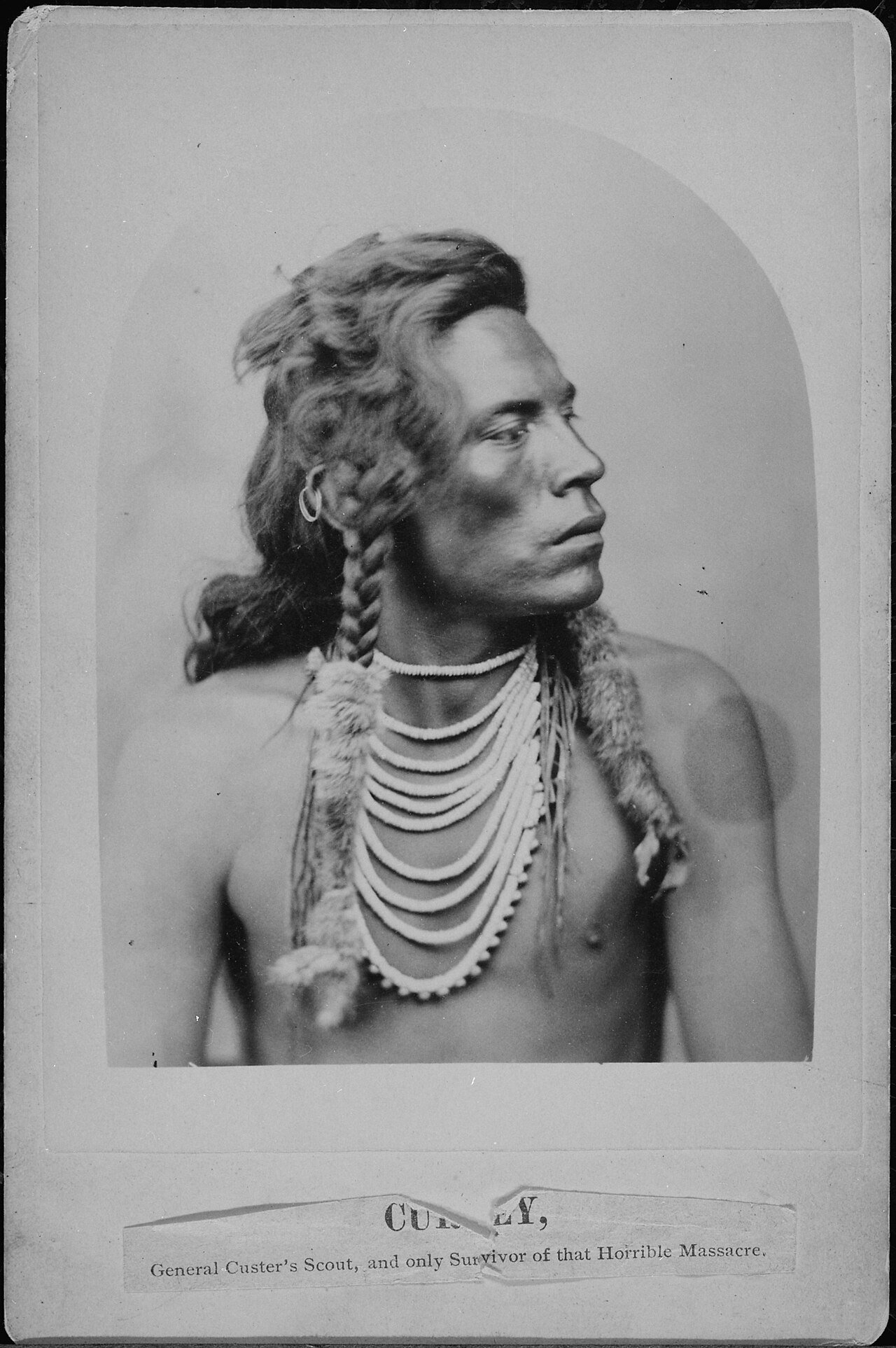
The Crow fought on the other side. Several Crow scouts rode with the 7th Cavalry that day, and one of them, a young man named Curley, became famous as the “last man to see Custer alive.”
Newspapers soon spread stories that Curley had stayed with Custer almost to the end and escaped by wrapping himself in a Lakota blanket. In one later account, he said Custer was shot about an hour before the fighting ended and was still alive for much of the battle.
But Curley’s earliest statement told a different story. Days after the battle, interviewed by Lieutenant James Bradley, he repeatedly denied fighting in Custer’s last battle. He said he had ridden off to a distance of about a mile and watched for a short time before leaving. Most historians believe he left before the end and could not have seen how Custer died.
So Who Really Killed Custer?
After almost 150 years, the honest answer is that no one knows. The fight on the ridge was fast, chaotic and hidden in dust and gun smoke. Most warriors didn’t know Custer was there. Several people may truly have believed they killed him, and some of them may have been right about the man in front of them, just not about who he was.
What is certain is that Custer did not die the way the paintings show, standing tall with his long hair blowing in the wind. He died in a fight he had chosen, against people who were defending their families, and the warriors who were there have never agreed on who fired the last shot.
After reading about the mystery of Custer’s death, meet the 4 Native women who fought Custer at the Little Bighorn. Then, read how Crazy Horse destroyed Custer’s command.