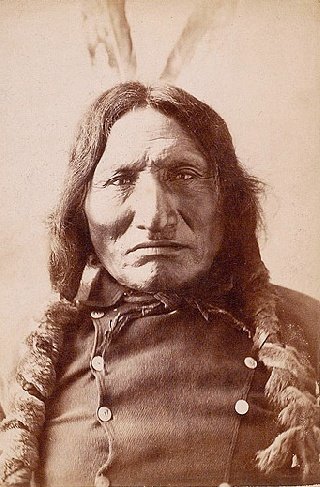
In 1881, five years after the Battle of the Little Bighorn, a Minneconjou Lakota chief named Red Horse sat down with an Army doctor at the Cheyenne River Agency in Dakota Territory and told the story of the day Custer died.
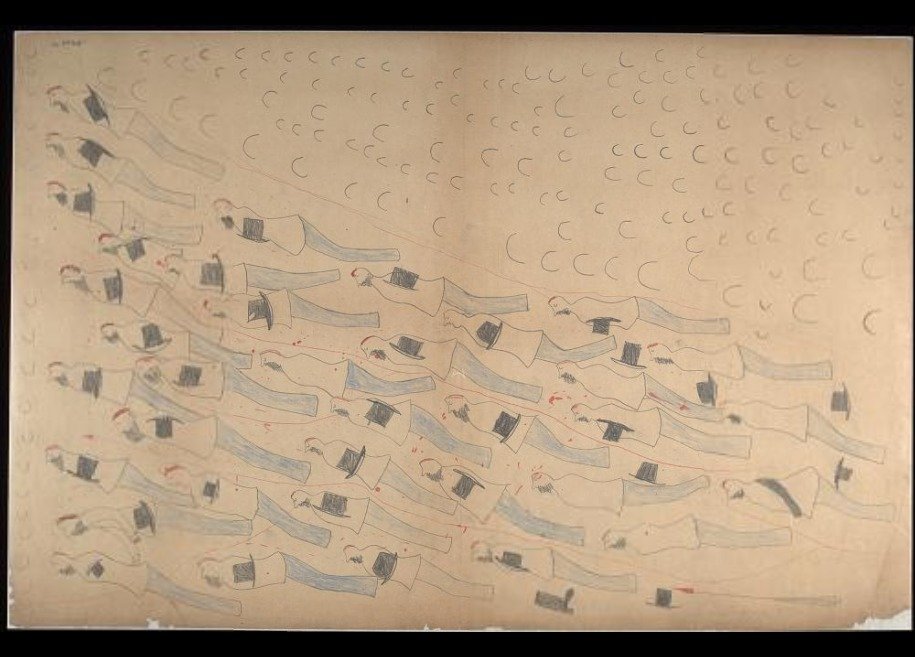
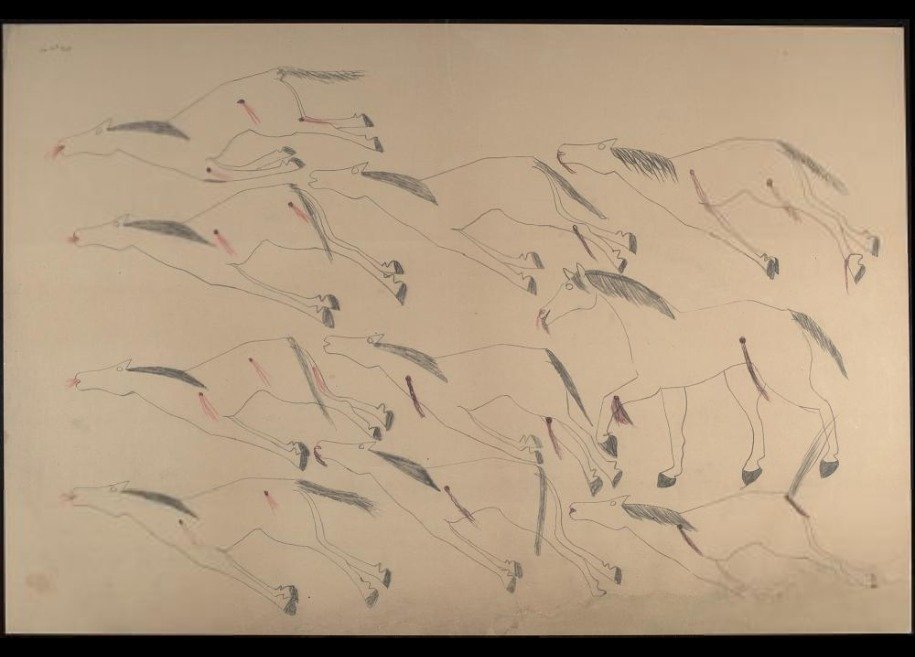
He told it in sign language. It was translated into English and written down. Then Red Horse picked up pencils and drew what he had seen, in 42 large drawings.
His account is one of the earliest and most detailed Native records of the battle. Parts of it are deeply disturbing.
Who Was Red Horse?
Red Horse, in Lakota Tasunka Luta, was born around 1822. He was a Minneconjou, one of the seven bands of the Lakota, and he was a respected chief and warrior. In June 1876, his people were camped with the Hunkpapa, Oglala, Cheyenne and others in the huge village along the Little Bighorn River in Montana.
The account was recorded by Dr. Charles E. McChesney, an Army surgeon, as part of a study of Plains Indian sign language and picture-writing led by Garrick Mallery of the Smithsonian’s Bureau of Ethnology. Mallery published it in 1893 in his book Picture-Writing of the American Indians.
“Digging Wild Turnips”
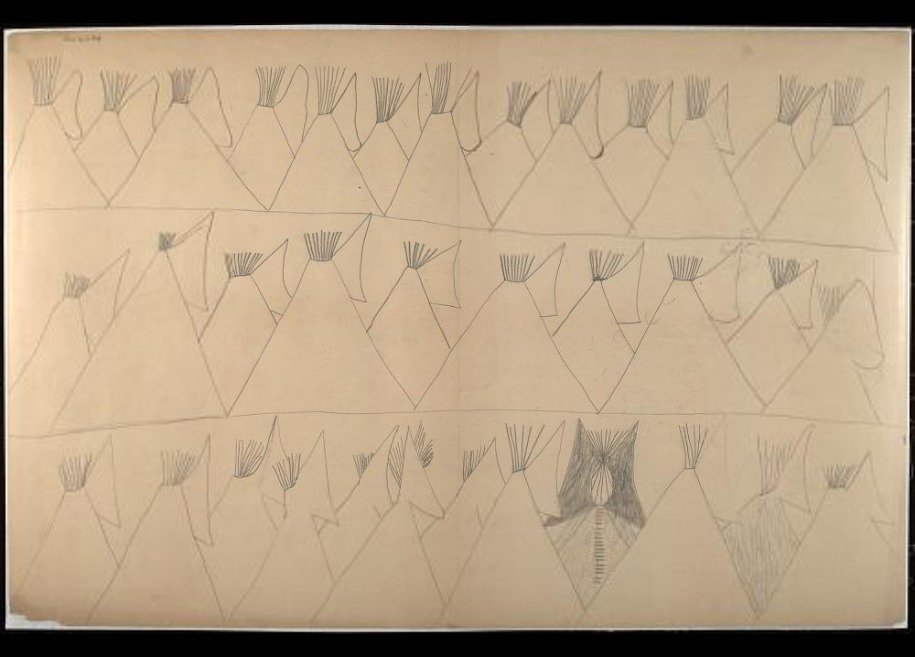
Red Horse’s story begins quietly. On the morning of the attack, he said, he and four women were a short distance from camp, digging wild turnips.
Then one of the women pointed to a cloud of dust rising near the camp. Red Horse saw that soldiers were coming. He said he was a chief in the council lodge, and that the soldiers came so fast the chiefs had no time to talk.
“The soldiers charged the Sioux camp about noon,” he said.
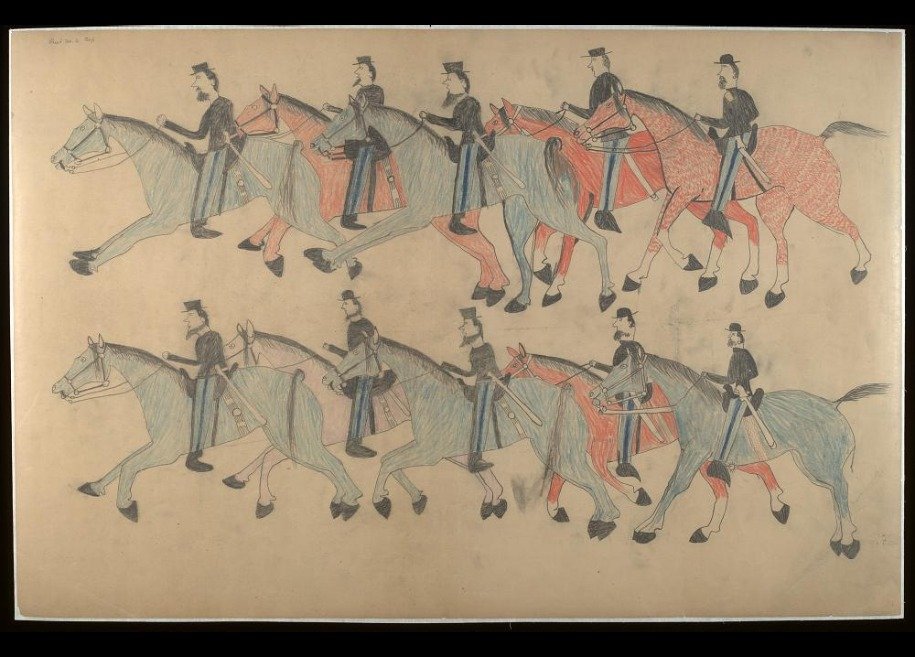
The first attack came from Major Marcus Reno’s battalion. Red Horse described how the Lakota and their allies drove these soldiers back across the river and up onto the bluffs.
The Bravest Man They Ever Fought
One part of the account has puzzled historians for more than a century.
“Among the soldiers was an officer who rode a horse with four white feet,” Red Horse said. According to him, the Sioux said this officer was “the bravest man they had ever fought.”
He admitted he did not know who the man was. “I don’t know whether this was Gen. Custer or not,” he said. He added that he never saw the officer’s body, and that he had heard the man was killed by a Santee warrior who took his horse.
When the account was published, an editor’s note suggested the officer may have been Captain Thomas French of the 7th Cavalry, who fought with Reno’s men and survived. Other writers have suggested other officers, including Custer himself. The truth may never be known.
Red Horse also said he saw two officers who looked alike, “both having long yellowish hair.”
“Sioux, Pity Us”
Then came Custer’s battalion, attacking from the other end of the village.
Red Horse said the Lakota and Cheyenne warriors, fresh from defeating Reno, turned on Custer’s men and surrounded them. In his account, the soldiers became confused. Some tried to run.
And then comes the most disturbing line of his account. He said that many of the soldiers threw away their guns and raised their hands, saying, “Sioux, pity us; take us prisoners.”
“The Sioux did not take a single soldier prisoner,” he said, “but killed all of them.”
Historians treat this part carefully. Red Horse’s words came through sign language and an interpreter, and other Native accounts describe the end of the battle differently. But his account is one of several that describe the last moments of Custer’s men as panic, not a heroic last stand.
After The Battle
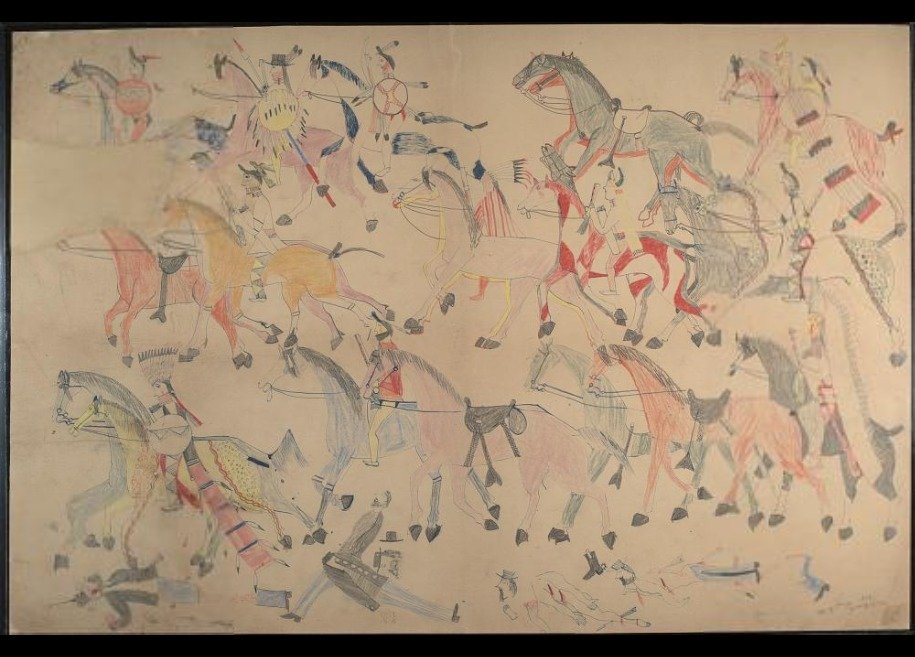
Red Horse described what happened next without hiding anything. The warriors took the guns and cartridges from the dead soldiers, and some took their clothing and dressed themselves in it.
Then, using the soldiers’ own weapons, they turned back to fight the soldiers trapped on the hill, Reno’s and Benteen’s men. They kept them pinned down until scouts warned that more soldiers were coming. Red Horse said that if those soldiers had not come, the Sioux would have killed the men on the hill too.
He also told the cost to his own people. “The soldiers killed 136 and wounded 160 Sioux,” he said. Most historians believe the real number of Native dead was lower, perhaps 30 to 100, but no one knows for sure.
The Drawings
Red Horse’s 42 drawings show the battle the way a Lakota warrior saw it: the village of tipis, the soldiers riding in, the warriors in their paint and war bonnets, the fallen men on both sides, and the wounded horses.
Some of the drawings show the dead, the soldiers in rows and the Lakota and Cheyenne warriors who fell. They are not drawn for drama. They are a record, like a list of names.
For more than a century, the original drawings sat in the Smithsonian’s National Anthropological Archives, seen by very few people. In 2016, Stanford professor Scott Sagan and researcher Sarah Sadlier, a Minneconjou Lakota, brought them back into public view in an exhibition at Stanford’s Cantor Arts Center. Today, the drawings have been digitized by the Smithsonian for anyone to see.
Why His Account Matters
For many years, Americans learned about the Little Bighorn from paintings of Custer standing tall among his men, fighting to the end. Red Horse saw the battle from the other side.
His account is not a legend. It is the memory of a man who was there, told in his own way, and drawn by his own hand. Red Horse died in 1907.
After reading Red Horse’s account, find out who really killed Custer.