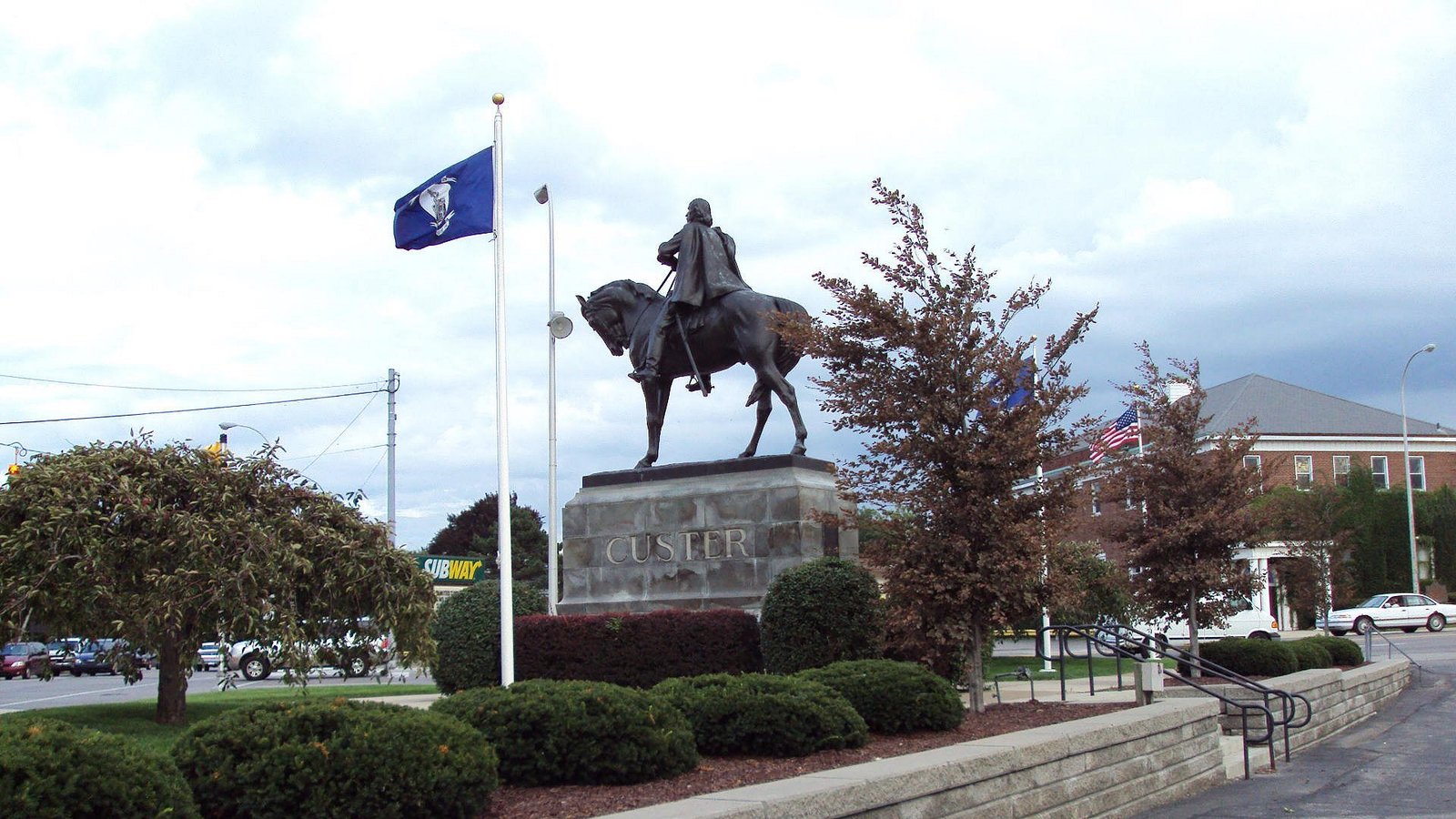
In Monroe, Michigan, a bronze statue of George Armstrong Custer on horseback has stood near the center of town for more than a century.
Some people see a Union hero from the Civil War. Others see the man who attacked the village of a Cheyenne chief who wanted peace, and who led the 7th Cavalry into the Little Bighorn. Both groups live with the same statue.
So should Custer be honored? Here are the arguments, as each side makes them.
The Statue In Monroe
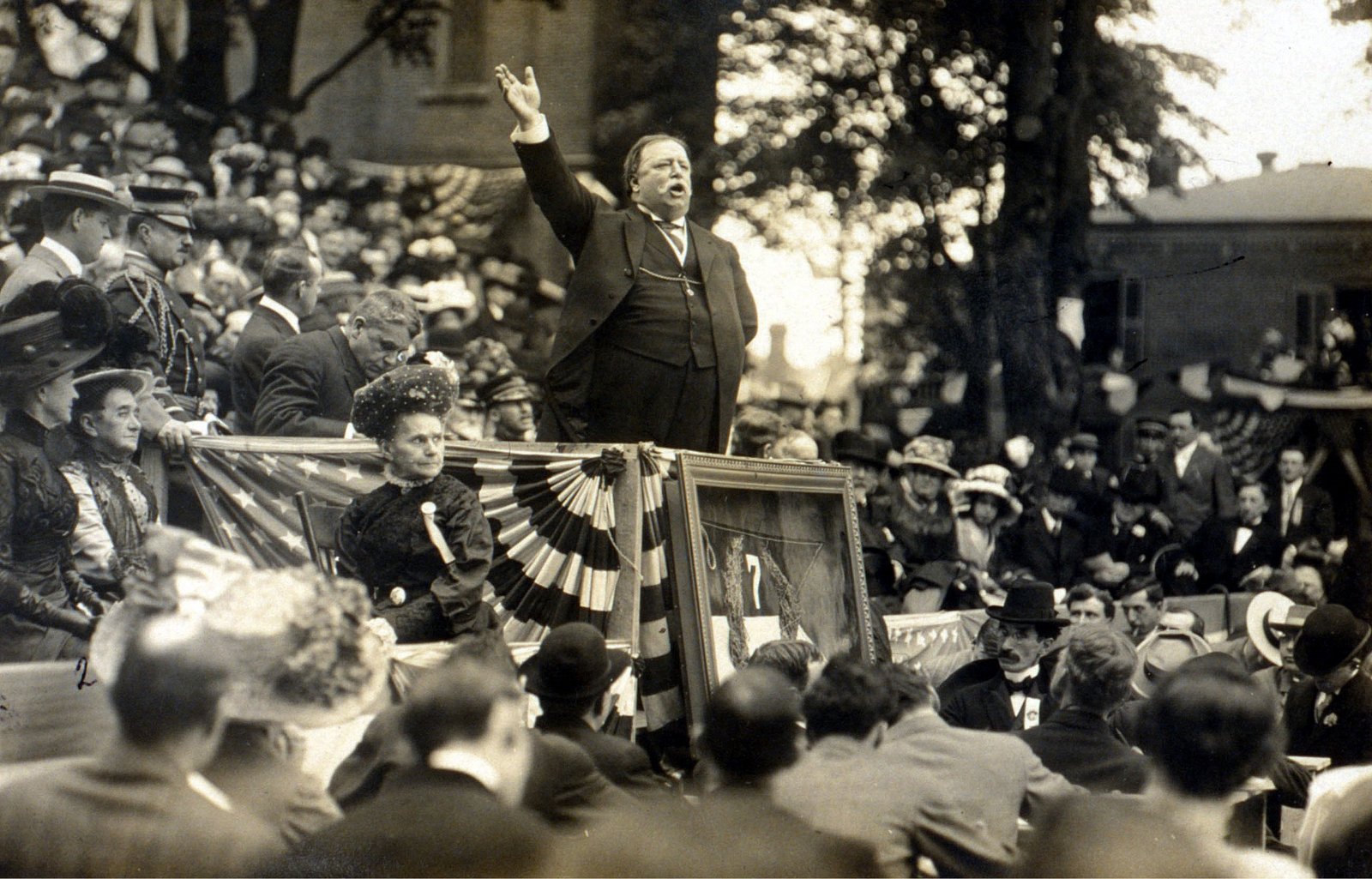
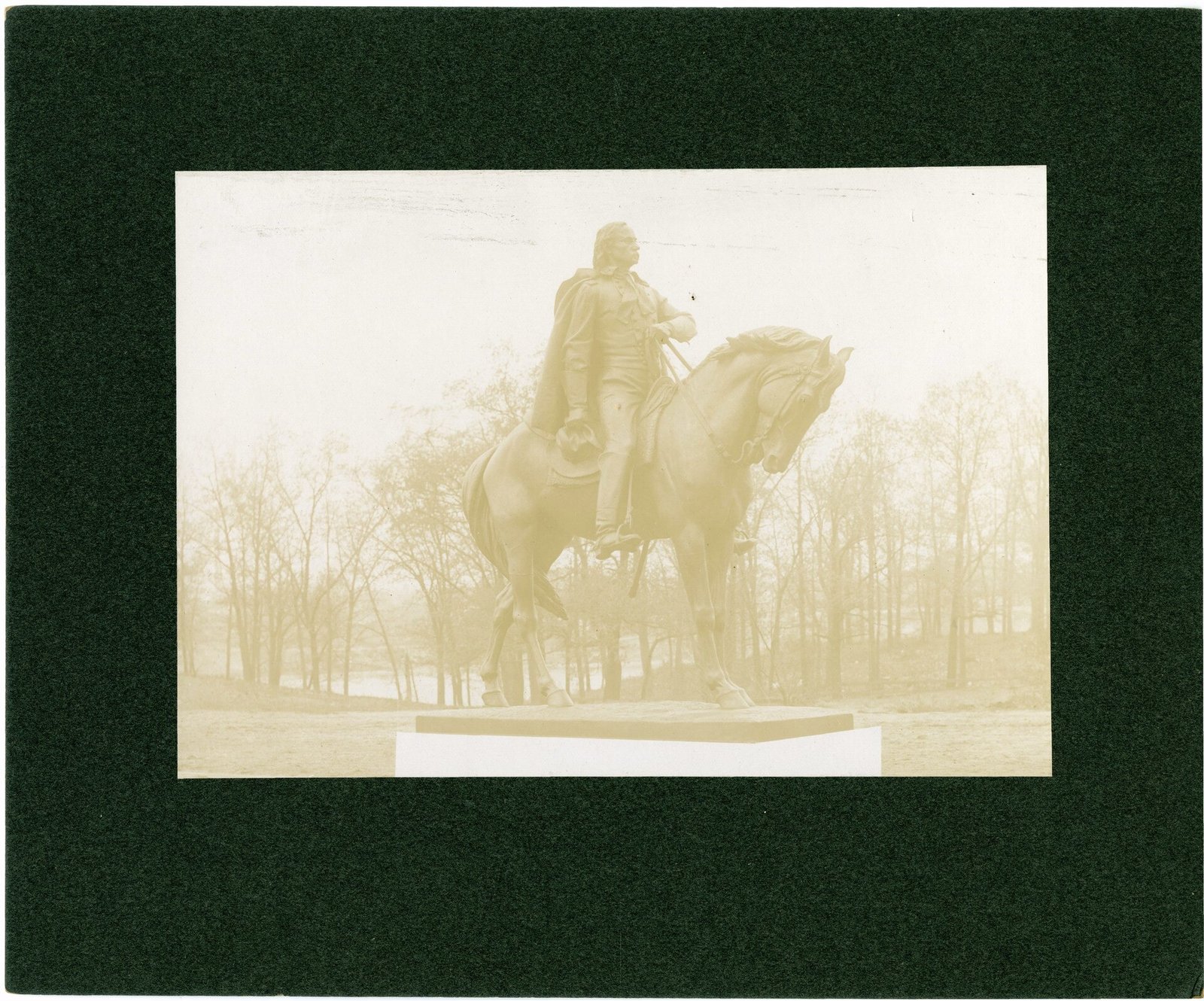
The statue, called “Sighting the Enemy,” was made by the sculptor Edward Clark Potter. It is 14 feet of bronze, and it cost $24,000. President William Howard Taft and Custer’s widow, Elizabeth “Libbie” Custer, unveiled it in June 1910.
It shows Custer in his Civil War uniform. The statue was moved in 1923 and again in 1955, and since then it has stood at the corner of Elm Avenue and North Monroe Street. It is on the National Register of Historic Places.
Custer has other monuments too: a monument at his grave at West Point, a statue in his birthplace of New Rumley, Ohio, and Custer National Cemetery at the Little Bighorn. Many places, from towns to counties, carry his name.
The Case For Honoring Him
His Civil War record. Custer became a general at the age of twenty-three. At Gettysburg, he led his Michigan cavalry brigade in a famous charge, and at Appomattox, the first Confederate flag of truce was carried to his lines. The Monroe statue was built to honor that service, and many people in his hometown still see it that way.
His hometown ties. Custer grew up in Monroe, and his wife, Libbie, came from there. For many families, the statue is part of local history.
“He didn’t make the policy.” Some historians argue that the harsh government policies toward Native Americans were set in Washington, and that Custer was a soldier carrying out orders. They say judging him for those policies is not fair.
“Don’t erase history.” Supporters of the statue say that taking it down would hide history, not teach it.
The Case Against Honoring Him
The Washita. In November 1868, Custer led a dawn attack on the Cheyenne village of Black Kettle, a chief who had tried to keep the peace. Black Kettle and his wife were killed, along with many women and children, and 53 Cheyenne women and children were taken captive.
The Black Hills. In 1874, Custer led an expedition into the Black Hills, land promised to the Lakota by treaty. He announced there was gold. Miners poured in, and war followed.
The Little Bighorn. In 1876, he attacked a huge camp of Lakota and Cheyenne families, and that fight is how he is remembered today.
The Native voices. In 2020, a petition to remove or relocate the Monroe statue drew roughly 14,000 signatures. The United Tribes of Michigan voted unanimously to call for its removal, and the National Congress of American Indians has voted unanimously to support dismantling Custer memorials across the country. Julie Dye, a Pokagon elder, said that Monroe is part of her tribe’s ancestral territory, and that the monument is hurtful to Native people.
A Middle Path
Not everyone who wants change asks for removal. Graham Denton, a Monroe resident and a member of the Southern Bands of Cheyenne and Arapaho Tribes, asked for the statue to be moved to a museum, where it could be presented with its full history. “I would never want people to forget about Custer and what he did,” he said.
Monroe’s city leaders talked about adding signs that tell the story of Custer’s part in the Indian Wars alongside his Civil War record. But in August 2021, the city council canceled a planned community project on the statue before it had begun. As of June 2026, the statue still stands.
What Happened At The Battlefield
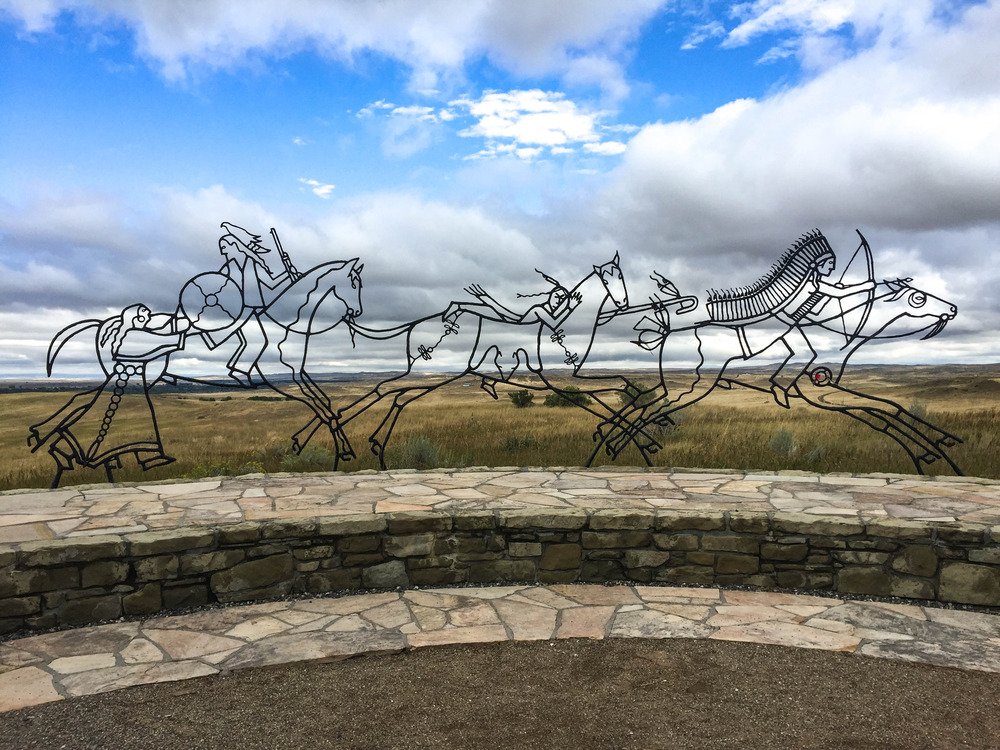
At the Little Bighorn, the question was answered in a different way. In 1991, the site was renamed from Custer Battlefield to Little Bighorn Battlefield National Monument, and in 2003 it dedicated an Indian Memorial to the warriors who died there. Custer’s name remains on the national cemetery and on the monument on Last Stand Hill. The site now tells both sides.
What Do You Think?
Custer was a brave Civil War soldier. He was also the leader of the Washita attack and of the Little Bighorn campaign. Both things are true, and historians do not agree about how to weigh them.
The question is not only about one man, but about how a country chooses to remember its past: with a statue, a museum, a sign, or all three.
After reading about the debate, find out 10 things you didn’t know about George Armstrong Custer. Then read the 10 mistakes that led to Custer’s Last Stand.
Related Stories
- Who Really Killed Custer? His Two Wounds And The Conflicting Accounts
- 10 Things You Didn’t Know About George Armstrong Custer
- The Custer Family Who Died Together At The Little Bighorn
- 8 Native Chiefs Who Fought At The Little Bighorn
- How Bad Was The Fetterman Fight? The Day 81 U.S. Soldiers Rode Into A Trap