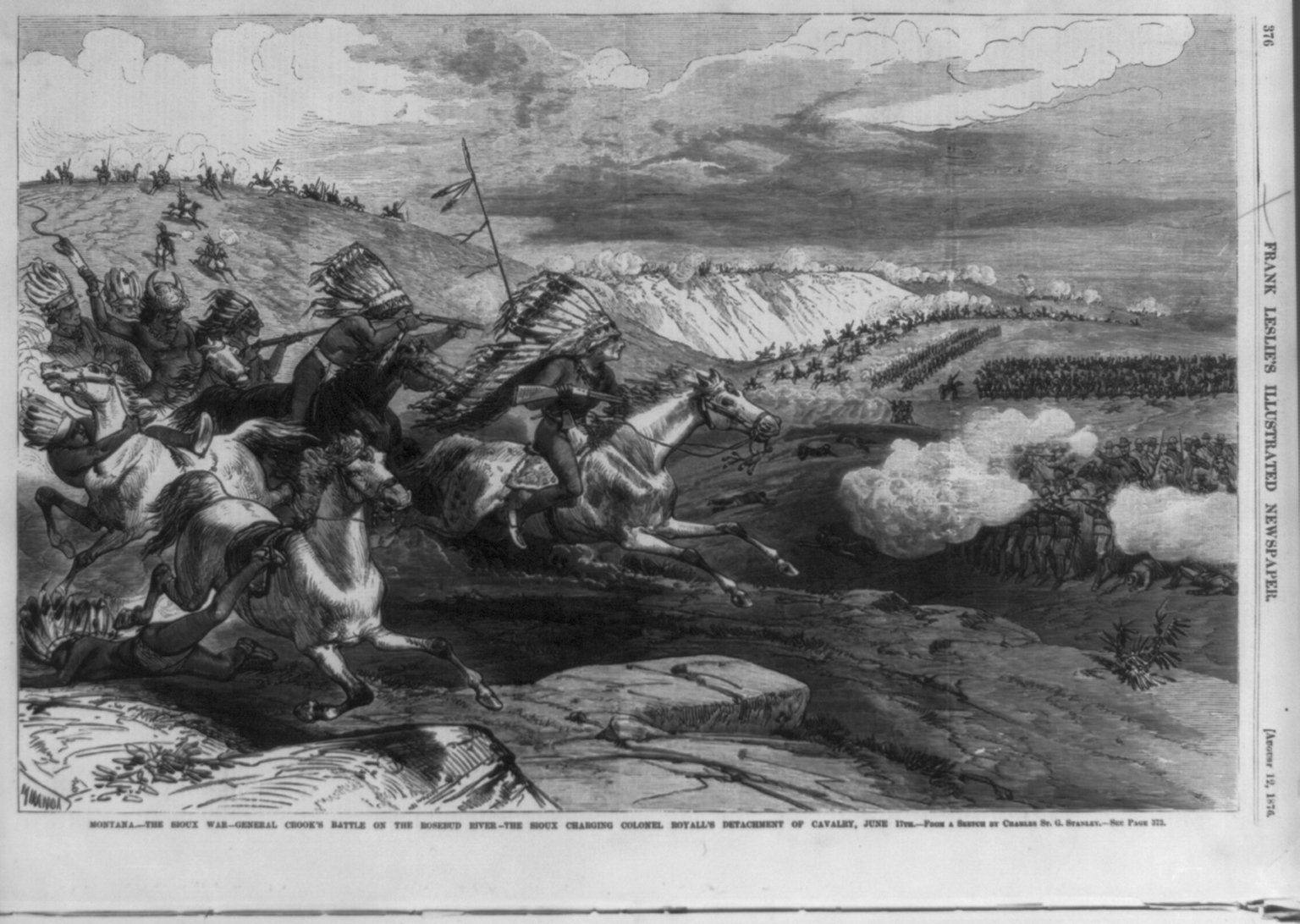
The Northern Cheyenne have a name for the fight that took place along Rosebud Creek in Montana on June 17, 1876. They don’t call it the Battle of the Rosebud. They call it “The Battle Where the Girl Saved Her Brother.”
The girl was Buffalo Calf Road Woman, a Northern Cheyenne wife and mother who rode into gunfire to rescue her brother. Eight days later, she fought again at the Little Bighorn. And for more than a century, her people kept a secret about what she did there.
Who Was Buffalo Calf Road Woman?
Buffalo Calf Road Woman, also remembered as Buffalo Calf Trail Woman and Brave Woman, was born on the Plains around the 1840s and grew up among the Northern Cheyenne. She was the sister of a Cheyenne chief named Comes in Sight, and the wife of a warrior named Black Coyote. Together they raised children while their people faced the growing pressure of the U.S. Army and settlers moving onto Cheyenne and Lakota lands.
She is remembered as a superb horsewoman and a fearless fighter. When the soldiers came in the summer of 1876, she rode out alongside the men.
The Battle Where The Girl Saved Her Brother
In June 1876, General George Crook led a large army column north into Montana Territory. His goal was to force the Lakota and Northern Cheyenne bands onto reservations. On the morning of June 17, Lakota and Cheyenne warriors, with Crazy Horse among them, met Crook’s troops along Rosebud Creek.
In the middle of the fighting, Comes in Sight’s horse was shot, and he was left on foot with soldiers closing in. Buffalo Calf Road Woman rode straight toward him through the gunfire. She turned her horse, her brother jumped on behind her, and the two galloped away to safety.
According to accounts of the battle, her rescue lifted the spirits of the warriors around her. By the end of the day, Crook’s army had been forced to pull back and resupply.
That retreat mattered. Eight days later and about 40 miles away, Lieutenant Colonel George Armstrong Custer and the 7th Cavalry attacked the great village on the Little Bighorn River without Crook’s soldiers anywhere nearby.
Today, the battlefield is protected as Rosebud Battlefield State Park in Big Horn County, Montana. Its National Historic Landmark listing carries the Cheyenne name: Where The Girl Saved Her Brother.
At The Little Bighorn
On June 25, 1876, Custer’s troops attacked the large village of Lakota, Northern Cheyenne and Arapaho families camped along the Little Bighorn River, which the Lakota call the Greasy Grass. Within hours, Custer and every soldier in the five companies with him had been killed.
Buffalo Calf Road Woman was there, fighting near her husband, Black Coyote. For generations, though, the Northern Cheyenne did not share their full account of how Custer died.
Also read: Curly, The Crow Scout, And His Disturbing Account Of Custer’s Last Stand
The Secret Kept For 100 Summers
In June 2005, at a gathering in Montana, Northern Cheyenne storytellers shared their tribe’s oral history of the battle publicly. According to their account, it was Buffalo Calf Road Woman who struck the blow that knocked Custer from his horse before he died.
Cheyenne elder Frank Rowland explained why the story had stayed private for so long. He told reporter Martin J. Kidston of the Helena Independent Record:
“The chiefs said to keep a vow of silence for 100 summers. One-hundred summers have now passed and we’re breaking our silence.”
According to the Cheyenne, the silence was kept out of fear of retribution from the U.S. government. As the story has been retold since, she struck Custer with a club rather than a gun. Wallace Bearchum, then director of tribal services for the Northern Cheyenne, described her as a warrior who fought out in the open and stayed on her horse the entire time.
Not every historian accepts every detail of the account. No one alive today saw the battle, and Custer’s final moments have been argued over since 1876. But the Cheyenne account comes from the people who were there, passed down by the families who lived through it.
The Women Who Remembered Custer’s Promise
Cheyenne women appear in another well-known account of Custer’s death. In 1927, a Cheyenne woman named Kate Bighead, who witnessed the battle, told her story to Thomas B. Marquis, who published it as She Watched Custer’s Last Battle.
Kate Bighead recalled that in 1869, Custer had smoked a sacred pipe with Cheyenne chiefs, including Medicine Arrow and Little Robe, and promised never again to make war on the Cheyenne. The chiefs warned him that if he broke that promise, he would be killed.
Seven years later, he led soldiers against a Cheyenne camp once more. According to Kate Bighead, after the battle two Cheyenne women pierced Custer’s ears with a sewing awl so that he would hear better in the spirit world, because he had not listened to the chiefs’ warning in this one.
The Long Walk Home
After the Little Bighorn, the Army pursued the Northern Cheyenne relentlessly. By 1877 many had been forced south to a reservation in Indian Territory, in present-day Oklahoma, far from their homeland. Hunger and disease followed.
In September 1878, around 300 Northern Cheyenne, led by chiefs Dull Knife and Little Wolf, broke away and began the long journey back north toward Montana. Buffalo Calf Road Woman and her family were among them. The story of that journey was later told in Mari Sandoz’s book Cheyenne Autumn.
The journey brought tragedy to her family. During it, Black Coyote killed a fellow Cheyenne, and the family was sent away from Little Wolf’s band. In April 1879, after Black Coyote was involved in a deadly clash with U.S. soldiers along Mizpah Creek in Montana, the family was captured and held at Fort Keogh, near present-day Miles City.
Also read: Charles Windolph’s Shocking Account Of Custer’s Last Stand
How Buffalo Calf Road Woman Died
In May 1879, Buffalo Calf Road Woman died of diphtheria, which has been described as the “white man’s coughing disease.”
Black Coyote was awaiting execution when she died. Most accounts say that after learning of her death, he took his own life in custody, though reports differ on how he died.
She is believed to have been buried in the hills near Miles City. The exact location of her grave is not known.
Who Has Told Her Story
For more than a century, Buffalo Calf Road Woman’s story lived mainly in Cheyenne memory. These are the people and works that have carried it:
- Northern Cheyenne storytellers and elders, who kept the account of Custer’s death private for 100 years and shared it in 2005, including Frank Rowland.
- Martin J. Kidston of the Helena Independent Record, who reported the Cheyenne account in June 2005.
- Kate Bighead and Thomas B. Marquis, whose 1927 book She Watched Custer’s Last Battle preserved a Cheyenne woman’s eyewitness memories of the battle.
- John Stands In Timber and Thomas B. Marquis, who recorded and published many Northern Cheyenne accounts of the 1876 battles, helping to preserve the memory of the Rosebud fight.
- Rosemary and Joseph Agonito, whose 2006 biography Buffalo Calf Road Woman: The Story of a Warrior of the Little Bighorn is the most complete book about her life.
- Beth Judy, who told her story in Bold Women in Montana History and in Montana Public Radio’s “Bold Women of Montana” series (2023).
- Montana Fish, Wildlife & Parks, which cares for Rosebud Battlefield State Park and honors the Cheyenne name for the battle.
A Warrior Remembered
History books long told the Little Bighorn as “Custer’s Last Stand,” with Custer at the center. The Cheyenne have always told it differently. In their telling, one of the bravest warriors on those hills was a mother who had already risked her life for her brother, and who rode out again a week later to defend her people.
Today, more than 150 years after the Rosebud, the Cheyenne still remember her name, and the battlefield in Montana still carries the story of the girl who saved her brother.
A note on the image: no confirmed photograph of Buffalo Calf Road Woman is known to exist. The illustration above is an 1876 newspaper engraving of the Battle of the Rosebud.
Related Stories
- Private Peter Thompson’s Strange Account Of Custer’s Last Moments
- Rain-in-the-Face: The Lakota Warrior A Famous Poem Accused Of Killing Custer
- Red Horse’s Disturbing Account Of Custer’s Last Stand
- 10 Powerful Quotes From Native American Leaders, And What Was Happening When They Said Them
- 7 Battles Where Native Nations Defeated The British Empire