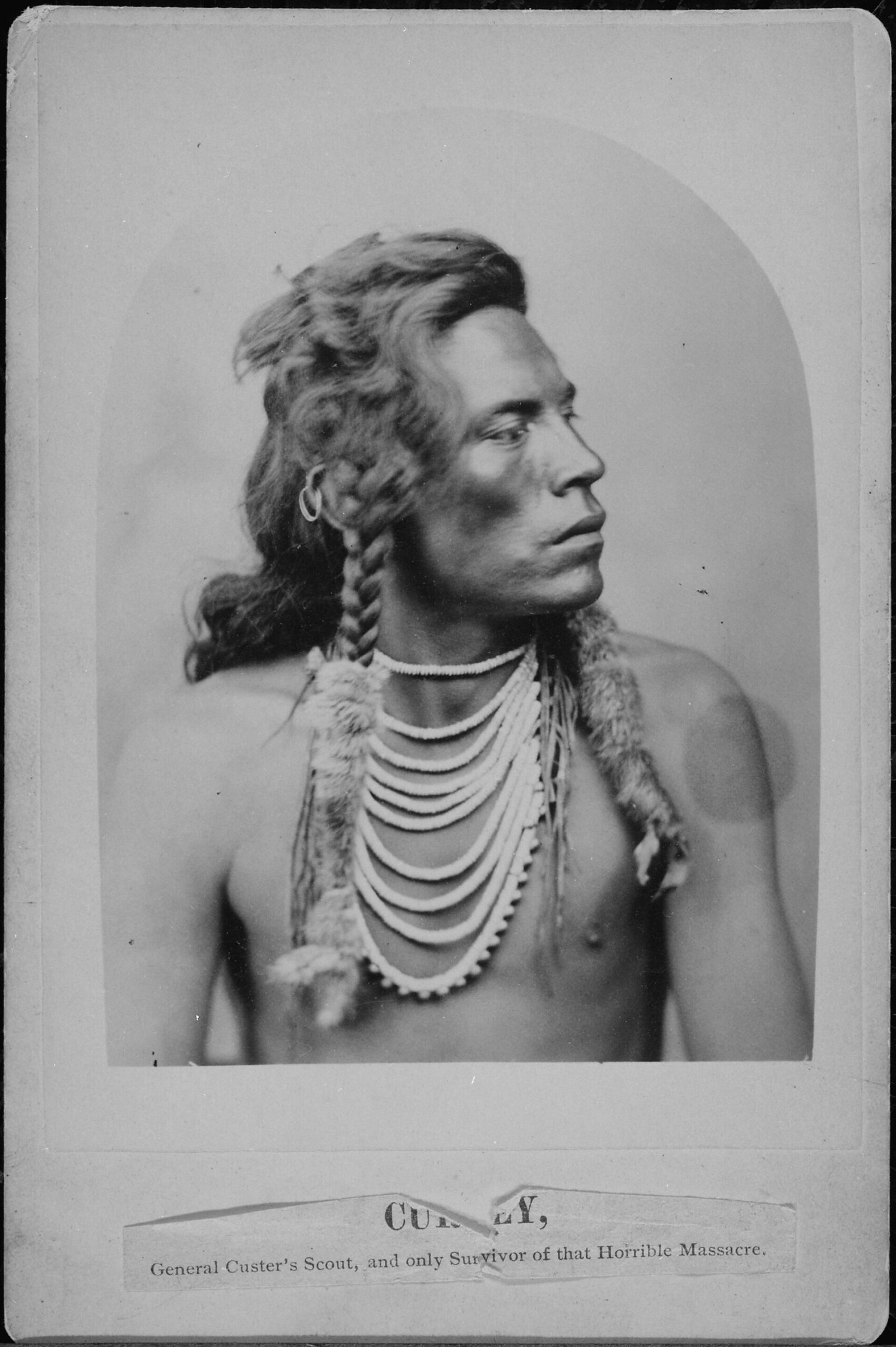
Two days after Custer’s Last Stand, a young Crow man rode up to a steamboat on the Bighorn River. He could not speak English, and no one on the boat could speak Crow. But he knew something no one else on that boat knew yet.
Custer and every soldier with him were dead.
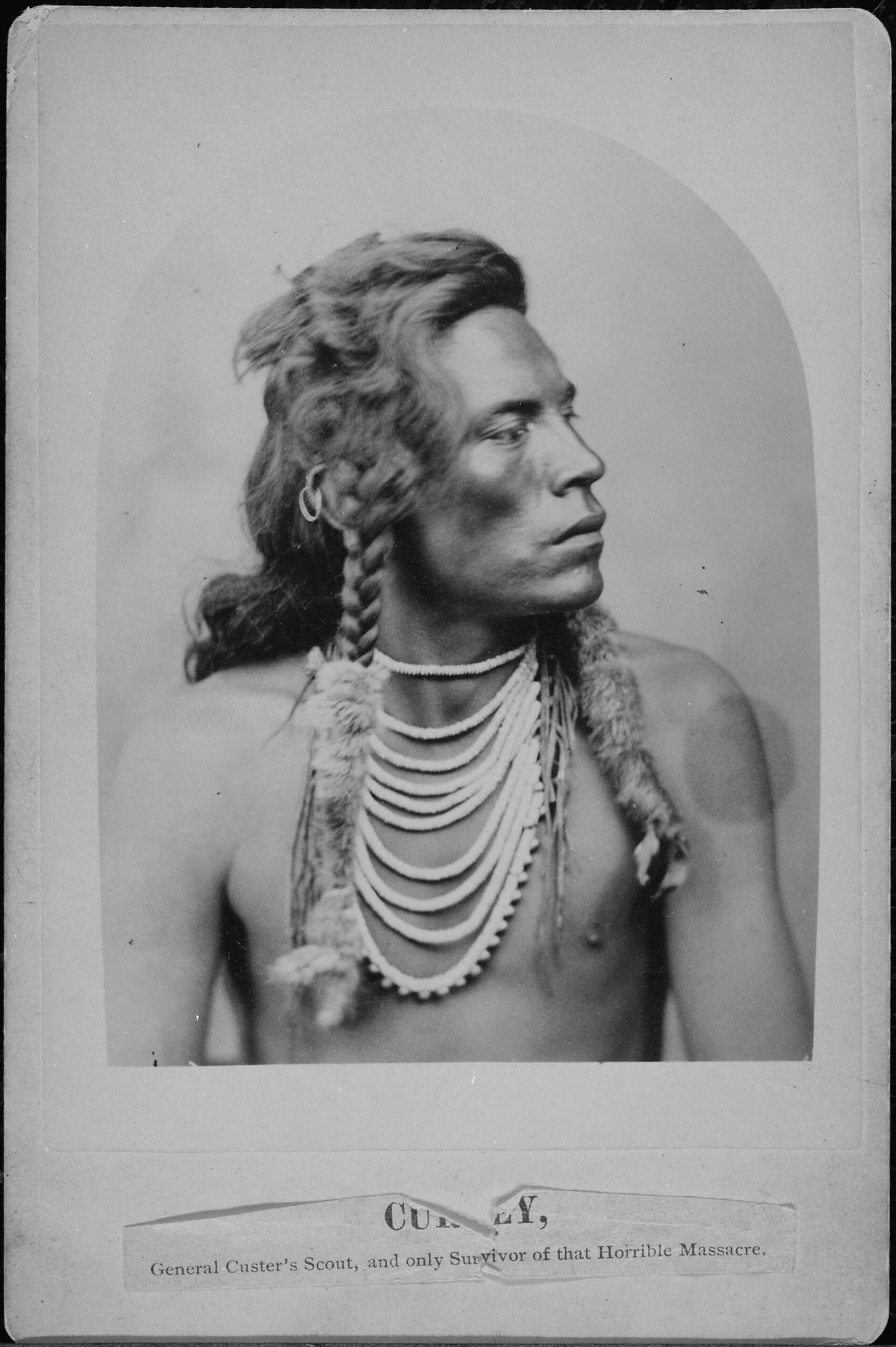
His name was Curly. For the rest of his life, he would be called “the last man to see Custer alive,” and even “the only survivor” of Custer’s Last Stand. But the stories he told changed over the years, and historians still argue about what he really saw.
A Young Crow Scout
Curly, whose Crow name was Ashishishe, was born in the 1850s in what is now Montana. The Crow were longtime enemies of the Lakota and Cheyenne, who had pushed into their hunting grounds. Many Crow men chose to scout for the U.S. Army against their old enemies.
Curly enlisted as a scout on April 10, 1876. That June, he was one of six Crow scouts loaned to Custer’s 7th Cavalry, under the guidance of the interpreter Mitch Bouyer, for the campaign that ended at the Little Bighorn. He was only about 20 years old.
What Happened On June 25
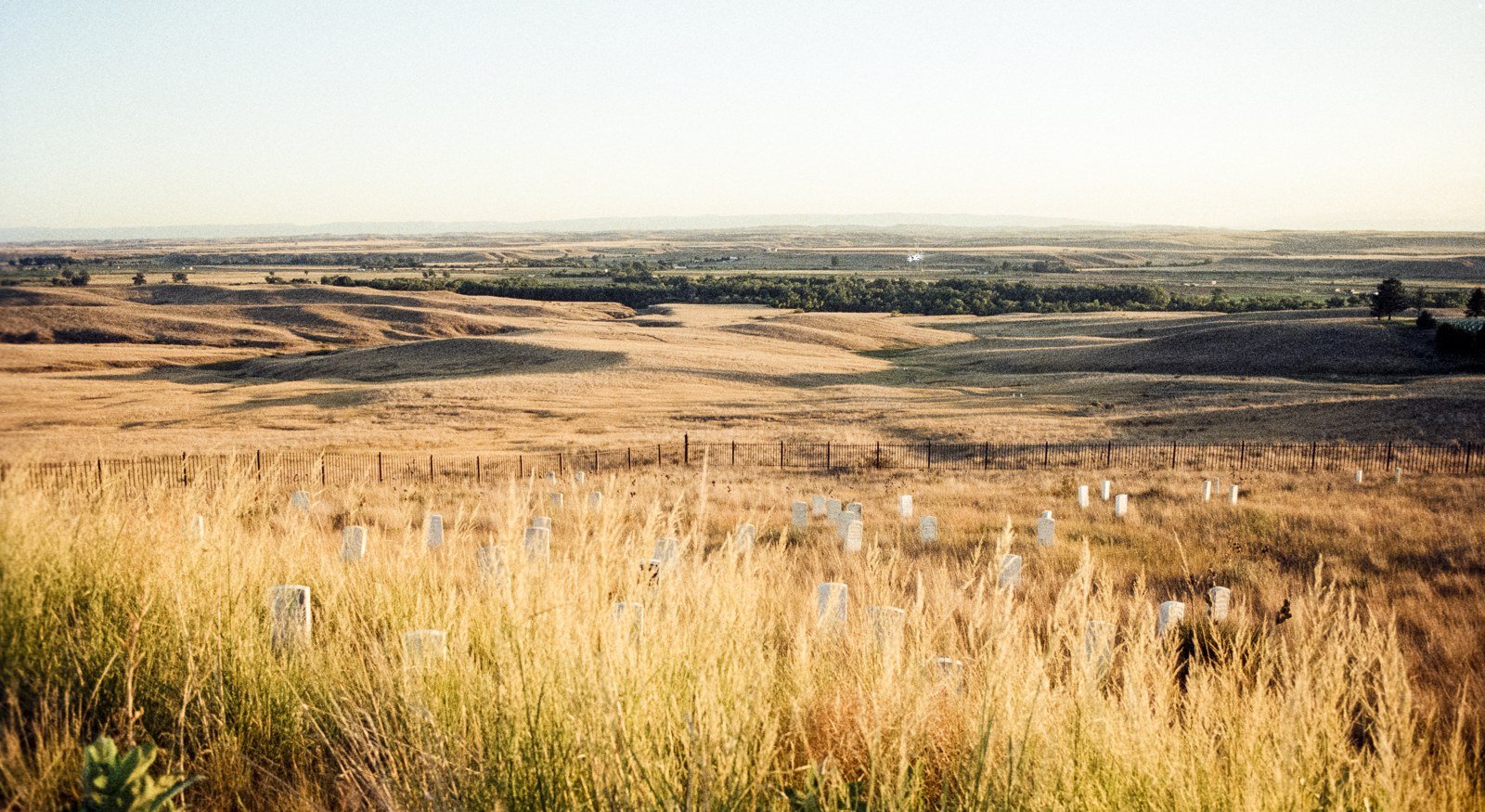
On June 25, 1876, Curly rode with Custer’s battalion as it moved north along the bluffs above the great Lakota and Cheyenne camp. According to the Crow scouts’ own accounts, they were sent away before the heaviest fighting began. Scouts were hired to find the enemy, not to die fighting beside the soldiers.
Curly separated from the others. In his earliest accounts, he said he rode off to a distance and watched the battle for a short time before leaving. Mitch Bouyer, the interpreter who had guided the Crow scouts, stayed with Custer. He was killed with the soldiers.
The Message On The Steamboat
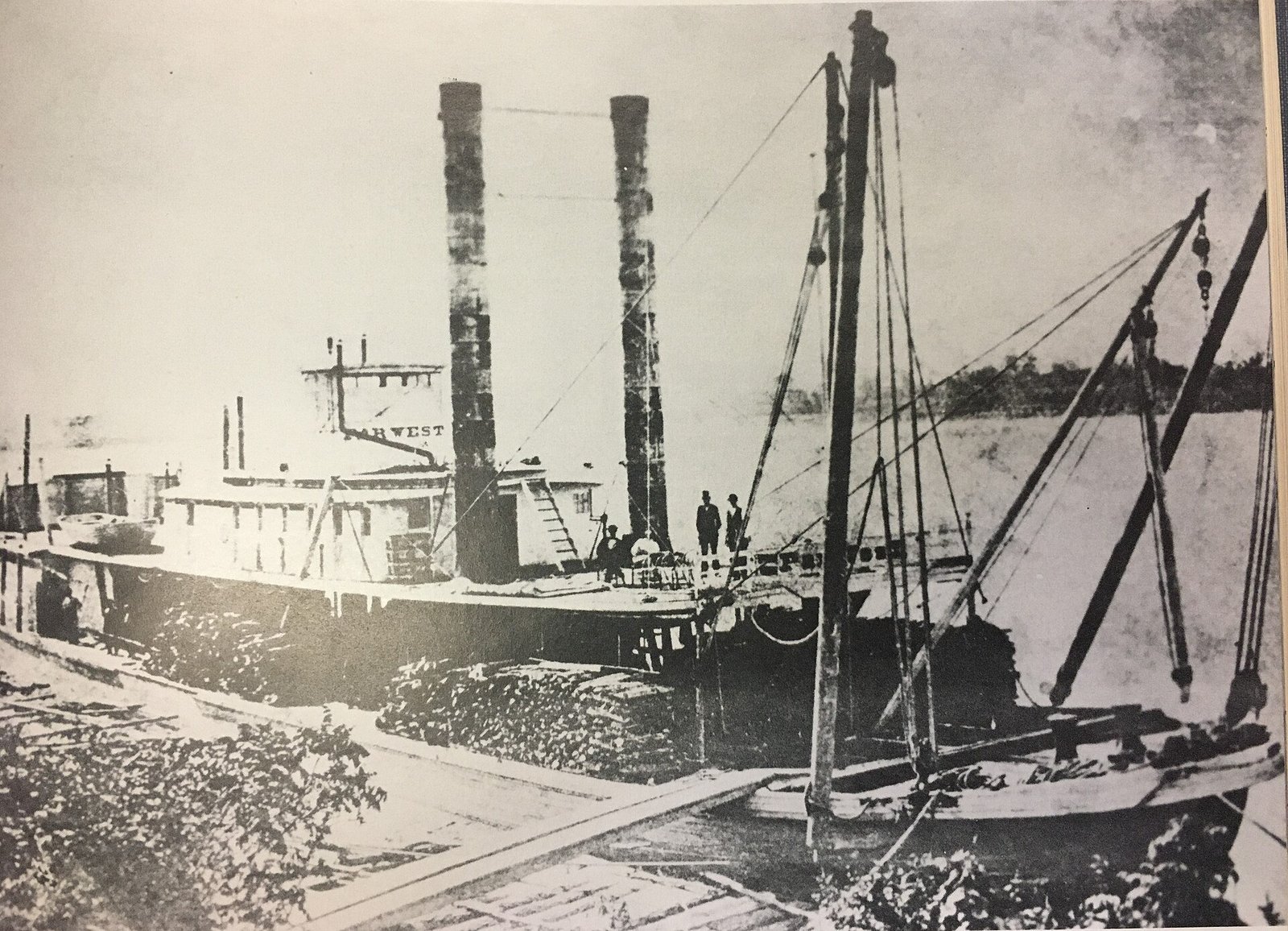
On June 27 or 28, sources differ, Curly reached the steamboat Far West, tied up at the mouth of the Little Bighorn. Captain Grant Marsh and his crew had no idea a battle had been fought.
Curly had to tell them with signs and pictures. According to the crew’s accounts, he took a pencil and drew circles on a wooden box. The inner circle was the soldiers. The outer circle was the warriors, closing in around them. Then he made signs to show the soldiers falling.
At first, the men did not fully understand. Soon, the full horror became clear. When reporters later told the story, it was said that Curly had wept as he told it. The Far West would carry Reno’s wounded soldiers down the river and, eventually, the news to the rest of the country.
“I Was Not In The Fight”
Days after the battle, Lieutenant James Bradley of Colonel John Gibbon’s column interviewed Curly. Thomas Leforge, a white man who lived among the Crow, interpreted. According to Leforge, Curly said again and again: “I was not in the fight.”
But newspapers wanted a survivor. Within weeks, Curly was being described as a scout who had witnessed the battle up close. A newspaper account published in 1876 said Custer “remained alive through the greater part of the engagement,” supposedly based on Curly’s story. The Bismarck Tribune reported that his story had “proved too true in all its details.”
The Story That Grew
As “Custer’s Last Stand” became a national legend, so did Curly. Writers and showmen claimed he had fought beside Custer to the end, then escaped by wrapping himself in a Lakota blanket and slipping through the warriors. Some versions even said he had begged Custer to escape with him, and Custer had refused.
Over time, hounded by reporters and historians, Curly seems to have stopped denying the legend, and some of his later accounts became more dramatic.
But he did reject the most famous version. In 1909, after a film showed him urging Custer to flee, he told the historian Walter Mason Camp: “The story about my going to Custer on the battlefield and trying to persuade him to escape after the men were nearly all killed is untrue.” He added, “I never told it.”
“A Liar” Or A Witness?
Curly paid a price for his fame. Some Lakota veterans of the battle called him a liar, saying no one who rode with Custer to the end had escaped. Some soldiers and writers mocked him for leaving.
Most historians today believe Curly left before the end and could not have seen Custer die. But they also believe he was probably the last member of Custer’s column to see the battalion alive, and he was certainly the first person to carry the news to the outside world.
Buried Beside The Battlefield
Curly lived the rest of his life on the Crow Reservation, on a ranch in the Little Bighorn valley, just a short ride from the battlefield. He died of pneumonia in May 1923.
He was buried in the national cemetery at the Little Bighorn Battlefield, about a mile from his home, among the soldiers of the regiment he once scouted for. For almost 50 years he had lived with the question everyone asked him, and he took the full truth of what he saw on June 25, 1876, with him.
After reading about Curly, find out who really killed Custer. Then, read about what happened to Custer’s body after the battle.