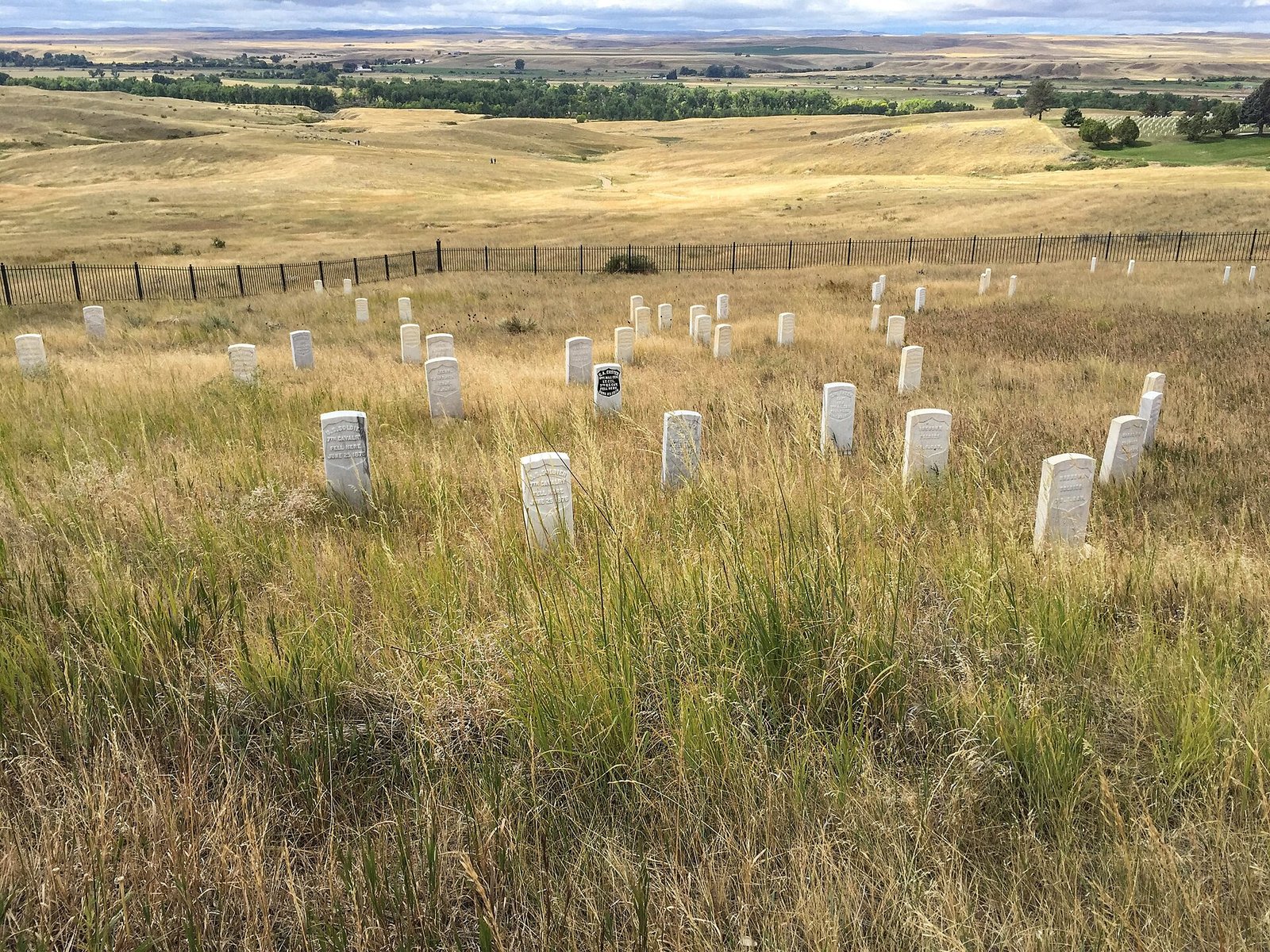
One hundred and fifty years after the Battle of the Little Bighorn, the field holds a mystery that no one has solved.
About 210 men died with Custer on June 25, 1876. Most were buried where they fell. But a few were never identified. And two dozen or more may still lie in a ravine that archaeologists have searched for and failed to find.
The Burial
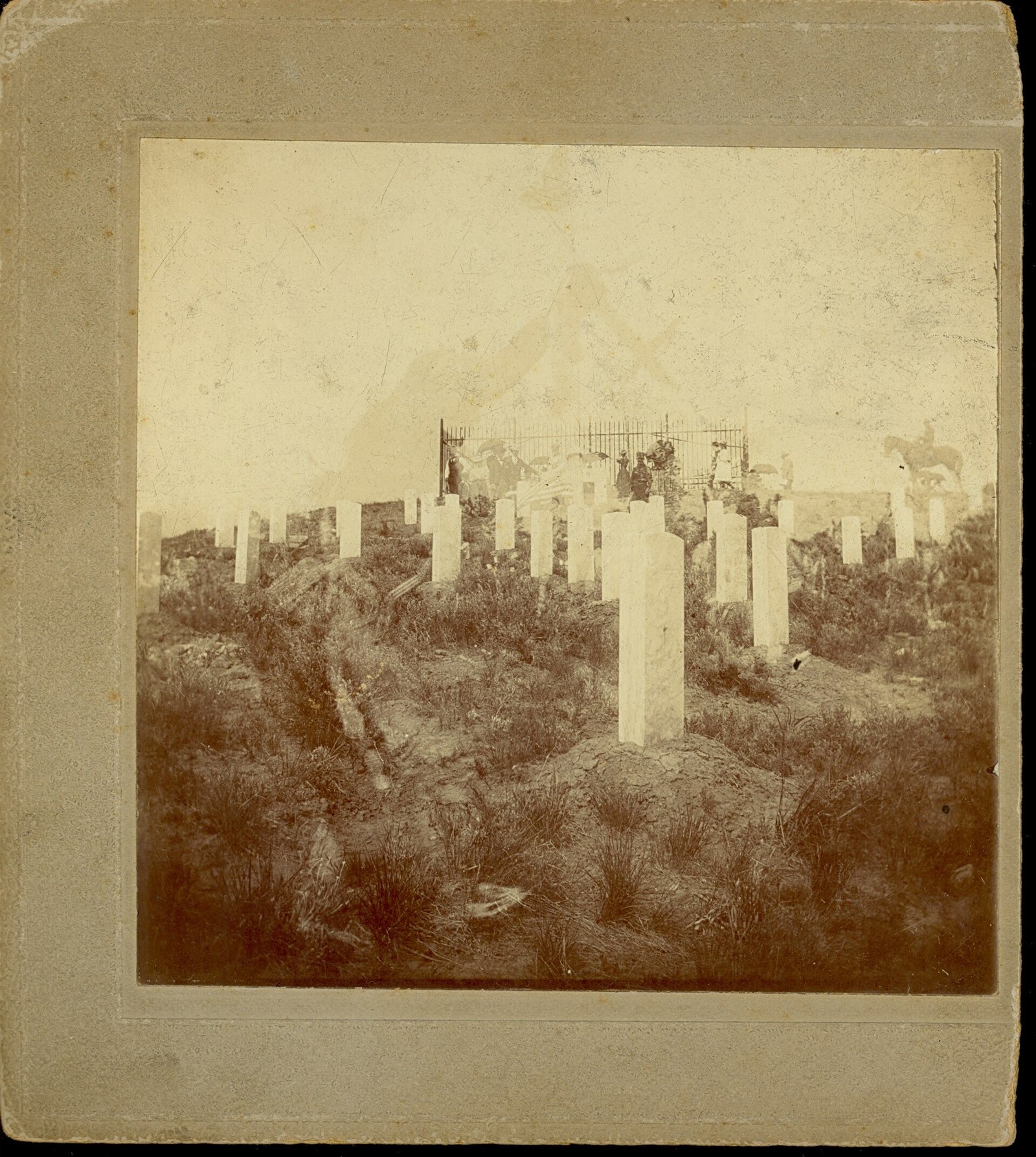
On June 27, 1876, soldiers reached the battlefield. They found Custer’s men dead on the ridges above the river. The bodies had lain in the summer heat for two days. The soldiers had little time and few tools, so they dug shallow graves and covered the dead where they lay.
One officer’s report said they buried 204 bodies on the 28th. Estimates of the number killed with Custer are about 210. The difference shows how much was uncertain from the start.
Most of the dead had been stripped of their clothing and were hard to recognize. Even so, the soldiers managed to identify most of the officers. Three were never identified.
Three Officers Who Were Never Identified
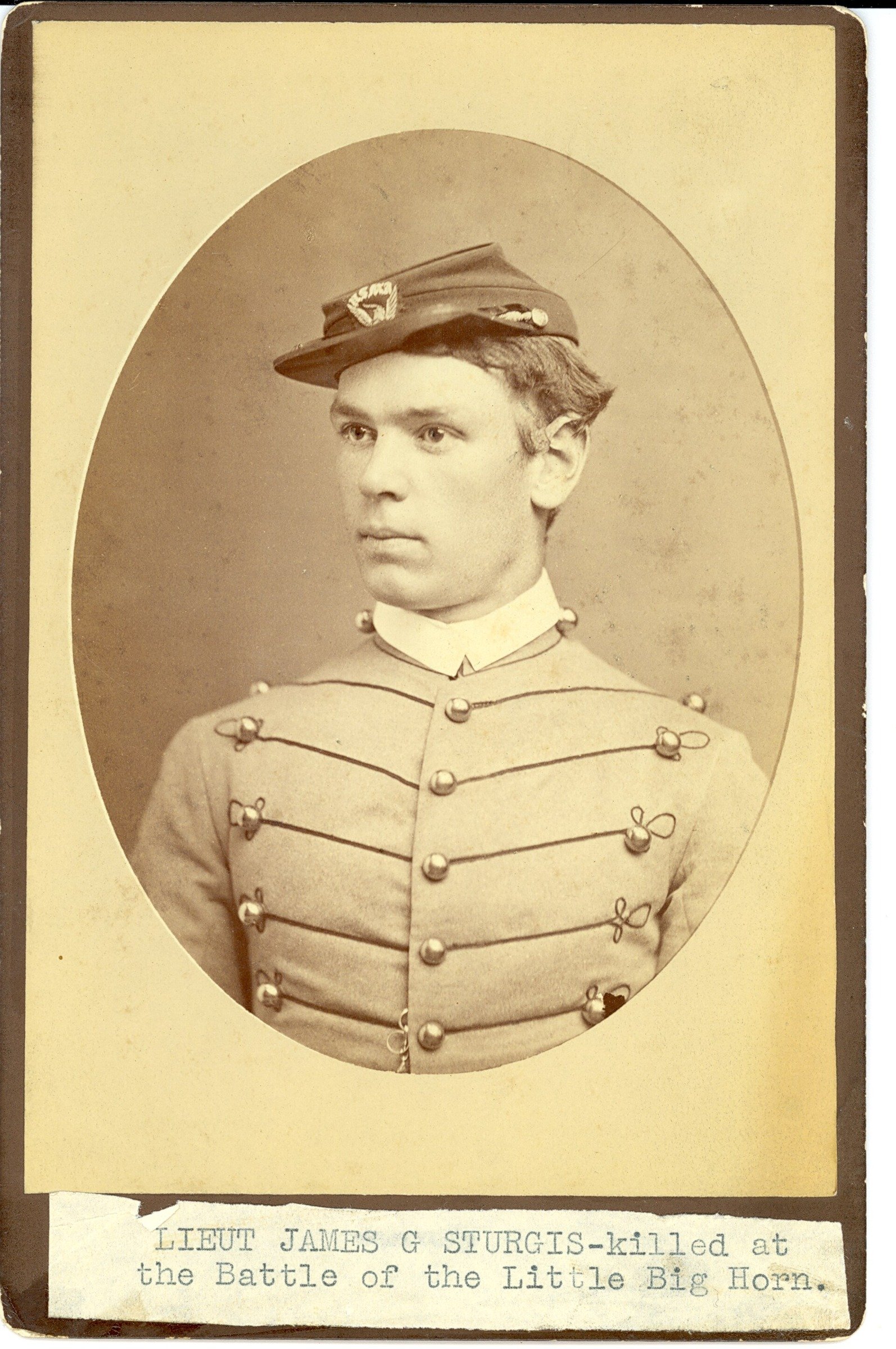
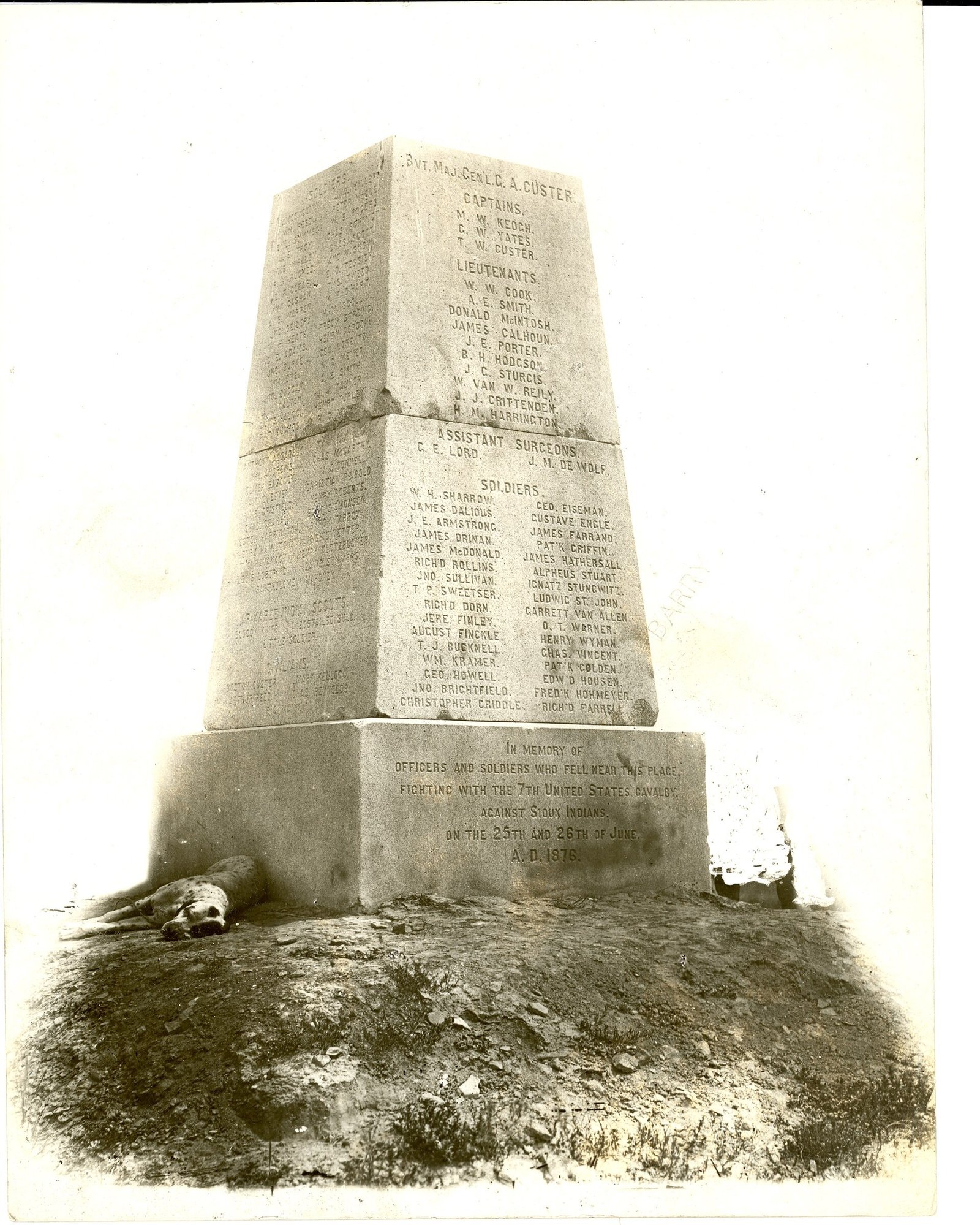
Three officers from Custer’s battalion, Lieutenants Henry Harrington, James Sturgis and James Porter, were never identified among the dead. Later, headstones were placed for them, but the places where they actually lie remain unknown.
James Sturgis was a young second lieutenant, the son of the regiment’s colonel, Samuel Sturgis, who was away from the regiment that summer. After the battle, soldiers found articles of Sturgis’s clothing in the abandoned Lakota village. His body was never identified.
James Porter was a first lieutenant in Company I. Soldiers searching the abandoned village found his buckskin jacket, with a bloody hole over the heart. That was enough for the Army to be sure he was dead. But his body was never found.
The Search For Lieutenant Harrington
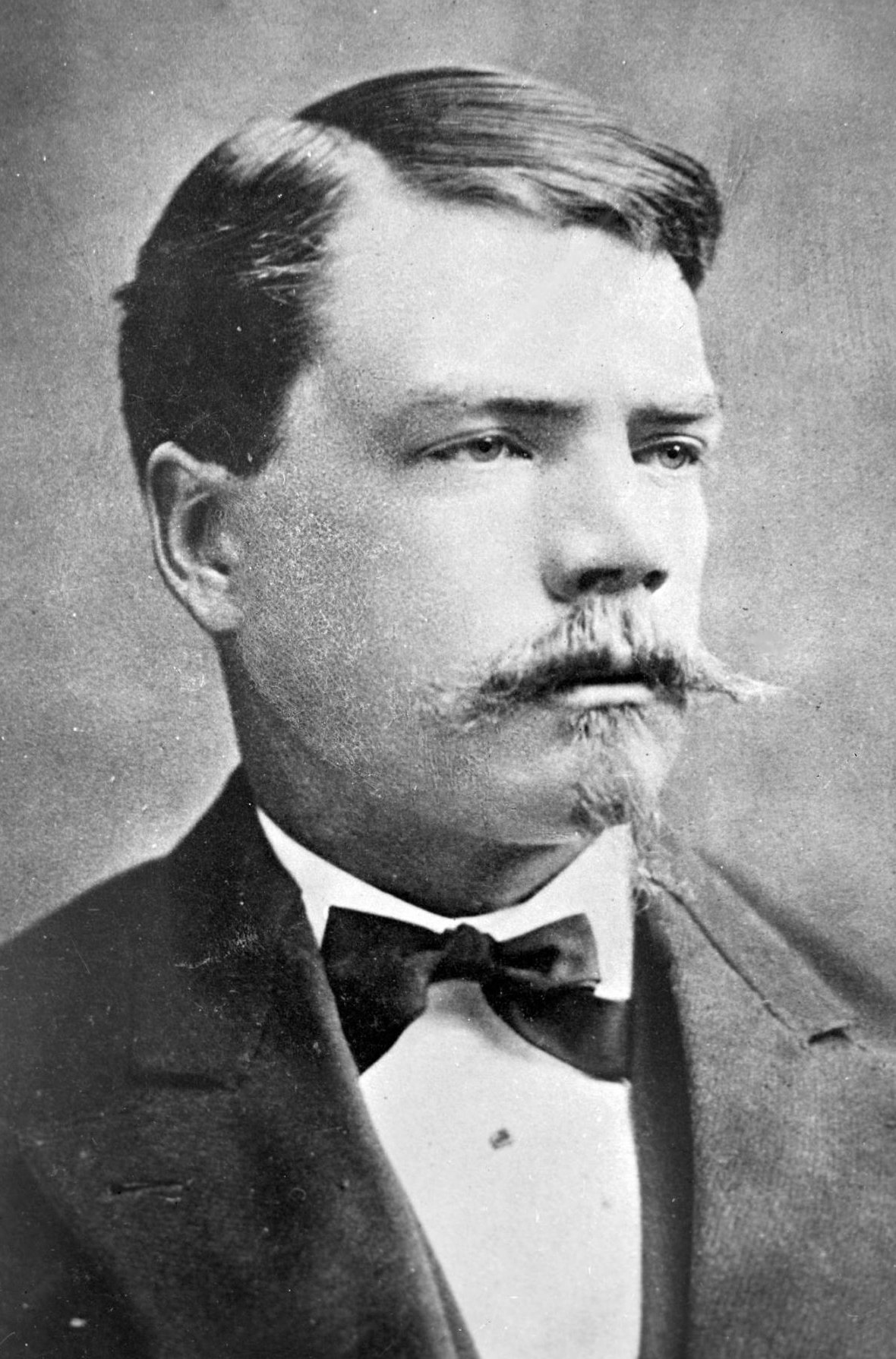
The most haunting case is that of Henry Moore Harrington. Born in 1849 in Albion, New York, he graduated from West Point in 1872 and was commissioned in the 7th Cavalry. At the Little Bighorn, he was twenty-seven years old and was put in command of Company C, because the regiment was short of officers.
His body was never identified on the battlefield. He was declared missing and presumed dead.
His wife, Grace, refused to give up. She made several trips to the battlefield, hoping to find his remains or to learn whether he had somehow survived. She never found him.
The story has one strange footnote. In 1877, an Army surgeon found a damaged skull and some bones well to the east of the battlefield. Both were later sent to the Smithsonian. A century later, a forensic artist, Sharon Long, made a facial reconstruction of the skull, and it resembled Harrington. An arrowhead was found with the remains. But the link to Harrington was never confirmed.
Some historians think it fits the idea that Harrington may have led a small group trying to break out of the encirclement. Others think the evidence is too thin to say.
Also read: What Happened To The Native Warriors After The Little Bighorn?
Men Who Tried To Escape
Harrington is not the only man who may have tried to run. Two soldiers, Corporal John Foley and First Sergeant James Butler, were found about three-quarters of a mile from the main body of dead, apparently killed while trying to get away. Private Nathan Short was found weeks later, far to the east, near the Rosebud River.
Wooden Leg and other Native witnesses also described soldiers who broke away and rode east. If some of Custer’s men did escape the ridge, the question is how far they got, and where they were finally caught.
The Lost Men Of Deep Ravine
The biggest mystery is Deep Ravine, a steep, winding gully a short distance from Last Stand Hill.
Accounts say that between 24 and 28 men, believed to be mostly from Company E, died in or near this ravine. Historians still disagree about how they got there. Some think they were sent forward as a skirmish line from Last Stand Hill. Others think they were fleeing toward the river.
When the Army returned in later years to gather the remains, it could not find them. By 1881, the site of the shallow graves in the ravine was so overgrown that no one could say where it was.
The Search With Metal Detectors
In August 1983, a prairie fire swept across nearly 600 acres of the battlefield, burning away the thick grass. The next year, archaeologists Douglas Scott and Richard Fox led the first systematic survey of the field, using metal detectors and careful digging. They recovered more than 5,000 artifacts and mapped the movements of the fighting as never before.
When they tested markers on the field, they found human remains beneath them. But they did not find the lost men of Deep Ravine.
Later research, based on how the ground has shifted over the years, suggests a likely location. Scott and Fox have drawn different conclusions from the same data, and one travel account notes that despite years of searching, “the ground has refused to yield.” As far as is publicly known, the men have still not been found.
Why It Matters
The missing men of the Little Bighorn were not famous. They were farm boys, immigrants and young officers who were far from home. Their families waited for answers that never came.
Today, the battlefield is a national monument, and white markers stand where soldiers fell, along with red granite markers for the Lakota and Cheyenne warriors who died there. But a few of the men are still out there, somewhere beneath the grass.
After reading about Custer’s missing soldiers, find out what happened to Custer’s body. Then read the story of the Custer family who died together at the Little Bighorn.
Related Stories
- How Crazy Horse Destroyed Custer’s Command At The Little Bighorn
- Who Really Killed Custer? His Two Wounds And The Conflicting Accounts
- 10 Things You Didn’t Know About George Armstrong Custer
- 10 Broken Treaties That Shaped America
- Rain-in-the-Face: The Lakota Warrior A Famous Poem Accused Of Killing Custer