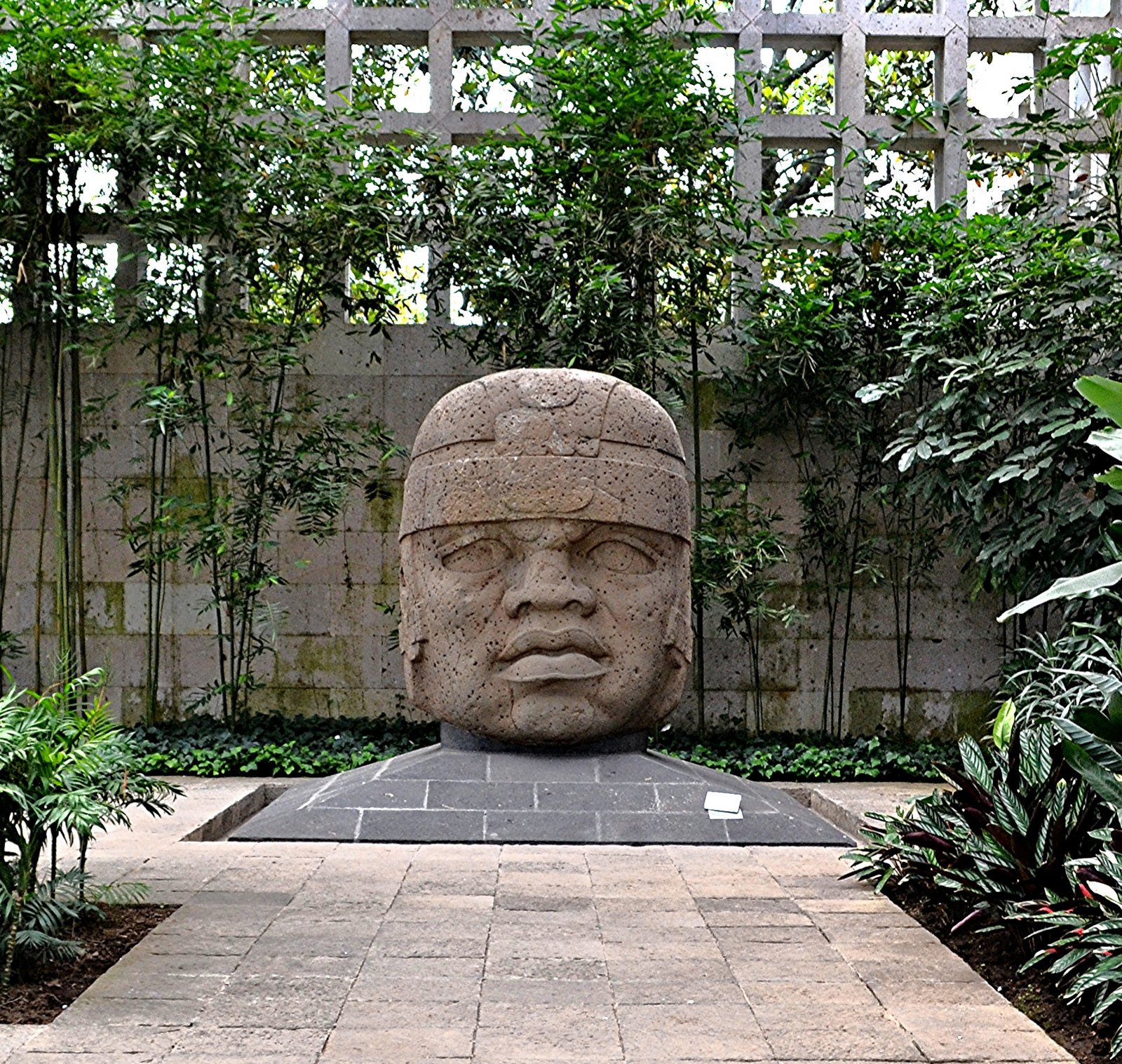
Deep in the jungles of southern Mexico, farmers and archaeologists have found some of the most striking sculptures in the Americas: giant stone heads, each carved from a single block of basalt. Some stand more than ten feet tall.
They were made by the Olmec, one of the earliest civilizations in Mexico. And for about 150 years, people have argued about the faces on those heads.
What Are The Olmec Heads?
Seventeen colossal heads are known. Ten come from San Lorenzo, four from La Venta, two from Tres Zapotes and one from La Cobata, all in the Gulf Coast region of Mexico that archaeologists call the Olmec heartland.
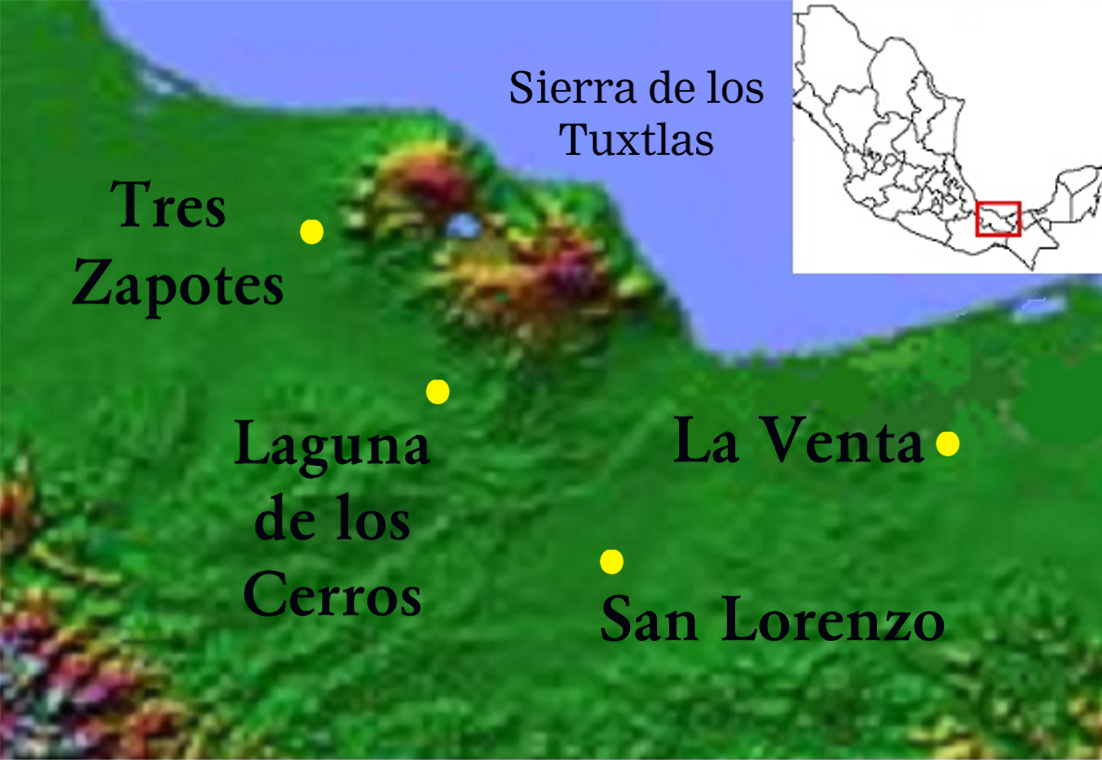
Most date to the Early Preclassic period, between about 1500 and 1000 BCE. The two Tres Zapotes heads and the La Cobata head are somewhat later. The stone is basalt, quarried in the Sierra de los Tuxtlas mountains and moved many miles to the sites, probably with rafts and large teams of workers. Estimates of their weight run from about 6 tons to about 40 tons for the largest.
The first one known to the outside world was found in the 19th century in Veracruz. The American archaeologist Matthew Stirling excavated the Tres Zapotes head in the late 1930s. His work launched the study of Olmec culture.
Whom Do They Show?
Archaeologists believe the heads are portraits of powerful Olmec rulers. Each has a different face and a different headdress, which may mark individual leaders or dynasties. They are probably carved to look like living or recently dead kings.
The Claim
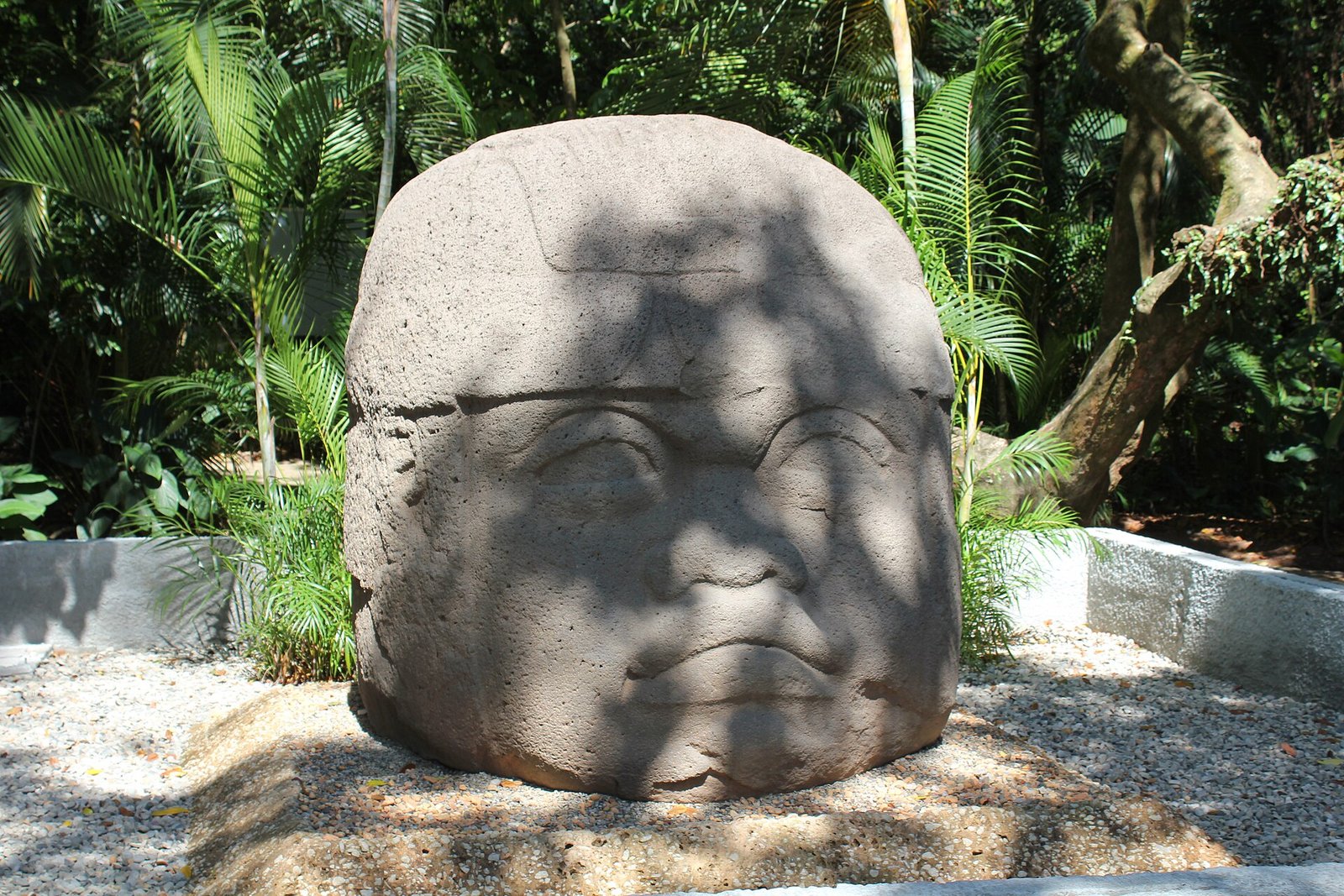
As early as the 19th century, the Mexican scholar José Melgar described the first head he saw as having “Ethiopian” features. In the 1970s, the writer Ivan Van Sertima argued in his book They Came Before Columbus that the heads showed African faces, and that Africans had reached Mexico before Columbus and helped build Olmec civilization.
The argument is based on the faces. Many people looking at the heads see broad noses and full lips, and they read those features as proof of African ancestry.
What Archaeologists Say
Mesoamerican specialists, including Richard Diehl and Ann Cyphers, who have studied the Olmec for decades, do not accept this idea. Their reasons include:
- No African objects have been found. No African artifacts have turned up at Olmec sites in controlled excavations. Pottery, tools, remains, crops and building styles all point to local Mesoamerican origins.
- The heads are art, not photographs. They are stylized sculptures made by Olmec artists, and they follow Olmec art conventions that appear throughout Olmec figures and carvings.
- Genetic studies point elsewhere. Studies of the ancestry of Indigenous Americans trace it mainly to ancient peoples from Siberia and northeast Asia who crossed into the Americas. They do not show an African origin for early Americans.
- The timing does not work for the claim. The heads were carved more than 2,400 years ago. The theory requires voyages across the Atlantic for which there is no evidence.
Why Faces Cannot Prove Ancestry
The deeper problem is the method. Skin color, nose shape and lip shape vary within every population on Earth, and they do not match ancestry in a simple way. People with broad noses and full lips live in many parts of the world, including among Indigenous peoples of the Americas. A face carved in stone, or a face in a photograph, is not DNA evidence.
That is the point of the saying that has been shared widely online: facial features cannot reliably establish ancient ancestry. The Olmec faces are consistent with Indigenous Mesoamerican people, who have always shown a wide range of appearance.
Who Were The Olmec?
Many scholars believe the Olmec spoke an early form of the Mixe-Zoquean languages, which are still spoken in southern Mexico today. If so, their living descendants are Indigenous Mesoamerican peoples.
The Olmec are admired for their achievements: the colossal heads, early cities, an elaborate religion, and symbols that influenced later Mesoamerican cultures, such as the Maya. Many historians point out that crediting those achievements to outsiders erases the work of Indigenous people.
A Note On African History
None of this takes anything away from African history, which has its own long record of great kingdoms, art and learning. Africans did arrive in the Americas in large numbers after 1500, brought against their will, and their descendants have shaped the history of Mexico and the Americas ever since. The claim here concerns something else: whether Africans built the Olmec world, and the evidence does not support that.
The heads remain what they have always been: monuments to Olmec rulers, carved by Olmec hands.
Related Stories
- 10 Things Hollywood Got Wrong About Native Americans
- 10 Powerful Quotes From Native American Leaders, And What Was Happening When They Said Them
- Lincoln, Grant, Sherman And Custer: 4 American Heroes And The Records Textbooks Skip
- You Had No Idea How Bad Custer’s Last Stand Really Got
- What Happened To Custer’s Body After The Little Bighorn?