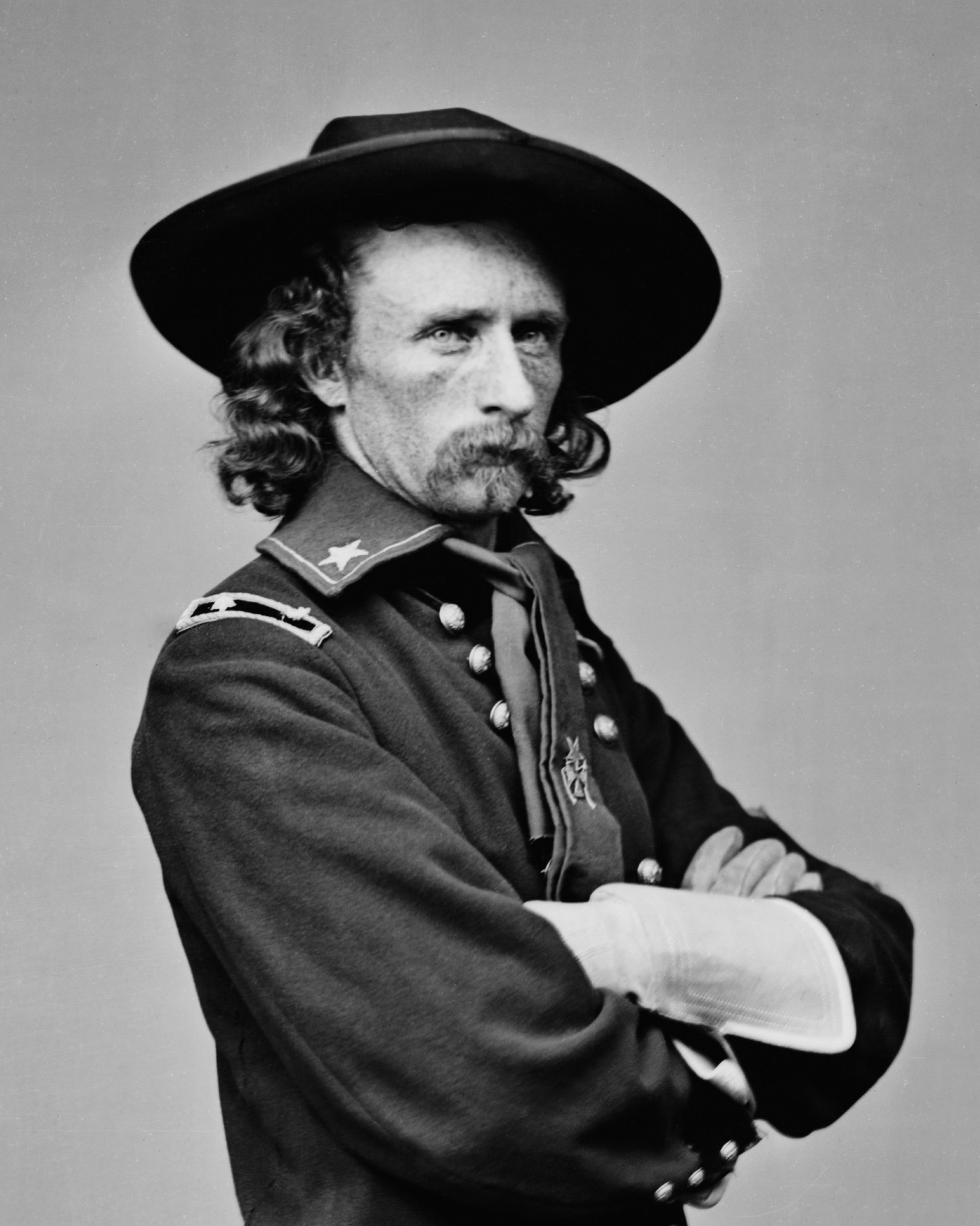
To many Americans in the 1800s, George Armstrong Custer was a hero: the dashing “Boy General” with long golden hair who rode at the front of every charge. To the Cheyenne and Lakota, he was something very different.
He was the soldier who attacked a peace chief’s village at dawn, who smoked a sacred pipe and then took hostages, and whose expedition opened the sacred Black Hills to a gold rush. This is the story of Custer’s life, and of the promises he made and broke on the Plains.
Last In His Class
George Armstrong Custer was born on December 5, 1839, in New Rumley, Ohio, the son of a farmer and blacksmith. In 1857 he entered the U.S. Military Academy at West Point.
He was not a model cadet. Over four years he collected 726 demerits, one of the worst conduct records in the academy’s history. When he graduated in June 1861, he finished 34th out of 34, dead last in his class.
It didn’t matter. The Civil War had just begun, and the Union Army needed officers.
The “Boy General”
Custer was bold, ambitious and fearless under fire, and he rose astonishingly fast. On June 29, 1863, at just 23 years old, he was made a brevet brigadier general and given command of the Michigan Cavalry Brigade.
Days later at Gettysburg, he led his Michigan cavalry against a much larger Confederate force under J.E.B. Stuart. His brigade suffered the heaviest losses of any Union cavalry brigade in the battle, but helped turn back Stuart’s attack.
By April 1865, at 25, Custer was a major general of volunteers, the youngest in the Union Army. He was there when Robert E. Lee surrendered at Appomattox. General Philip Sheridan even gave Custer’s wife the table on which the surrender terms were signed. It is now in the Smithsonian Institution.
Custer had married Elizabeth “Libbie” Bacon in 1864. She would follow him from post to post across the West, and long outlive him.
Sent West
After the war, the volunteer army was disbanded and Custer returned to a lower permanent rank. In July 1866 he was appointed lieutenant colonel of the newly formed 7th Cavalry Regiment and sent to the Plains, where the U.S. Army was trying to force Native nations onto reservations.
His first years there did not go well. In 1867 he was arrested and suspended from duty after leaving his post without permission to see his wife. He was brought back the following year for a winter campaign against the Southern Cheyenne.
Washita: The Attack On A Peace Chief
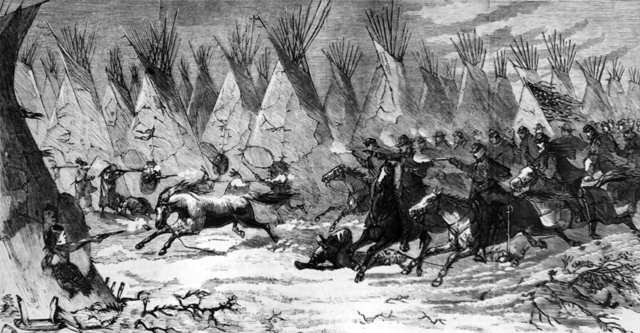
Black Kettle was a Southern Cheyenne chief known for seeking peace with the United States. In 1864, his village at Sand Creek in Colorado had been attacked by U.S. volunteer soldiers, and he had survived the massacre.
Four years later, at dawn on November 27, 1868, Custer’s 7th Cavalry attacked Black Kettle’s winter village on the Washita River in present-day Oklahoma, while the regimental band played the tune “Garryowen” to signal the charge.
Black Kettle and his wife, Medicine Woman Later, were both killed. Custer reported that 103 warriors died, but Cheyenne accounts put the number far lower, and the National Park Service describes the dead as about forty men, women and children. Around 53 women and children were taken captive. Custer’s men also shot hundreds of the village’s horses so the Cheyenne could not use them.
The Army celebrated Washita as a victory. The Cheyenne remembered it as the second time Black Kettle’s people had been attacked while seeking peace.
The Sacred Pipe On Sweetwater Creek
In March 1869, Custer’s soldiers reached a large Cheyenne village on Sweetwater Creek in the Texas Panhandle. The Cheyenne there were holding two white women captive, and Custer had come to free them.
Custer met with Stone Forehead, the Keeper of the Sacred Arrows, the most holy objects of the Cheyenne people, and smoked a sacred pipe with him. To the Cheyenne, it was a solemn promise of peace.
According to Cheyenne tradition, the ashes from the pipe were then poured onto Custer’s boots as a warning. If he ever broke that peace and made war on the Cheyenne again, he and his soldiers would be destroyed.
Custer did not leave in peace. As the National Park Service puts it, he “smoked the pipe in peace with the Sacred Arrows Covenant Keeper, then underhandedly took four Cheyenne hostage.” He used the hostages to pressure the camp, and the two captive women were released on March 19, 1869.
Gold In The Black Hills
The year before Washita, the United States had signed the Fort Laramie Treaty of 1868 with the Lakota and their allies. It set aside the Great Sioux Reservation, including the Black Hills, the sacred heart of Lakota land, for the nations’ “absolute and undisturbed use and occupation.”
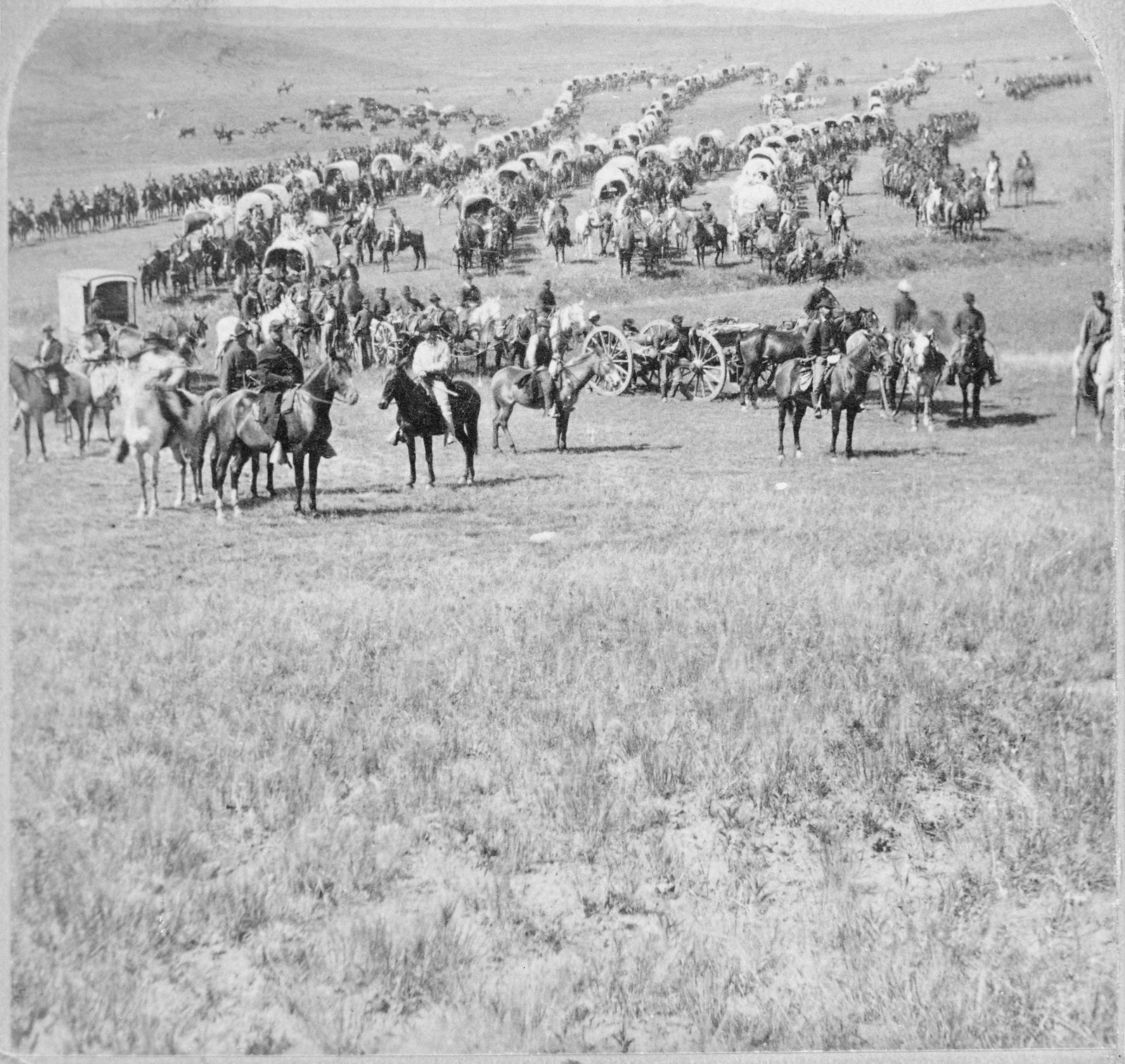
In 1874, Custer led an Army expedition into the Black Hills. His men found gold on French Creek, and Custer’s glowing reports of the region’s riches set off the Black Hills Gold Rush. Miners poured onto treaty land, and the government did little to stop them.
In 1877, after the Lakota refused to sell, Congress took the Black Hills. More than a century later, in 1980, the U.S. Supreme Court ruled that the land had been taken unlawfully and awarded compensation. The Lakota refused the money because accepting it would mean giving up their claim to the land. The fund has since grown to more than a billion dollars, and it remains untouched.
The Little Bighorn
In the summer of 1876, the Army set out to force the free Lakota and Northern Cheyenne bands onto reservations. On June 25, Custer’s scouts found a huge camp of Lakota, Northern Cheyenne and Arapaho families along the Little Bighorn River, which the Lakota call the Greasy Grass.
Rather than wait, Custer decided to attack at once. He divided his regiment into three battalions and led about 208 men himself.
The warriors who rode out to defend their families included Crazy Horse, Gall and many others. Within hours, Custer and every soldier in the five companies with him were dead. He was 36 years old.
The Cheyenne lost seven warriors that day, including the chief Lame White Man. The National Park Service notes that there was no victory celebration that night, “for too many Cheyenne families were mourning.”
The Women Who Remembered
The Cheyenne did not forget the promise made on Sweetwater Creek. In her 1927 account to historian Thomas B. Marquis, a Cheyenne woman named Kate Bighead recalled that the chiefs had warned Custer he would be killed if he broke his promise. According to her, after the battle two Cheyenne women pierced his ears with a sewing awl so that he would hear better in the spirit world, because he had not listened in this one.
And in 2005, Northern Cheyenne storytellers shared, for the first time publicly, their account that a Cheyenne woman named Buffalo Calf Road Woman struck the blow that knocked Custer from his horse.
The Making Of A Legend
Custer was buried on the battlefield and later reburied at West Point. His widow, Libbie, lived another 57 years, until 1933, and spent much of that time defending his memory in books and lectures. Thanks largely to her, “Custer’s Last Stand” became one of the most famous scenes in American history, painted and filmed again and again with Custer as the tragic hero.
The nations who fought him have always told the story differently. To them, the Little Bighorn was the day they defended their families, and the last great victory before their freedom on the Plains came to an end.
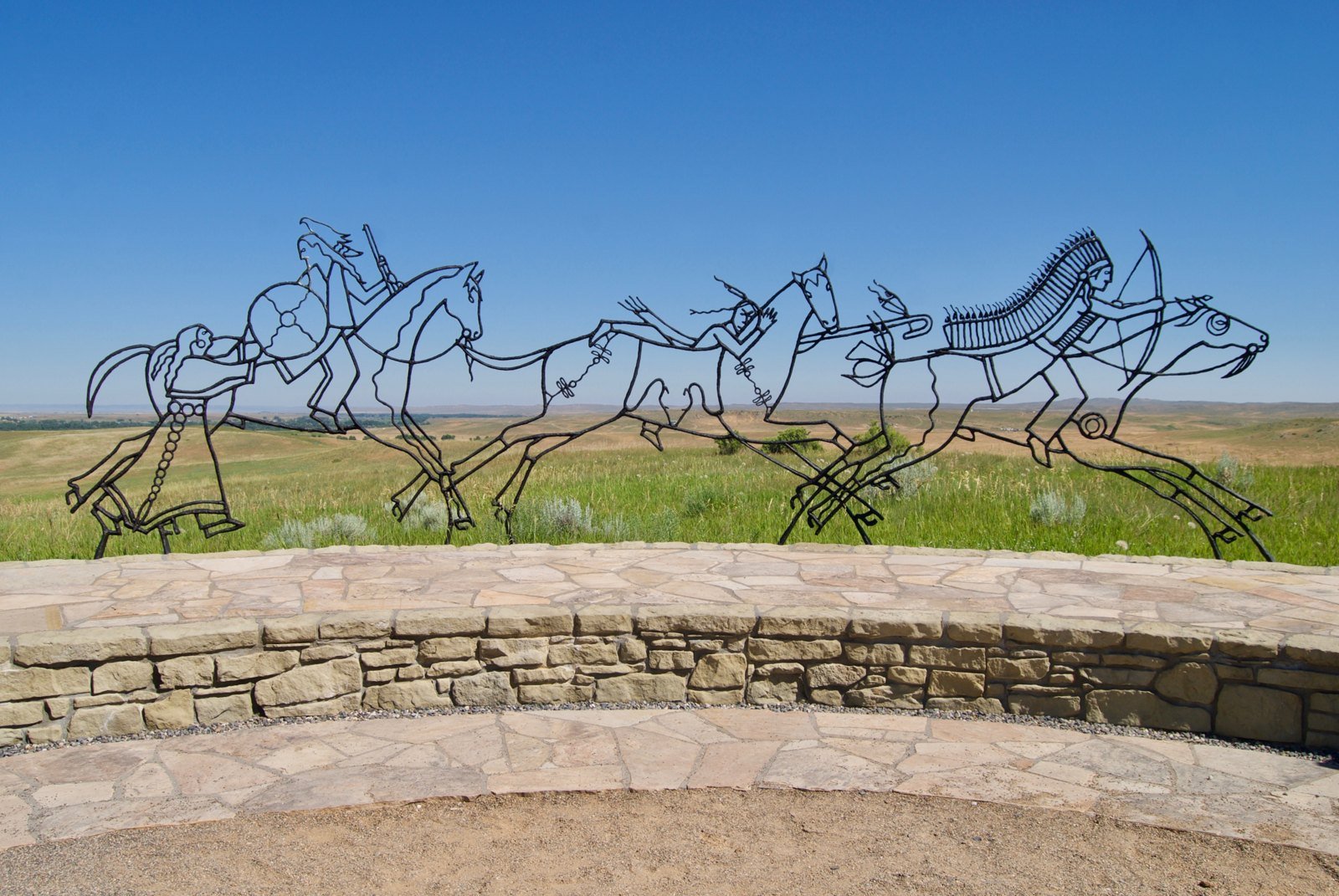
Today, the battlefield is the Little Bighorn Battlefield National Monument. Since 2003, it has included an Indian Memorial honoring the Lakota, Cheyenne and Arapaho who fought there.
After reading about Custer, meet the 4 Native American women who fought him at the Little Bighorn. Then, find out just how bad Custer’s Last Stand really got.