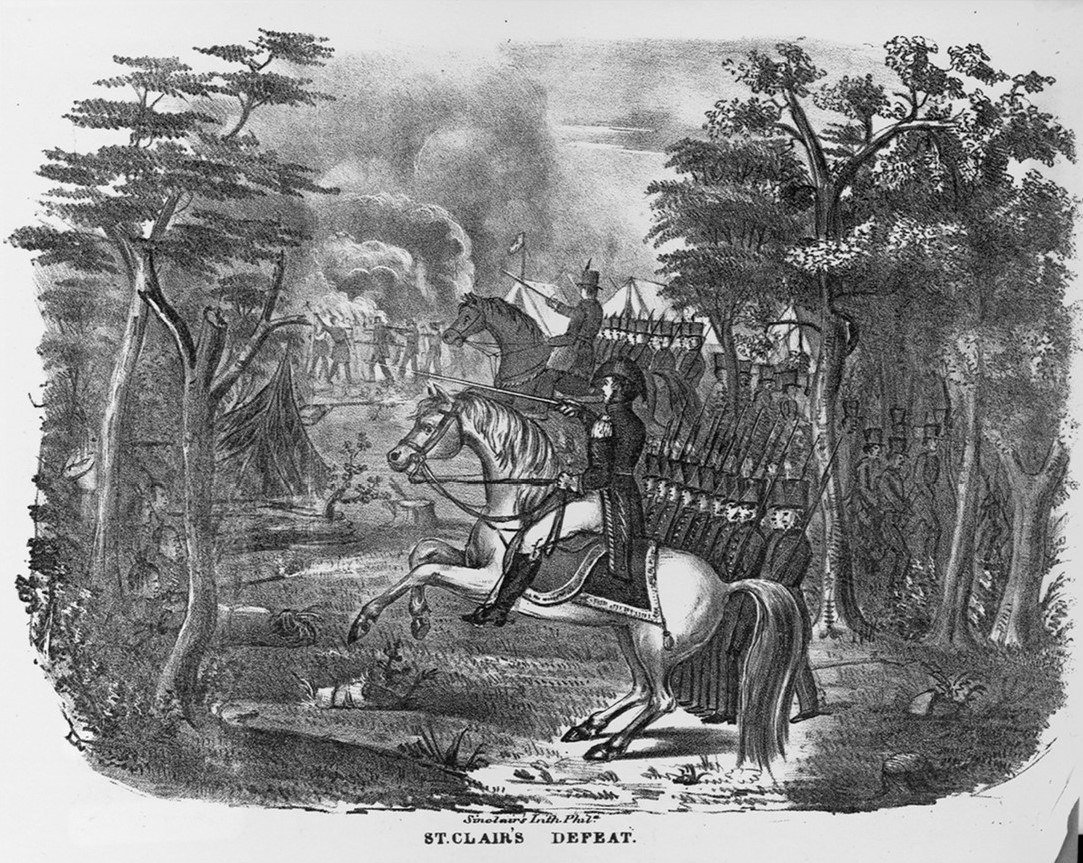
Ask most Americans to name the worst defeat the U.S. Army ever suffered against Native warriors, and they’ll say Custer’s Last Stand. They’d be wrong.
Eighty-five years before the Little Bighorn, on a freezing November morning in 1791, a confederacy of Native nations destroyed an American army on the banks of the Wabash River in present-day Ohio. More than 600 soldiers were killed, along with most of the women and children traveling with the army. By some estimates, roughly a quarter of the entire U.S. Army was lost in a single morning.
Historians call it the most decisive defeat in American military history. Yet almost no one learns about it in school.
A Young Nation Wants The Ohio Country
After the American Revolution, Britain handed the United States its claim to the lands north of the Ohio River. But the Native nations who actually lived there, including the Miami, Shawnee, Lenape (Delaware) and many others, had never agreed to give up their homelands.
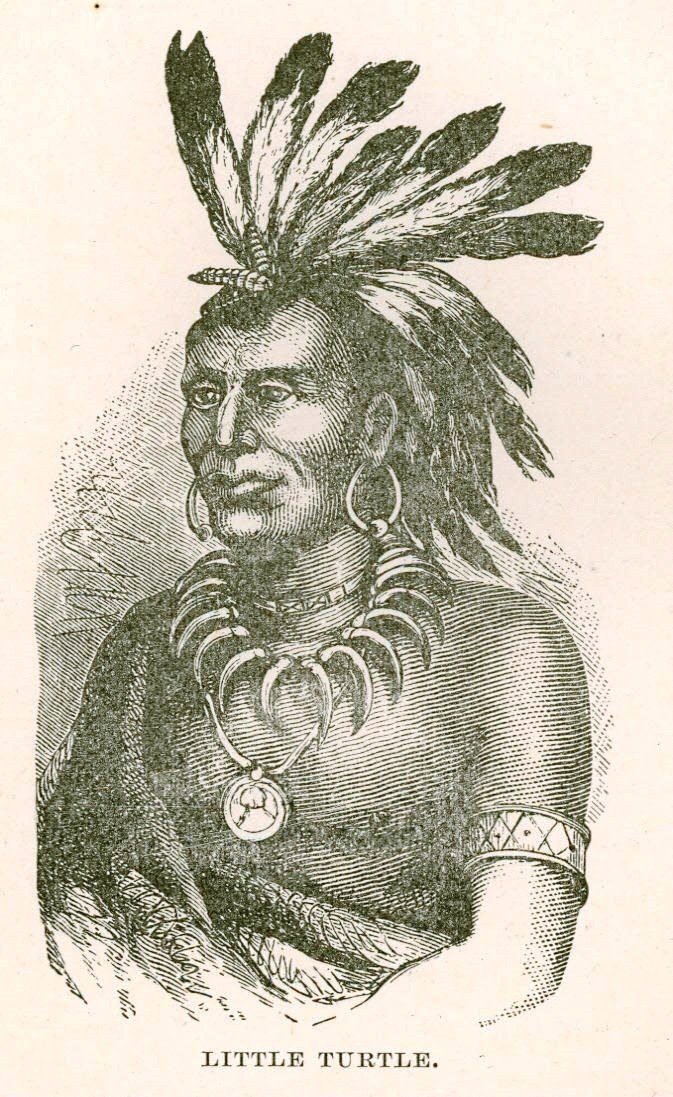
The young United States was deep in debt and planned to pay its bills by selling that land to settlers. That meant the Native nations had to be pushed out. They joined together in a powerful alliance, often called the Western or Northwestern Confederacy, led by the Miami war chief Little Turtle and the Shawnee leader Blue Jacket.
In October 1790, the confederacy had already crushed an American army under General Josiah Harmar near present-day Fort Wayne, Indiana. President George Washington decided to send a bigger one.
An Army In Trouble From The Start
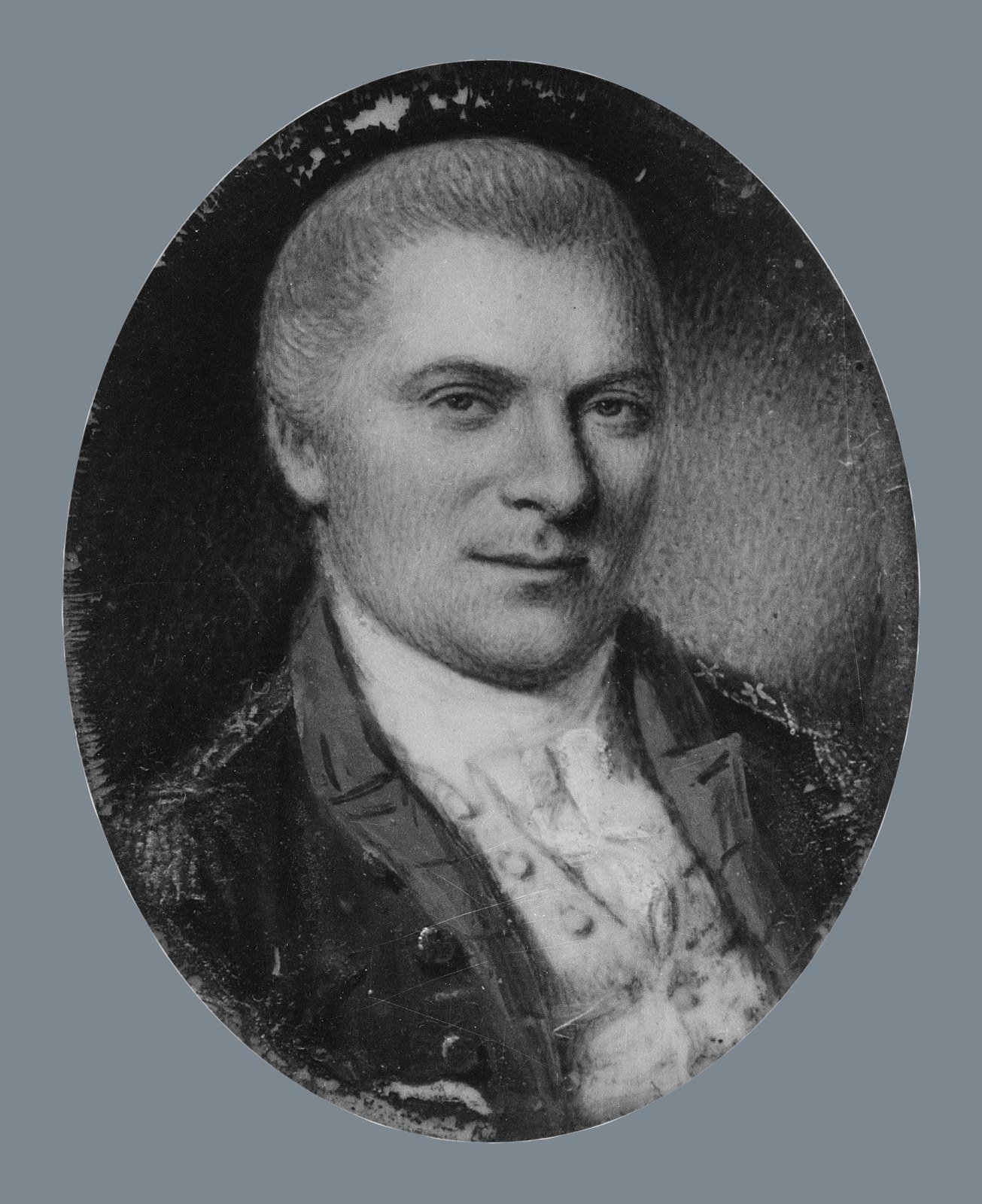
Washington chose Arthur St. Clair, a Revolutionary War general and the governor of the Northwest Territory. St. Clair was 57 years old and suffered so badly from gout that riding a horse was difficult.
His army was in trouble before it ever marched. Many of the recruits were rushed through training, supplies were poor, disease spread through the camps, and the horses were few and weak. The army did not leave Fort Washington, the site of present-day Cincinnati, until October 1791, late in the season.
As it crawled north, building forts along the way, men deserted and fell sick. By the night of November 3, St. Clair had about 920 soldiers and militia still with him, along with some 200 or more camp followers: wives, children, laundresses and others who traveled with the army.
A Fatal Night By The Wabash
That evening, the exhausted army made camp on high ground beside the upper Wabash River, near present-day Fort Recovery, Ohio. The Kentucky militia camped across the river from the regular soldiers, making it hard for them to support each other. No defensive works were built, even though warriors had been spotted in the woods.
During the night, more than 1,000 warriors quietly formed a great crescent around the sleeping camp. They came from the Miami, Shawnee and Lenape nations, along with Potawatomi, Ottawa, Ojibwe, Wyandot, Mingo and Cherokee fighters.
The Dawn Attack
On November 4, 1791, as the soldiers were preparing breakfast, the warriors struck. The militia across the river broke almost at once and fled into the main camp. Within about half an hour, the camp was completely surrounded.
The warriors’ marksmen picked off the artillery crews as they tried to load their cannons, and a group led by William Wells, a white man who had been adopted by the Miami, specifically targeted American officers. St. Clair had two horses shot from under him and led on foot. Again and again he ordered bayonet charges, and again and again the warriors fell back into the trees, then closed in around the soldiers who had followed them.
After about three hours, St. Clair ordered what was left of his army to break out. What followed, he later admitted, was “a flight.” Soldiers threw away their guns and gear and ran nearly 30 miles in a single day to Fort Jefferson.
The Cost
The numbers are staggering. Of 52 officers, 39 were killed and 7 wounded. Of about 920 soldiers and militia, 632 were killed and 264 wounded. Only 24 men came through unharmed. Nearly all of the camp followers were also killed or captured. In all, about 832 Americans died.
The confederacy lost an estimated 21 warriors killed and around 40 wounded.
For comparison, at the Little Bighorn in 1876, 268 men on the U.S. side were killed. St. Clair’s Defeat was more than three times as deadly, and it remains the worst defeat of a U.S. Army by Native American forces.
“General St. Clair Shall Have Justice”
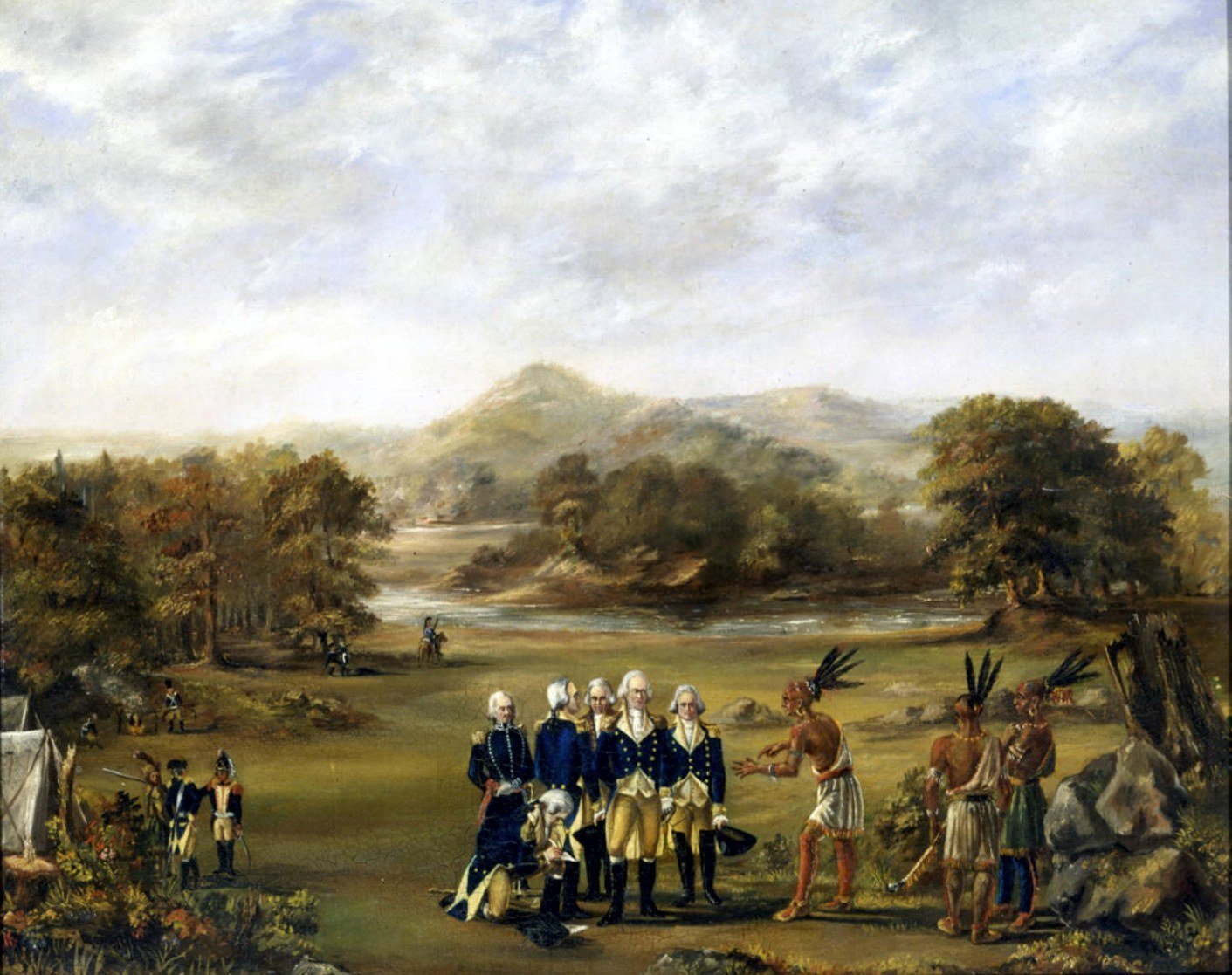
When the news reached Philadelphia in December, President Washington was furious. After an outburst, he reportedly told his secretary, Tobias Lear, “General St. Clair shall have justice.”
Washington asked St. Clair to resign his command. The House of Representatives then launched an investigation, the first special investigation in congressional history, and the first investigation of the executive branch. The precedents it set about Congress’s power to demand government documents are still debated today.
The defeat also changed the U.S. military forever. In 1792, Congress created a new, better-trained force called the Legion of the United States.
The Victory That Couldn’t Last
Three years later, the Legion, under General “Mad” Anthony Wayne, built Fort Recovery on the very battlefield of St. Clair’s Defeat. In 1794, Wayne’s army defeated the confederacy at the Battle of Fallen Timbers.
In 1795, Little Turtle and other leaders signed the Treaty of Greenville, which gave up much of present-day Ohio to the United States. The greatest Native victory over the U.S. Army had been followed, within four years, by the loss of the homeland it was fought to protect.
A Forgotten Battle
Historian William Hogeland called St. Clair’s Defeat “the high-water mark in resistance to white expansion. No comparable Indian victory would follow.”
Today, the town of Fort Recovery, Ohio, stands on the battlefield, with a monument, a museum and a cemetery honoring those who fell there. And yet, while every American knows Custer’s name, few have ever heard of Little Turtle, the war chief who won the greatest Native victory in the history of the United States.
Had you ever heard of St. Clair’s Defeat before today? Tell us in the comments.
Read more: 7 Battles Where Native Nations Defeated The U.S. Army and You Had No Idea How Bad Custer’s Last Stand Really Got.