In the 1500s, the Spanish Empire was the most powerful in the world. Its soldiers had steel swords, armor, guns, cannons and horses, and within a few decades they had toppled the Aztec and Inca empires.
But Spain did not win every battle in the Americas. From the lake city of Tenochtitlan to the forests of Chile and the plains of Nebraska, Native nations handed the Spanish Empire some of its most painful defeats. Some of those victories were temporary. Others changed the map for centuries.
Here are 10 battles where Native nations defeated the Spanish Empire.
1. La Noche Triste, Mexico (1520): The Aztecs Drive Out Cortés
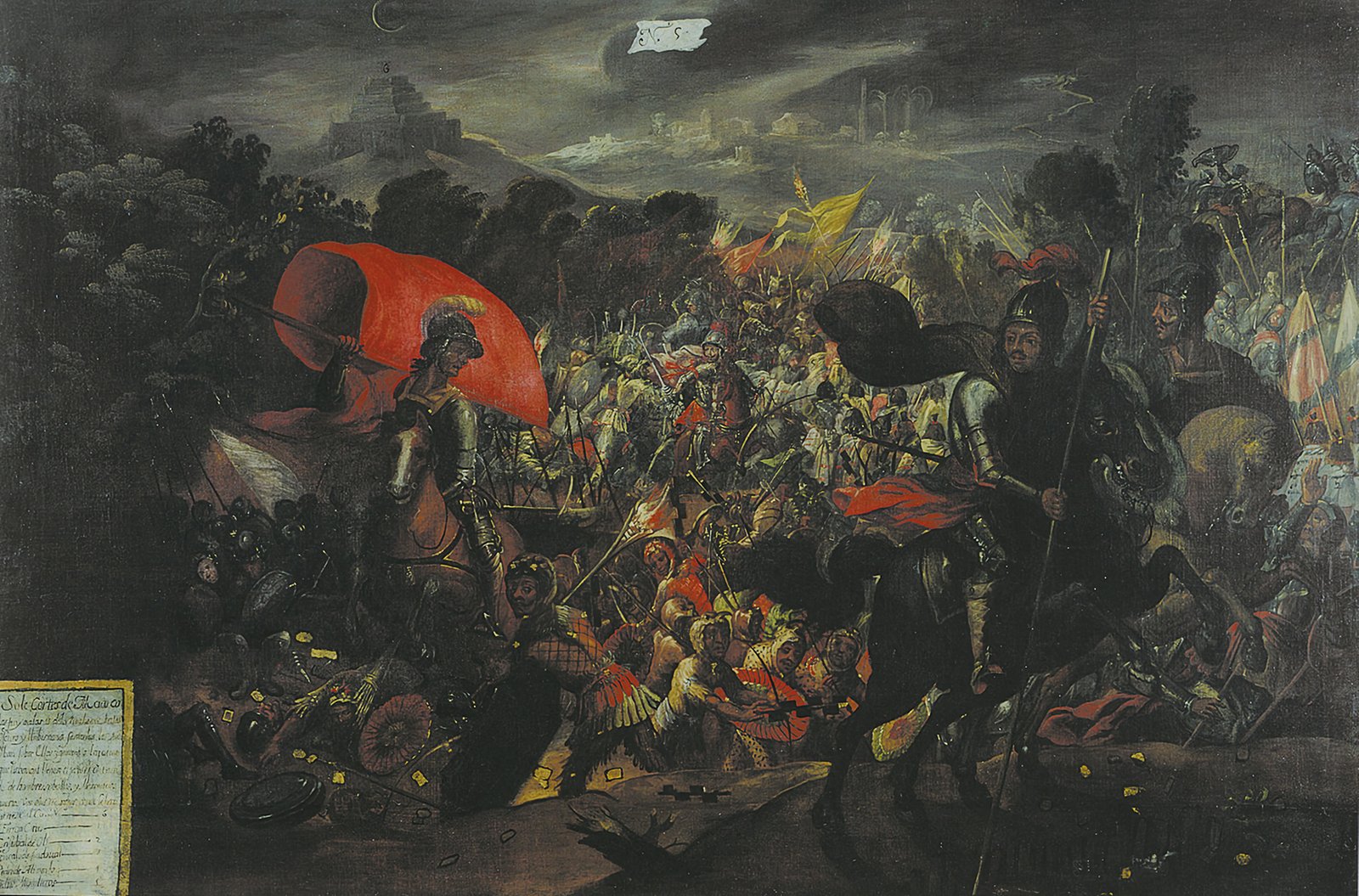
In 1519, Hernán Cortés and his soldiers entered Tenochtitlan, the island capital of the Aztec (Mexica) Empire, and took the emperor Moctezuma captive. By the summer of 1520, the city had risen against them. Moctezuma was dead, and Mexica warriors had the Spanish trapped in their palace.
On the rainy night of June 30, 1520, Cortés tried to slip out of the city along the Tacuba causeway. The Mexica spotted them. Warriors in canoes attacked from both sides, and the causeway’s bridges became death traps. Many Spaniards drowned, weighed down by armor and the gold they were carrying.
Estimates of the Spanish dead range from about 800 to more than 1,100, along with thousands of their Tlaxcalan allies. The Spanish remember it as La Noche Triste, “the Night of Sorrows.” In 2020, Mexico City began promoting a new name for the 500th anniversary: “Victorious Night.”
Spain would return with thousands of Native allies and take the city in 1521, helped by a smallpox epidemic that had already devastated it. But on that night, the Mexica won.
2. The Calusa Drive Off Ponce de León, Florida (1521)
Juan Ponce de León was the first Spaniard known to have explored Florida, in 1513. Even then, the powerful Calusa of southwest Florida attacked his ships and drove him off.
In 1521, he came back with about 200 settlers, horses and livestock to found a colony on the Calusa coast. The Calusa attacked again. Ponce de León was struck in the thigh by an arrow, and the colonists abandoned the attempt and sailed for Cuba, where he died of the wound in July 1521. The Calusa kept Spain out of southwest Florida for decades afterward.
3. The Chickasaw Burn Hernando de Soto’s Camp, Mississippi (1541)
Hernando de Soto led one of the largest Spanish expeditions ever to march through the American Southeast, searching for gold. In the winter of 1540–41 his army camped at a Chickasaw town in what is now northeastern Mississippi and demanded that the Chickasaw provide 200 men to carry his baggage.
The Chickasaw answered before dawn in early March 1541. Warriors set fire to the camp and attacked in the confusion. About a dozen Spaniards were killed, along with roughly 50 to 60 of their horses and hundreds of their pigs, and much of their clothing, weapons and gear burned. The expedition never recovered its strength. De Soto died the following year on the Mississippi River. The Chickasaw Nation remembers the battle as proof of its strength.
4. The Mixtón War, Mexico (1541): A Conquistador Falls
In 1540, the Caxcan people and their neighbors in western Mexico rose up against Spanish rule and retreated to fortified mountaintops, including the peak of Mixtón.
Pedro de Alvarado, one of the most famous and feared conquistadors, who had fought beside Cortés in Tenochtitlan and conquered Guatemala, refused to wait for reinforcements and attacked in June 1541. His assaults failed and his men were driven back. During the retreat, a horse fell on Alvarado, crushing him. He died on July 4, 1541.
Spain eventually won the Mixtón War, but only after the viceroy himself led a large army of Spanish soldiers and tens of thousands of Native allies into the mountains.
5. Tucapel, Chile (1553): Lautaro Defeats Valdivia
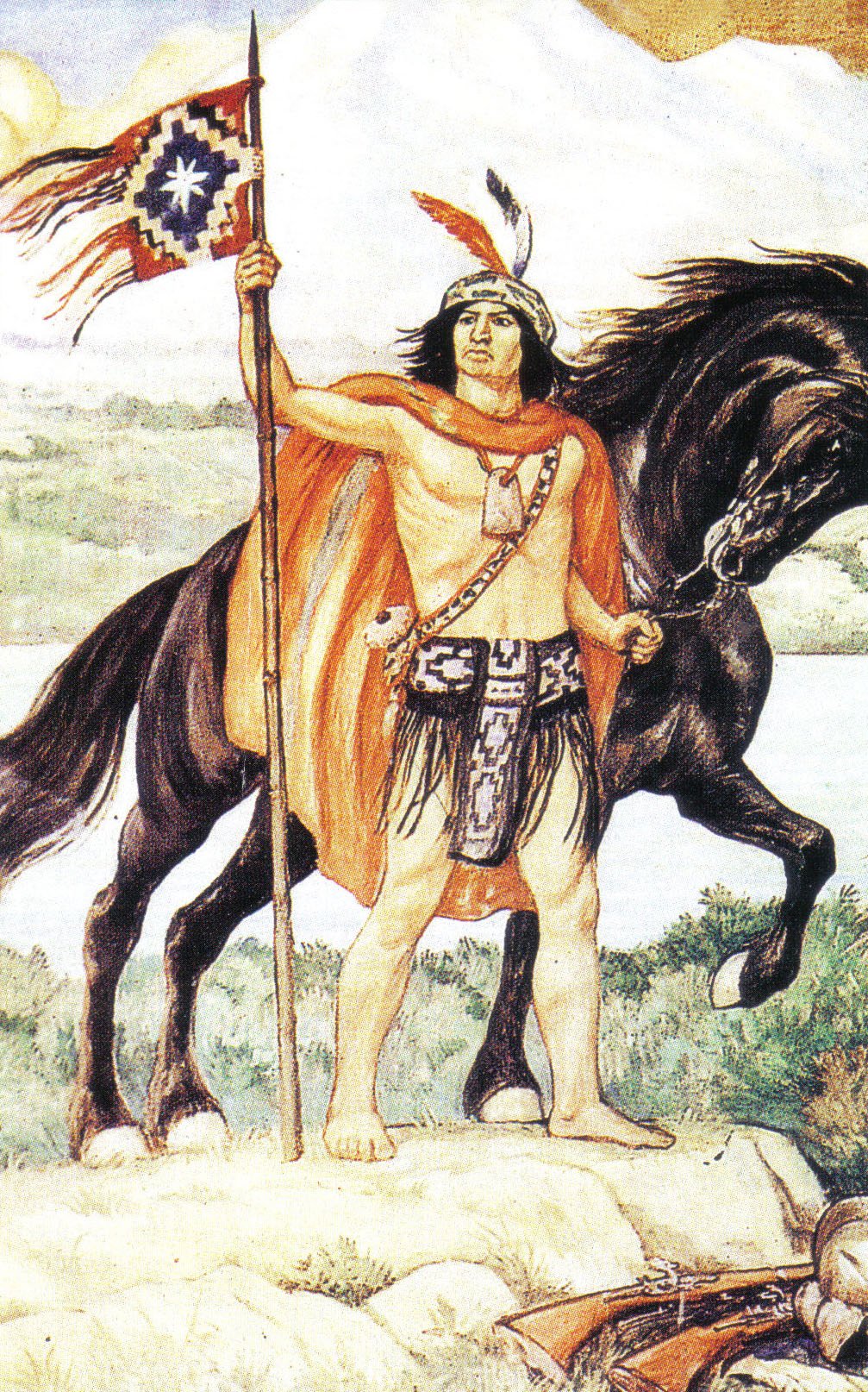
Pedro de Valdivia was the conquistador who founded Santiago and claimed Chile for Spain. South of the Biobío River, though, he ran into the Mapuche, and a young warrior named Lautaro.
As a boy, Lautaro had been captured by the Spanish and made to serve as Valdivia’s groom, caring for his horses. He watched how the Spanish fought, then escaped and returned to his people. In December 1553, the Mapuche captured the Spanish fort at Tucapel. When Valdivia rode to retake it with a small force of about 40 to 55 Spanish soldiers and Native allies, Lautaro’s warriors surrounded them on Christmas Day. Nearly all were killed, and Valdivia was captured and put to death.
The governor of Chile had been defeated by the man who used to look after his horses.
6. Curalaba, Chile (1598): The Battle That Saved Mapuche Independence
Forty-five years later, the Mapuche struck an even bigger blow. In December 1598, the Spanish governor of Chile, Martín García Óñez de Loyola, was camped with his column at Curalaba. Mapuche warriors under the leader Pelantaro had followed them, and attacked in a surprise raid before dawn. The governor and almost all of his men were killed.
Curalaba set off a great uprising. Over the next few years, the Mapuche destroyed the Spanish towns south of the Biobío River, an event Chileans still call the “Destruction of the Seven Cities.” In 1641, at the Parliament of Quillín, held deep in Mapuche territory, Spain agreed to a peace with the Biobío River as the frontier. Historians still debate exactly what that treaty meant, but in practice the Mapuche kept their independence for more than two centuries, until Chile and Argentina conquered their lands in the late 1800s.
Few Native nations anywhere in the Americas resisted European conquest for so long.
7. The Pueblo Revolt, New Mexico (1680): Spain Driven Out
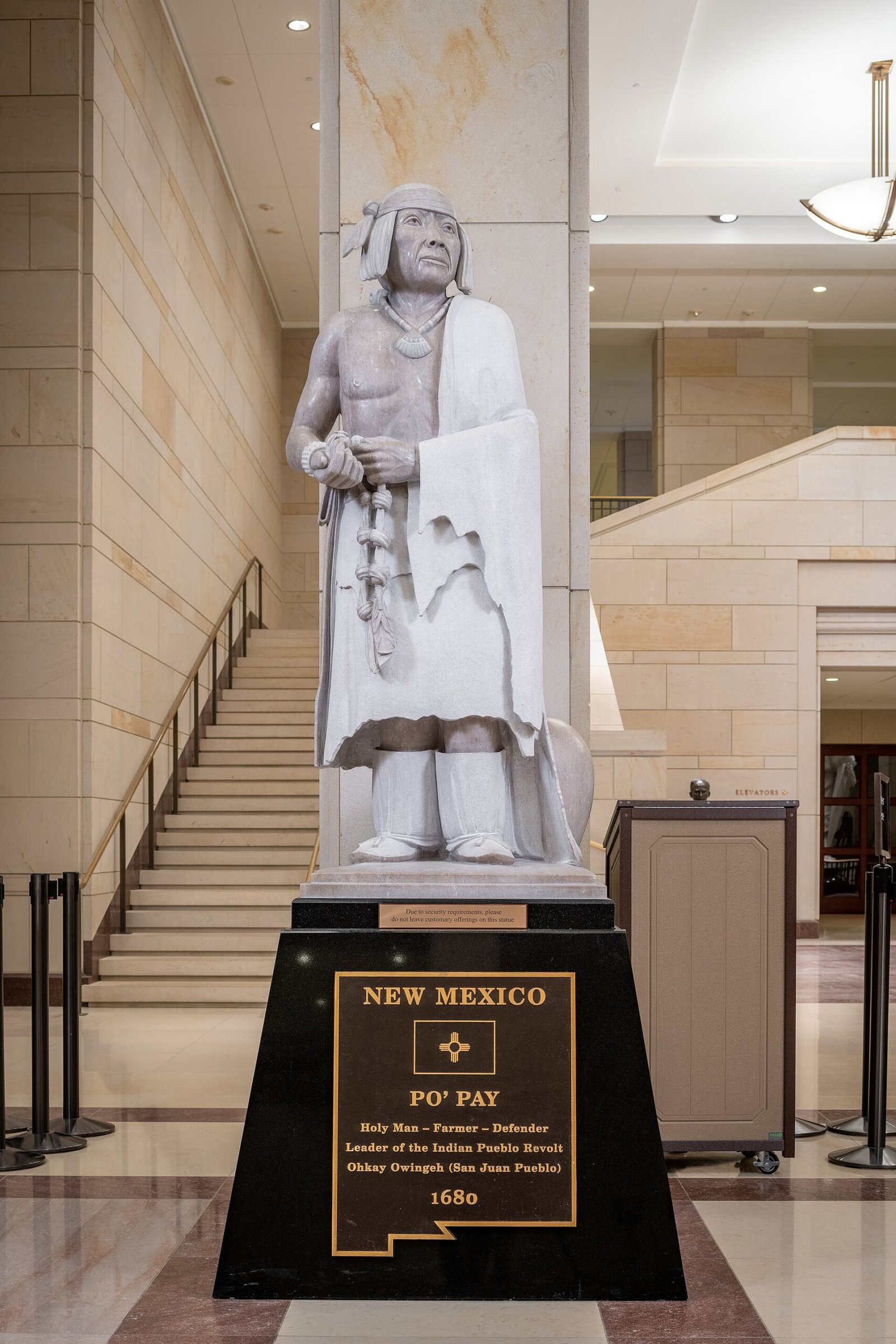
By 1680, the Pueblo peoples of New Mexico had lived under Spanish rule for more than 80 years, facing forced labor, punishment for practicing their religion, drought and famine. A religious leader from Ohkay Owingeh (San Juan Pueblo) named Po’pay organized a revolt among the Pueblos, who spoke several different languages and lived in towns spread over hundreds of miles. Runners carried knotted cords between the towns to count down the days to the uprising.
The revolt began on August 10, 1680. Warriors killed 21 of the province’s 40 Franciscan missionaries and about 380 Spanish settlers and soldiers, and laid siege to Santa Fe. On August 21, the surviving Spanish settlers, numbering in the thousands, abandoned Santa Fe and retreated south to El Paso.
For 12 years, the Pueblos were free of Spanish rule. When Spain returned under Diego de Vargas in 1692, its officials ruled with less force than before. Today, a statue of Po’pay, carved by the Jemez Pueblo sculptor Cliff Fragua, stands in the U.S. Capitol.
8. The Villasur Expedition, Nebraska (1720): Ambush On The Platte
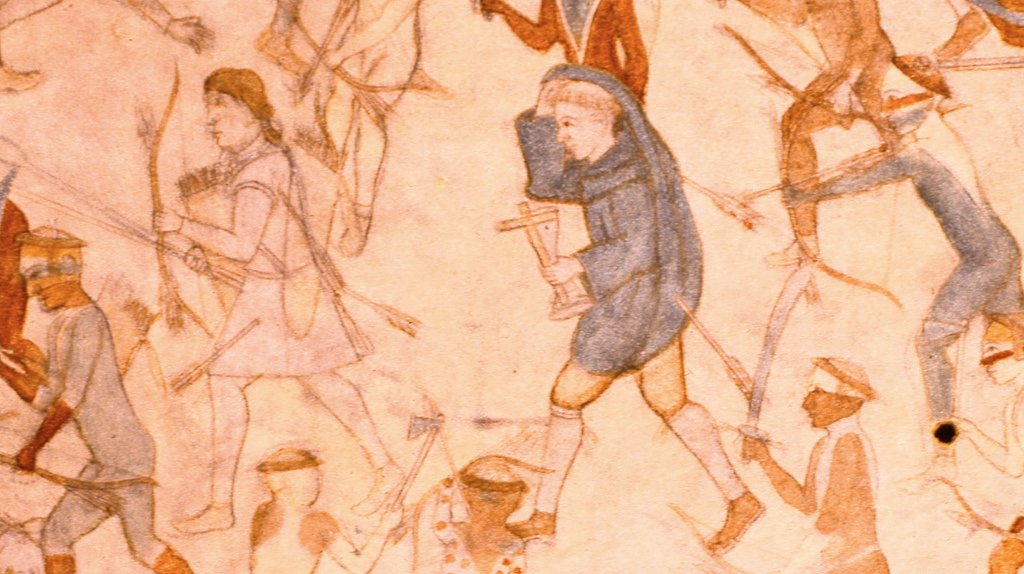
In 1720, Spanish officials in New Mexico feared the French were moving onto the Plains. They sent Lieutenant Colonel Pedro de Villasur northeast with about 40 Spanish soldiers, around 60 Pueblo allies and a few others to scout the area.
In mid-August, near where the Platte and Loup rivers meet in present-day Nebraska, Pawnee and Otoe warriors attacked the camp at dawn. Villasur and most of his Spanish soldiers were killed, along with a number of their Pueblo allies. Only a handful of survivors made it back to Santa Fe. Accounts put the dead at around 45. It was one of the deepest Spanish military expeditions onto the Great Plains, and it ended Spain’s attempts to push that far northeast.
A remarkable painting of the battle on buffalo hide, known as Segesser II, survives today in the New Mexico History Museum in Santa Fe.
9. The Battle Of The Twin Villages, Texas (1759)
In March 1758, Comanche, Wichita and allied warriors destroyed the Spanish mission of San Sabá in central Texas. Spain sent Colonel Diego Ortiz Parrilla north with an army of roughly 500 to 600 Spanish soldiers and Apache allies to punish them.
In October 1759, on the Red River along today’s Texas–Oklahoma border, Ortiz Parrilla found a Wichita town defended by a stockade and a moat, with a French flag flying above it. The Wichita, Comanche and their allies held the fort against his cannons and charges. After about four hours of fighting, with dozens of his men killed or wounded, Ortiz Parrilla retreated under cover of darkness and abandoned some of his cannons. He was relieved of command.
10. The Quechan Revolt, Arizona And California (1781)
The Quechan (Yuma) people controlled the crossing of the Colorado River, the key link on the overland route between Spanish Mexico and the new settlements of California. In 1780, Spain built two mission settlements on Quechan land. Settlers’ livestock grazed on Quechan fields, and promised gifts never came.
On July 17, 1781, the Quechan rose up. In a few days, they destroyed both settlements and killed more than 100 Spanish soldiers, settlers and missionaries, among them Captain Fernando de Rivera y Moncada, a former governor of California, and the well-known missionary Father Francisco Garcés. The women and children were taken captive and later ransomed.
Spain sent several punitive expeditions over the next two years, but it never reopened the overland trail to California. The Quechan kept control of the crossing for decades afterward.
Defeats That Shaped A Continent
Spain won many wars in the Americas, and Native nations paid a terrible price in war, disease and forced labor. But these 10 battles show that the conquest was never as simple as the history books once claimed. Native nations fought, planned and won, and in places like Chile, New Mexico and the southern Plains, they forced the most powerful empire in the world to retreat.
After reading about the battles Spain lost, read about 7 battles where Native nations defeated the U.S. Army. Then, discover 7 lost Native American cities and the mysteries they left behind.