Many Americans were taught that before Europeans arrived, North America was an empty wilderness. It wasn’t. Across the continent, Native peoples built towns, ceremonial centers and even cities, some larger than London was at the time.
Then, one by one, many of those places were left behind. Their builders didn’t disappear: their descendants include today’s Pueblo, O’odham, Wichita, Caddo and many other nations. But the cities themselves fell silent, and they left behind questions that archaeologists are still trying to answer.
Here are 7 lost Native American cities and the mysteries they left behind.
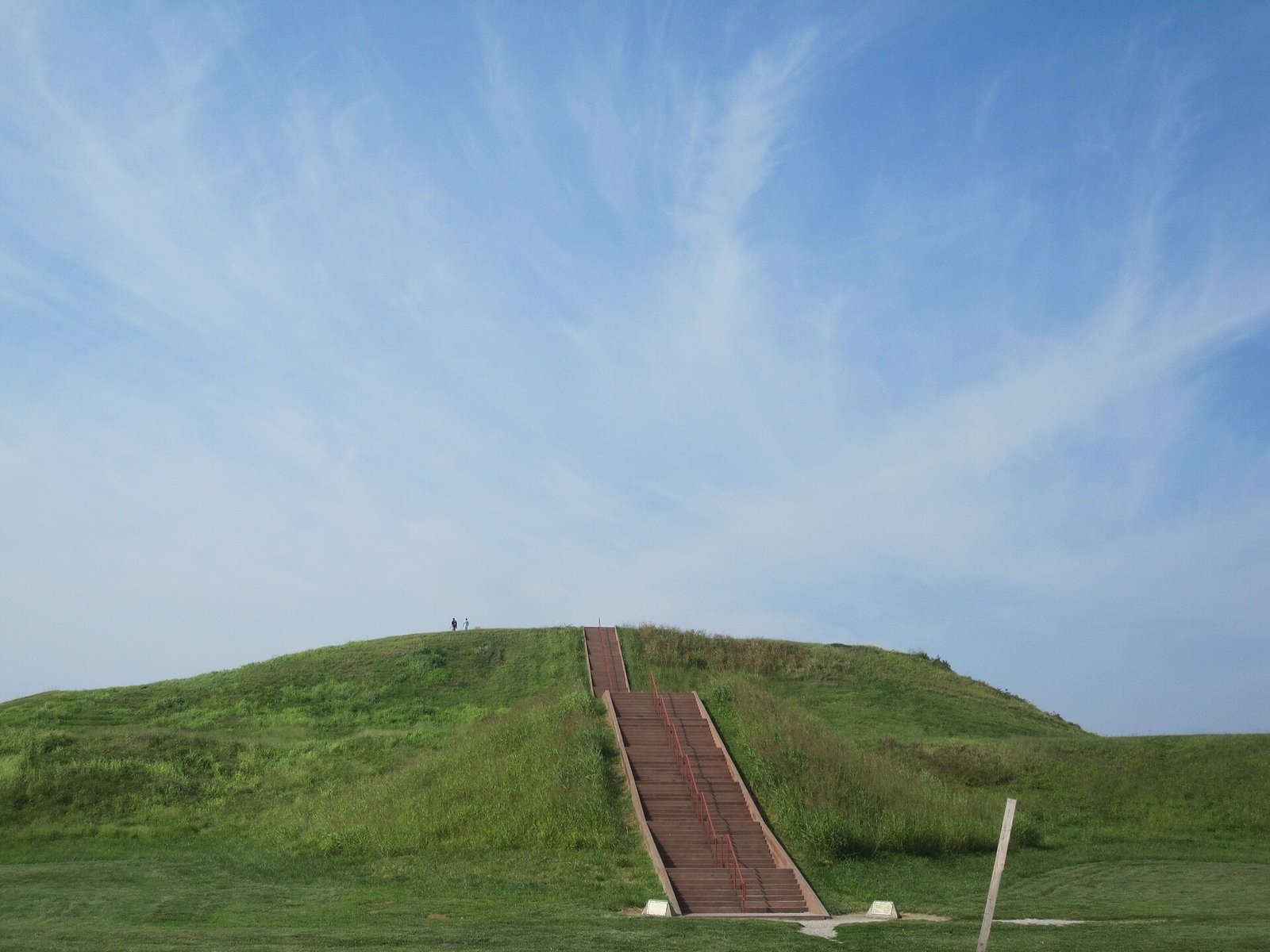
1. Cahokia, Illinois: The City Bigger Than London
Just across the Mississippi River from modern St. Louis lie the remains of the largest city ever built north of Mexico before Columbus. At its height, between about 1050 and 1150, Cahokia may have been home to 10,000 to 20,000 people, according to UNESCO. Some scholars think it was even larger, which would have made it comparable to London at the time.
Its centerpiece, Monks Mound, is the largest prehistoric earthwork in the Americas: about 100 feet tall and covering more than 12 acres at its base, built entirely by hand, basket by basket of earth. Around it stood more than 100 other mounds, a great plaza and circles of tall wooden posts that archaeologists call “Woodhenge,” which may have marked the sunrise on the solstices and equinoxes.
The mystery: By about 1350, Cahokia was empty. No one knows exactly why. Archaeologists have pointed to flooding, drought, deforestation, warfare and political breakdown. Its people moved away and joined other communities. Even the city’s original name has been lost.
2. Chaco Canyon, New Mexico: The Great Houses In The Desert
In a dry canyon in northwestern New Mexico, Ancestral Puebloan people built massive stone “great houses” between about 850 and 1150. The largest, Pueblo Bonito, had around 650 rooms and rose four or five stories high. It is often described as the largest building in North America until the 1800s.
Chaco was the hub of a network of straight roads, some about 30 feet wide, stretching out across the desert. Its people traded across enormous distances. Archaeologists have found the remains of scarlet macaws, tropical birds from Mexico, and traces of cacao, the raw material of chocolate, in special jars at Pueblo Bonito.
The mystery: Why build wide, perfectly straight roads in a world without wheels or horses? And why did Chaco’s people leave? Construction stopped around 1150, during a long drought, and the people gradually moved to other places. Their descendants are today’s Pueblo peoples, for whom Chaco remains a sacred place.
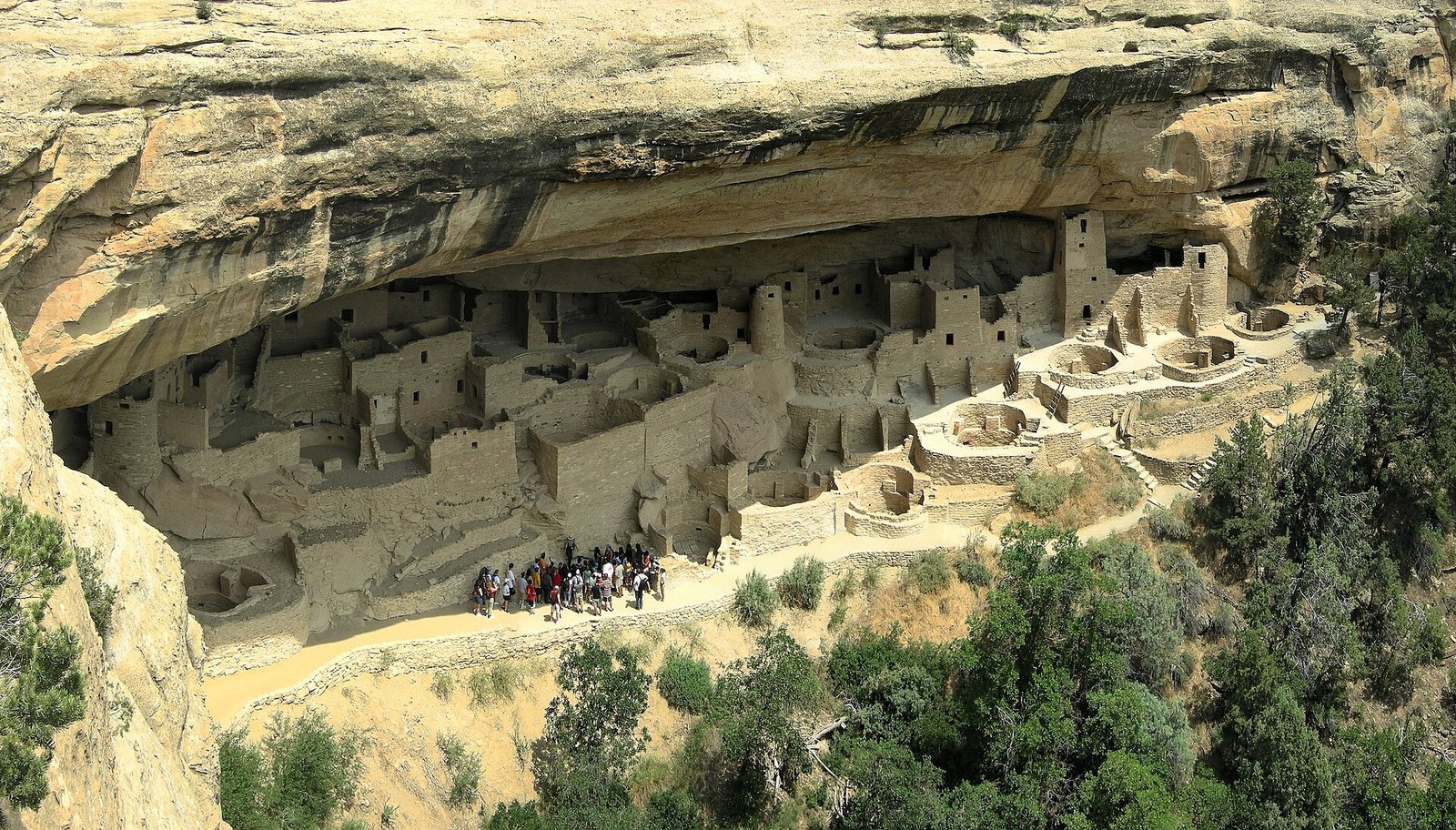
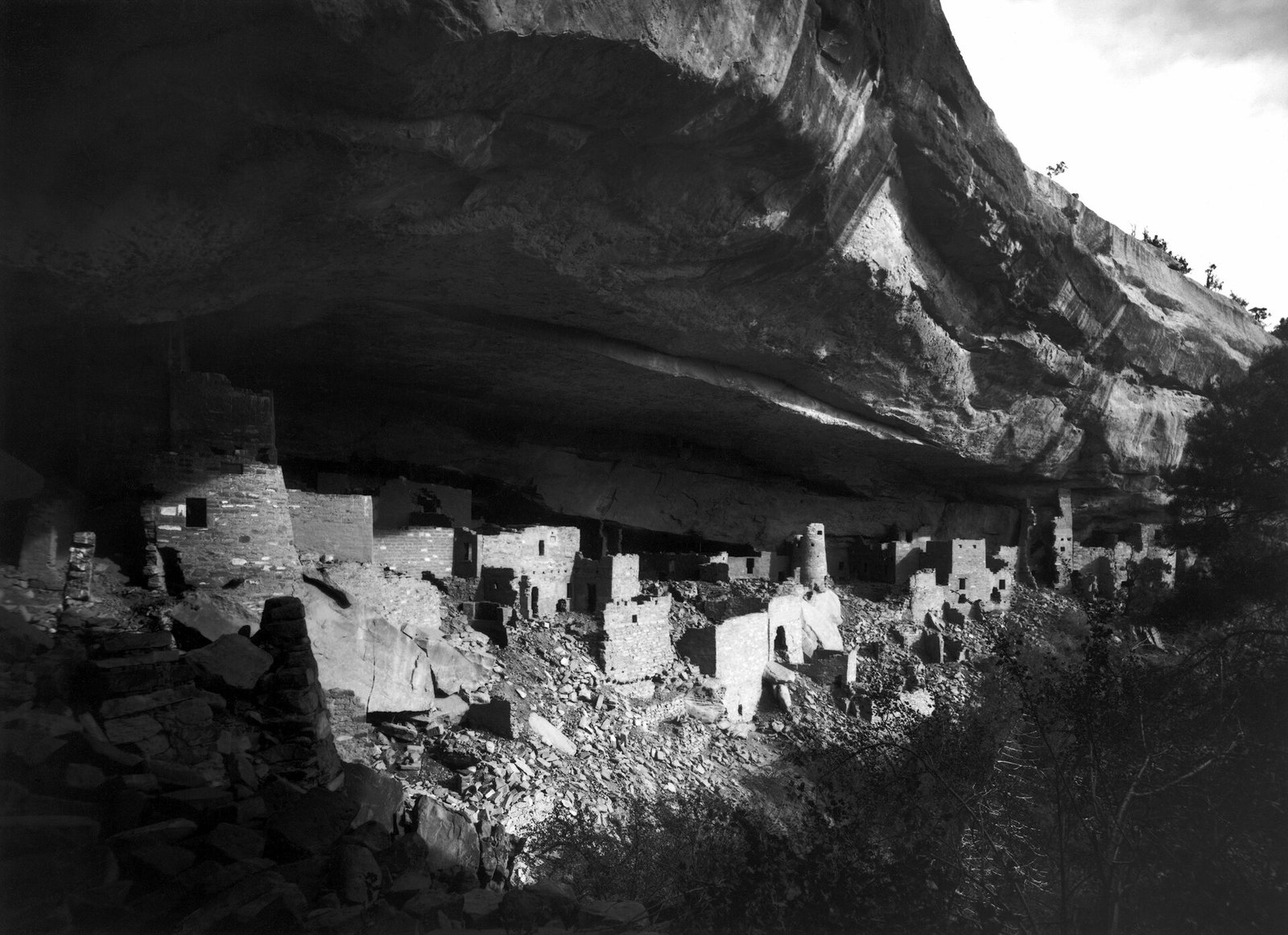
3. Mesa Verde, Colorado: The Cliff Palace
In the late 1100s and 1200s, Ancestral Puebloan families in southwestern Colorado did something extraordinary: they moved into homes built inside the cliffs. The largest, Cliff Palace, has about 150 rooms and more than 20 round ceremonial rooms called kivas, tucked beneath a huge sandstone overhang.
In December 1888, two ranchers searching for stray cattle, Richard Wetherill and Charlie Mason, saw it across the canyon. It looked as though its residents had only just left.
The mystery: The cliff dwellings were lived in for only a few generations. By about 1300, Mesa Verde was empty. A severe drought struck the region in the late 1200s, and there are signs of conflict and hardship, but why people chose to build in the cliffs in the first place, and exactly what drove them out, are still debated. Their descendants live today among the Pueblos of New Mexico and Arizona.
4. Poverty Point, Louisiana: Built By Hunter-Gatherers
Poverty Point in northeastern Louisiana is far older than any of the others. Its giant earthworks were built roughly 3,400 years ago, at about the time of Egypt’s New Kingdom, by people who lived by hunting, fishing and gathering, not farming.
They raised six huge C-shaped ridges, one inside the other, around a 43-acre plaza, along with several large mounds. In 2013, archaeologists reported that one of them, Mound A, was built in less than 90 days and perhaps as few as 30. That would have taken thousands of workers.
The mystery: Hunter-gatherer groups were thought to be small bands of a few dozen people. How did they organize thousands to build on this scale? Poverty Point also contains stone brought from hundreds of miles away. In 2014, it became a UNESCO World Heritage Site.
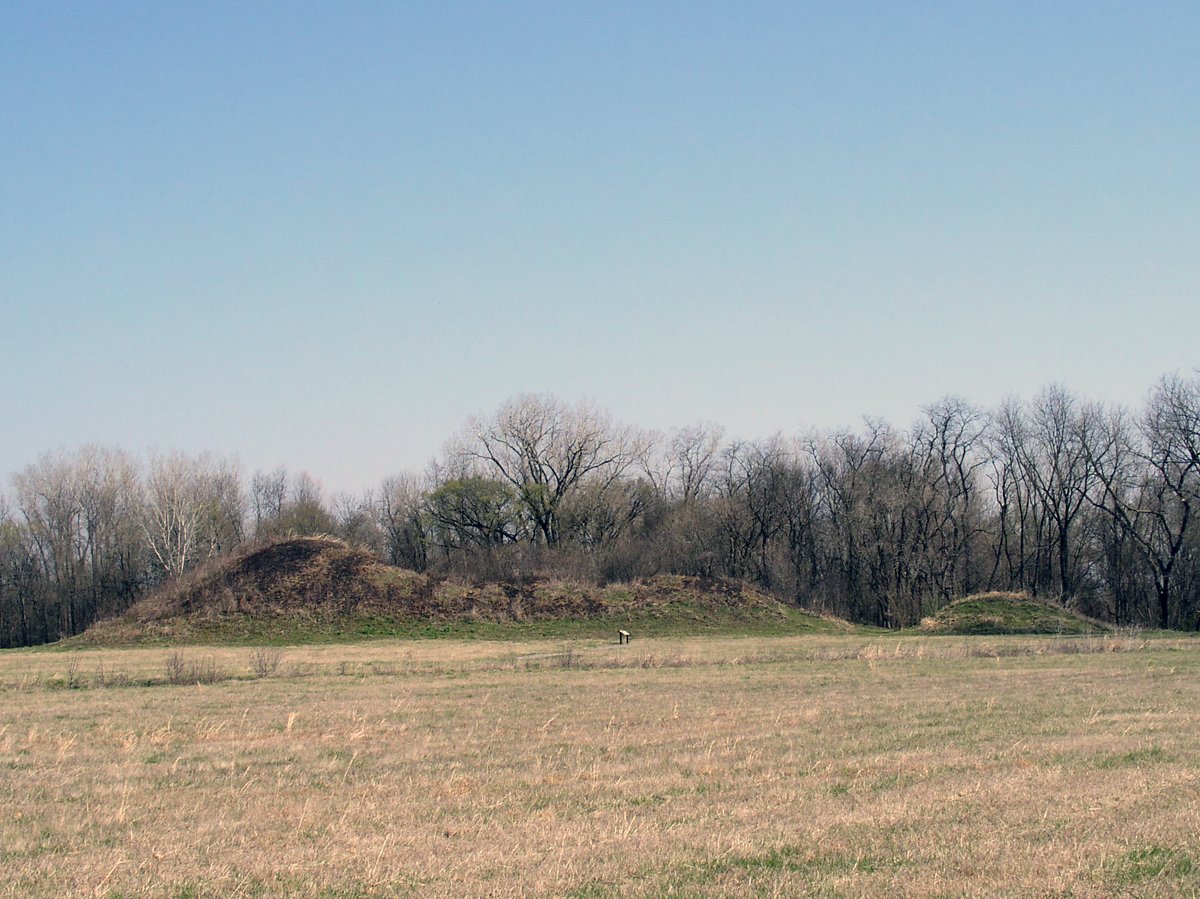
5. Spiro Mounds, Oklahoma: The “King Tut” Of America
Between about 850 and 1450, Spiro in eastern Oklahoma was one of the great ceremonial centers of the Mississippian world, linked by trade to places as far away as the Gulf Coast and the Great Lakes.
Its most famous mound, Craig Mound, held a hollow chamber filled with extraordinary objects: engraved conch shells, copper plates, pearls, carved pipes and textiles. In the 1930s, a group of treasure hunters calling themselves the Pocola Mining Company leased the land and dug into the mound. In 1935, they broke into the chamber. The Kansas City Star called it the “King Tut tomb of the Arkansas Valley.”
The mystery: The diggers sold thousands of objects to collectors around the world before a new state law stopped them. Much of what Spiro could have told us was lost forever. Scientists still don’t fully understand who was honored in that chamber, or why Spiro was abandoned around 1450.
6. Etzanoa, Kansas: The Great Settlement
In 1601, a Spanish expedition led by Juan de Oñate traveled onto the Plains and reached a huge town of the ancestors of the Wichita people. The Spanish called it “the Great Settlement” and estimated that about 20,000 people lived there, in round grass-covered houses spread along the river.
For centuries, historians thought the Spanish had exaggerated. Then, using new translations of the Spanish accounts, Wichita State University archaeologist Donald Blakeslee matched their descriptions to the land around Arkansas City, Kansas. In 2017, a young local found a small iron cannonball believed to date from a 1601 clash with the Spanish, and digs turned up more evidence.
The mystery: If Blakeslee is right, Etzanoa was not a scattering of villages but a single town of some 20,000 people, one of the largest in North America at the time. How did it grow so large on the Plains, and why was it left behind by about 1700? The Wichita Nation is now working with researchers to tell its story.
7. Casa Grande, Arizona: The Great House Of The Huhugam
In the desert south of Phoenix stands a four-story building made of caliche, a kind of natural desert concrete, built in the 1300s. The Spanish missionary Eusebio Kino saw it in 1694 and called it Casa Grande, the “Great House.”
It was built by the people archaeologists call the Hohokam, a name taken from the O’odham word Huhugam, which is often translated as “those who have gone.” They dug hundreds of miles of irrigation canals from the Salt and Gila rivers, among the largest canal systems in pre-Columbian North America, and turned the desert into farmland. Some modern Phoenix canals follow the same routes. In 1892, Casa Grande became the first archaeological site protected by the U.S. government.
The mystery: Some of the Great House’s walls and openings line up with the sun and moon at key times of the year. And by around 1450, the great Huhugam towns had been left behind. The O’odham peoples of southern Arizona, who count the Huhugam among their ancestors, have their own oral histories of what happened. Archaeologists are still piecing it together.
Not Lost To Everyone
These places are called “lost,” but that word mostly describes how they were forgotten by outsiders. The nations whose ancestors built them never forgot. Many still travel to these sites to pray, teach their children and remember.
After reading about these lost cities, discover 10 things Hollywood got wrong about Native Americans. Then, read about 7 battles where Native nations defeated the U.S. Army.