On June 25, 1876, Lieutenant Colonel George Armstrong Custer was killed with every soldier in the five companies he led at the Little Bighorn in Montana Territory. Lakota, Cheyenne and Arapaho warriors had destroyed his command in less than an hour.
Custer was famous in life. But what happened to him after death is a strange and little-known story: a shallow grave dug with too few shovels, a reburial a year later, a hero’s funeral at West Point, and a question that has never been fully answered. Are the remains buried at West Point really his?
Found On The Hill
Two days after the battle, on June 27, soldiers of General Alfred Terry’s column reached the ridge where Custer’s men had died. They found Custer near the top of the small rise now called Last Stand Hill, among the bodies of his soldiers.
According to the National Park Service, his body had been stripped but was not scalped or mutilated like many of the others. He had two bullet wounds, one in the left side of his chest and one in his left temple. Either could have been fatal.
The Cheyenne remembered something else. According to Kate Bighead, a Cheyenne woman who was at the battle, two Cheyenne women who had recognized Custer pierced his ears with a sewing awl, so he would hear better in the spirit world. He had not listened, she said, when Cheyenne chiefs warned him in 1869 never to fight them again.
A Grave Eighteen Inches Deep
On June 28, the surviving soldiers began burying the dead where they had fallen. It was an impossible job. More than 200 men lay scattered across the ridges in the summer heat, and the soldiers had only a handful of shovels. Lieutenant Edward Godfrey, who helped with the burials, later called it “a sickening, ghastly field.”
Most of the dead were covered with only a little earth and sagebrush. Custer was given slightly more care. Accounts describe a shallow grave, about eighteen inches deep, covered with a travois, a frame of poles taken from the abandoned Native camp, and weighed down with rocks. Wooden poles from the village were used to mark the graves.
Then the soldiers left the valley as quickly as they could, carrying their wounded.
Back To The Battlefield, 1877
The shallow graves did not last. Wind, rain and animals uncovered many of the dead over the following year. Visitors to the battlefield reported seeing bones lying in the open.
In the summer of 1877, the Army sent a detail to the battlefield to bring back the remains of Custer and his officers. It was led by Captain Michael Sheridan, the brother of General Philip Sheridan. The soldiers brought pine coffins for the officers.
Finding Custer was not easy. According to several accounts, the soldiers first opened a grave they believed was his, and then found evidence, said to be a corporal’s uniform, showing that it belonged to another man. They chose a different set of remains from another grave. One scout later recalled that very little was left of the body they took.
Not everyone was confident. One man who was there is said to have written that he thought they got the right body “the second time.” Historians still debate whether they did.
A Hero’s Funeral At West Point
Libbie Custer wanted her husband buried at the United States Military Academy at West Point, New York, where he had graduated in 1861, last in his class.
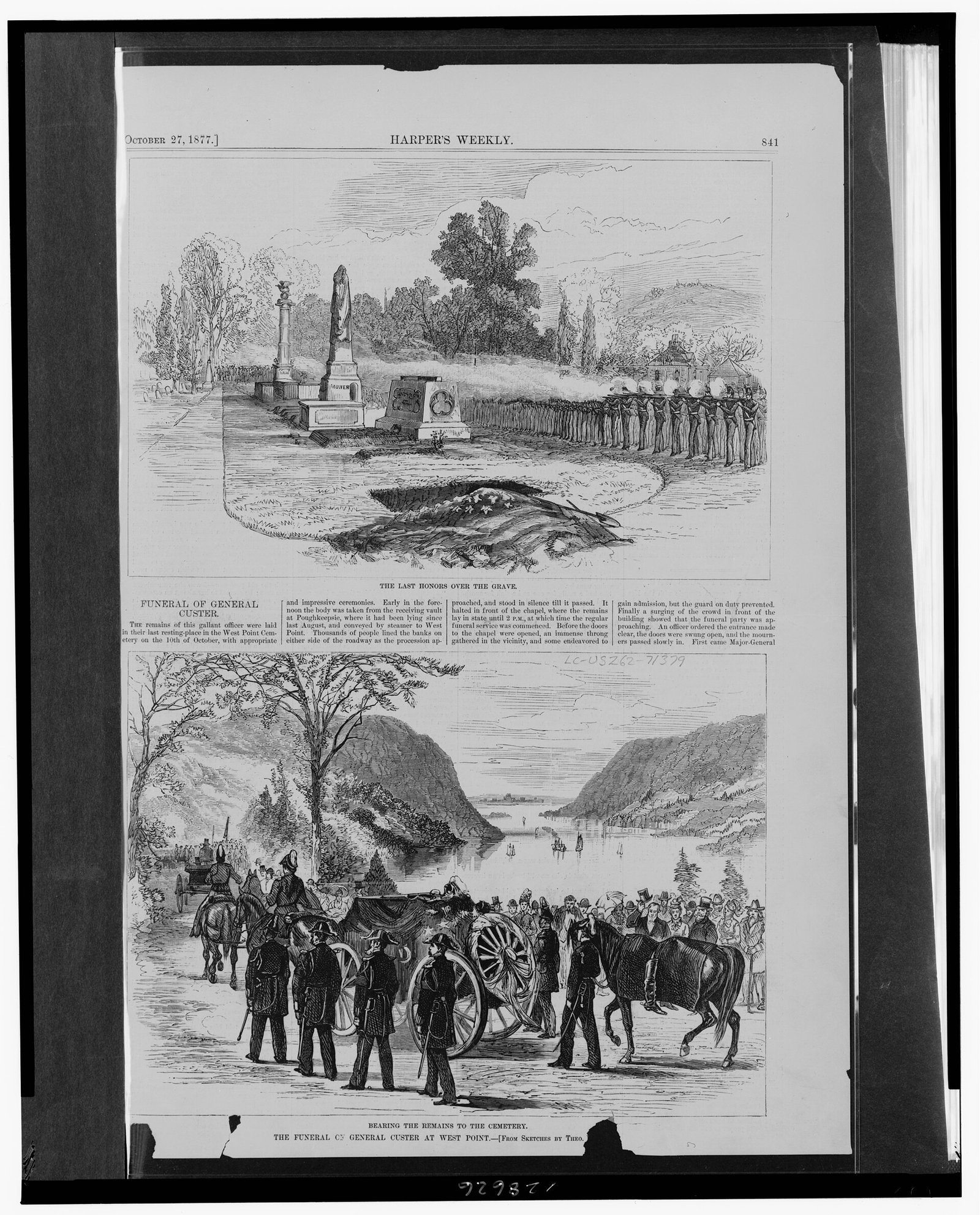
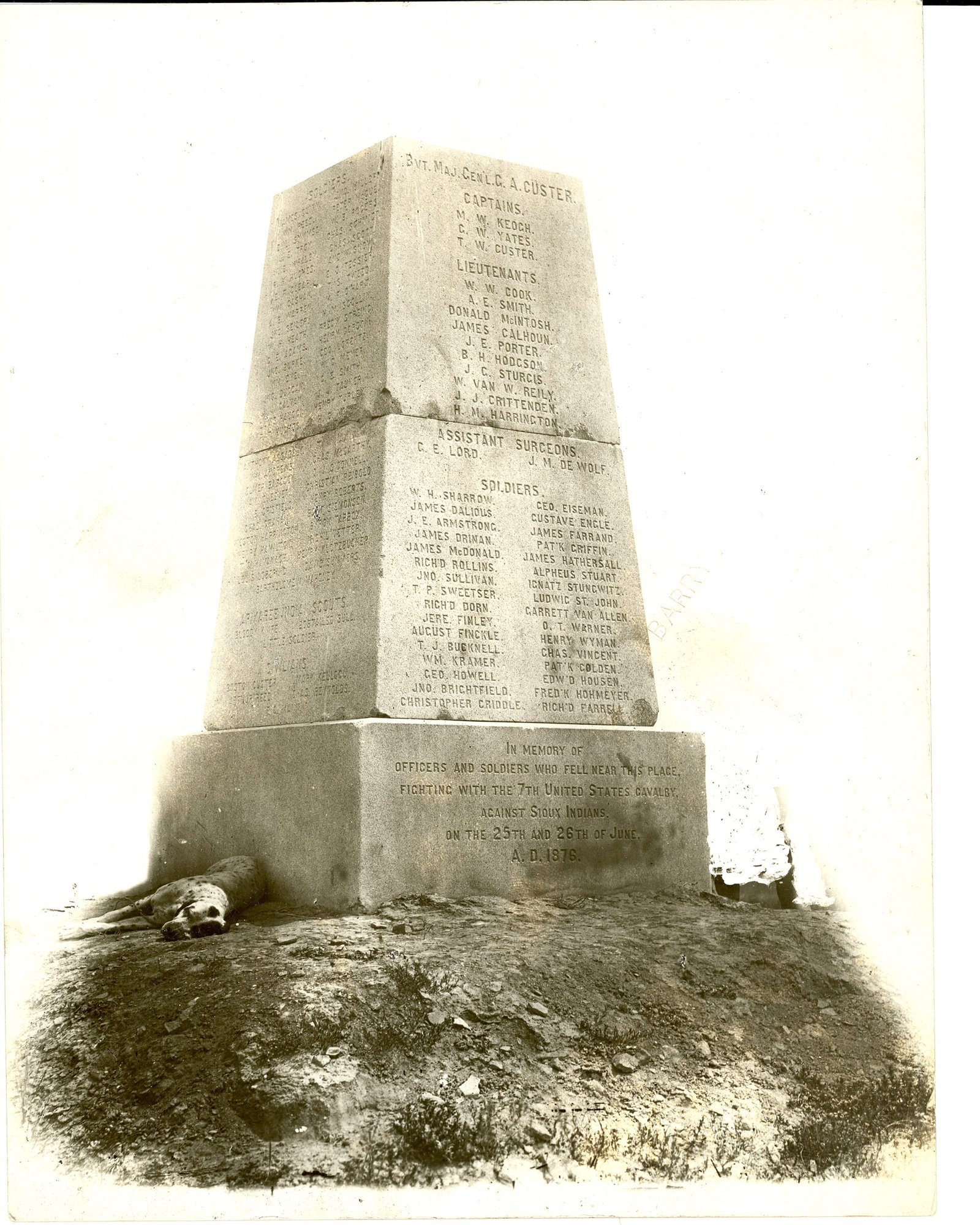
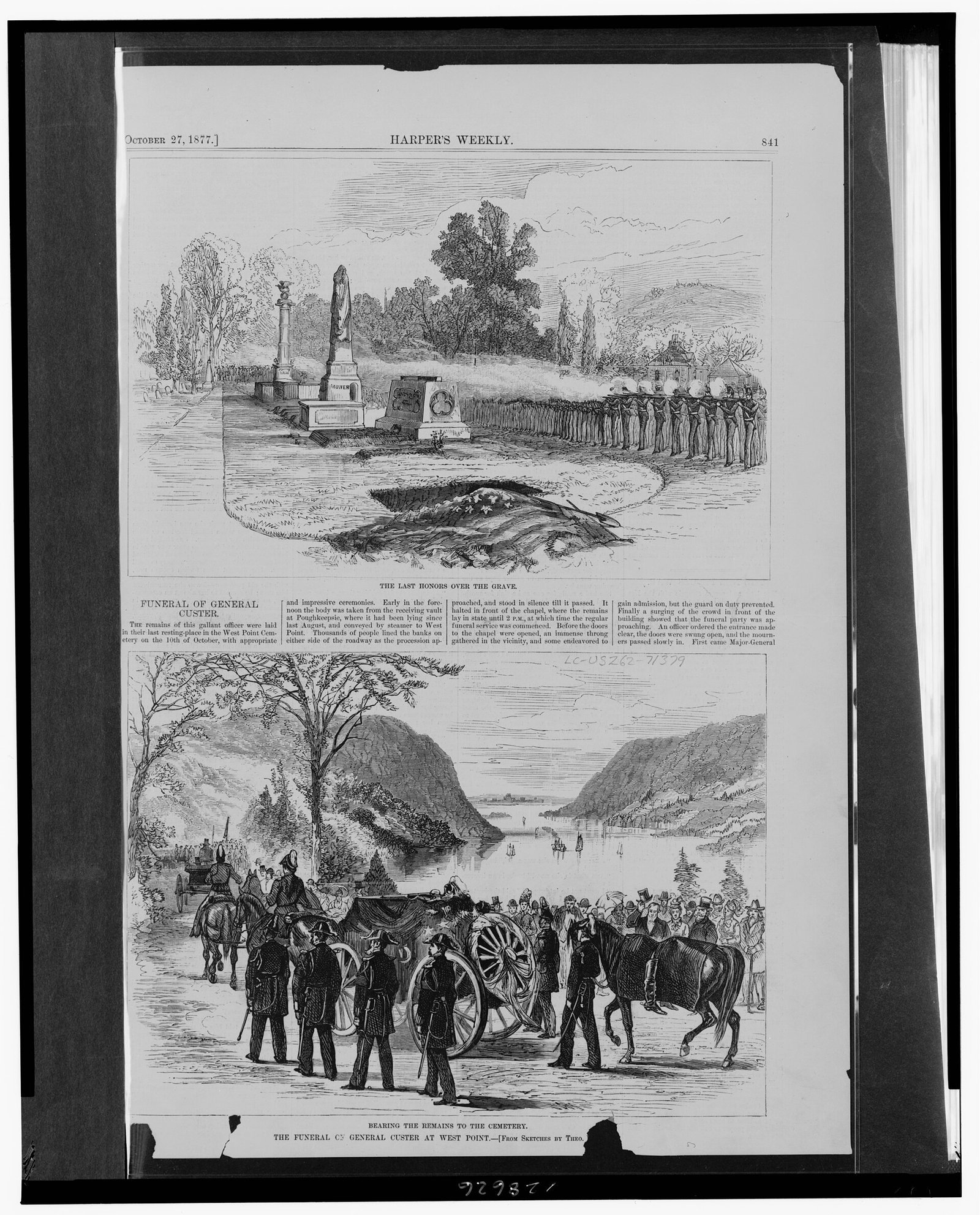
On October 10, 1877, Custer was buried there with full military honors. A military procession carried his coffin to the cemetery overlooking the Hudson River, and a volley was fired over the grave. Harper’s Weekly sent an artist to sketch the funeral for its readers.
The other officers were buried in different places. Tom Custer and James Calhoun, Custer’s brother-in-law, were reburied at Fort Leavenworth National Cemetery in Kansas. Others went home to their families.
The Statue Libbie Hated
In August 1879, a bronze statue of Custer was unveiled at West Point, showing him with a saber in one hand and a pistol in the other. Libbie Custer disliked it, and so did many officers. She campaigned to have it taken down, and in 1884, Secretary of War Robert Lincoln, the son of Abraham Lincoln, had it removed.
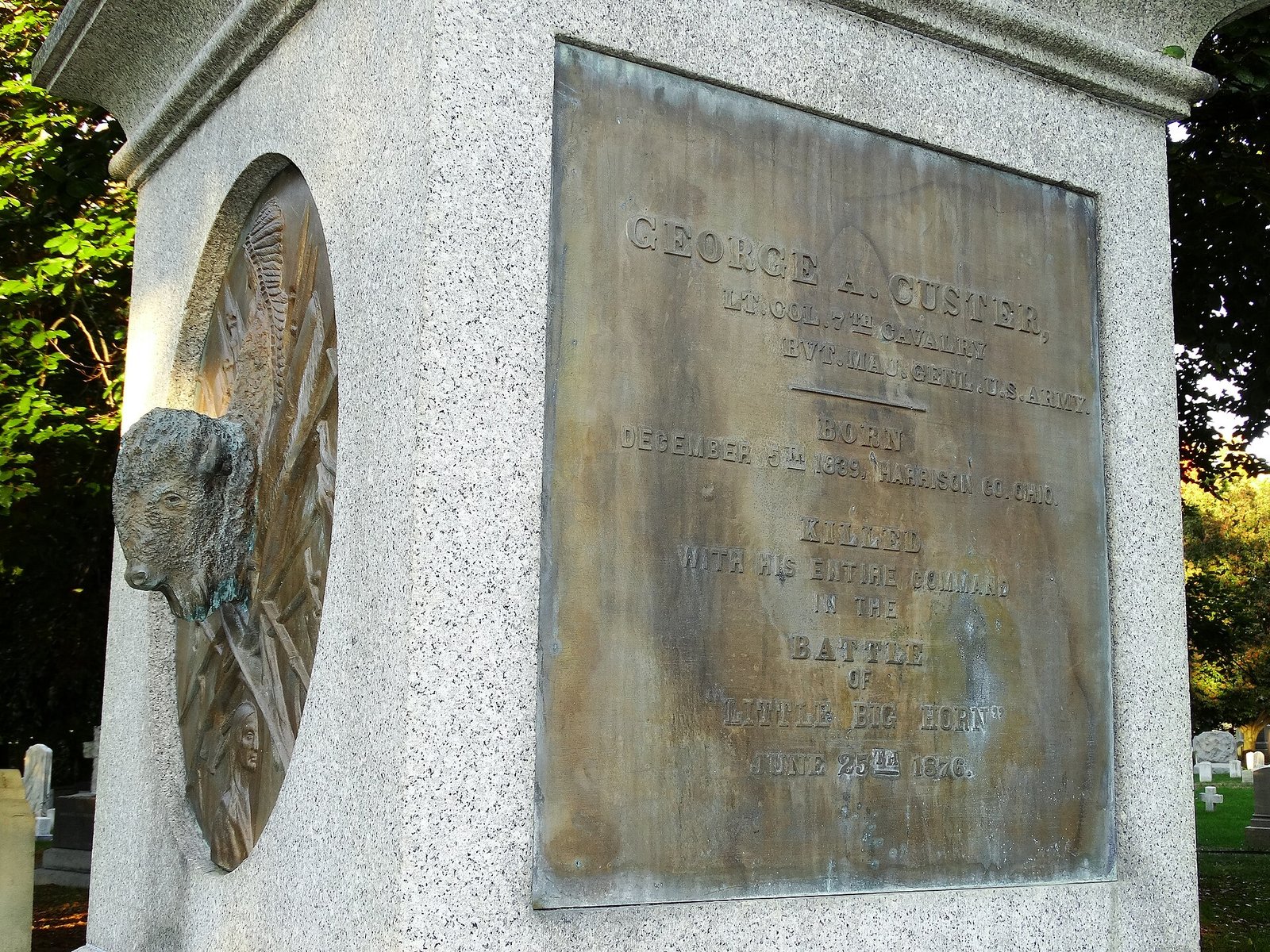
The statue was sent away to be turned into a bust, and it later disappeared. Its granite pedestal was eventually moved to Custer’s grave, where a memorial still stands today.
The Soldiers Left Behind
The enlisted men who died with Custer stayed on the battlefield. In July 1881, Lieutenant Charles Roe and a detail of the 2nd Cavalry placed a large granite memorial on top of Last Stand Hill, carved with the names of the dead. Roe reported that it stood within about six feet of the spot where Custer’s body had been found.
The soldiers gathered all the remains they could find on the battlefield and reburied them in a mass grave around the base of the memorial. They are still there today. In 1890, white marble markers were placed across the battlefield to show where soldiers had fallen.
Is It Really Custer?
Because the soldiers of 1877 were working with scattered, weathered remains and few clues, some historians believe it is possible, even likely, that the remains buried at West Point are not Custer’s at all. No one has ever proved it either way.
Elizabeth Custer died in New York in 1933, at the age of 90. She was buried at West Point, beside the grave of the husband she had spent 57 years defending.
After reading about what happened to Custer’s body, find out who really killed Custer. Then, read about the Custer family who died together at the Little Bighorn.