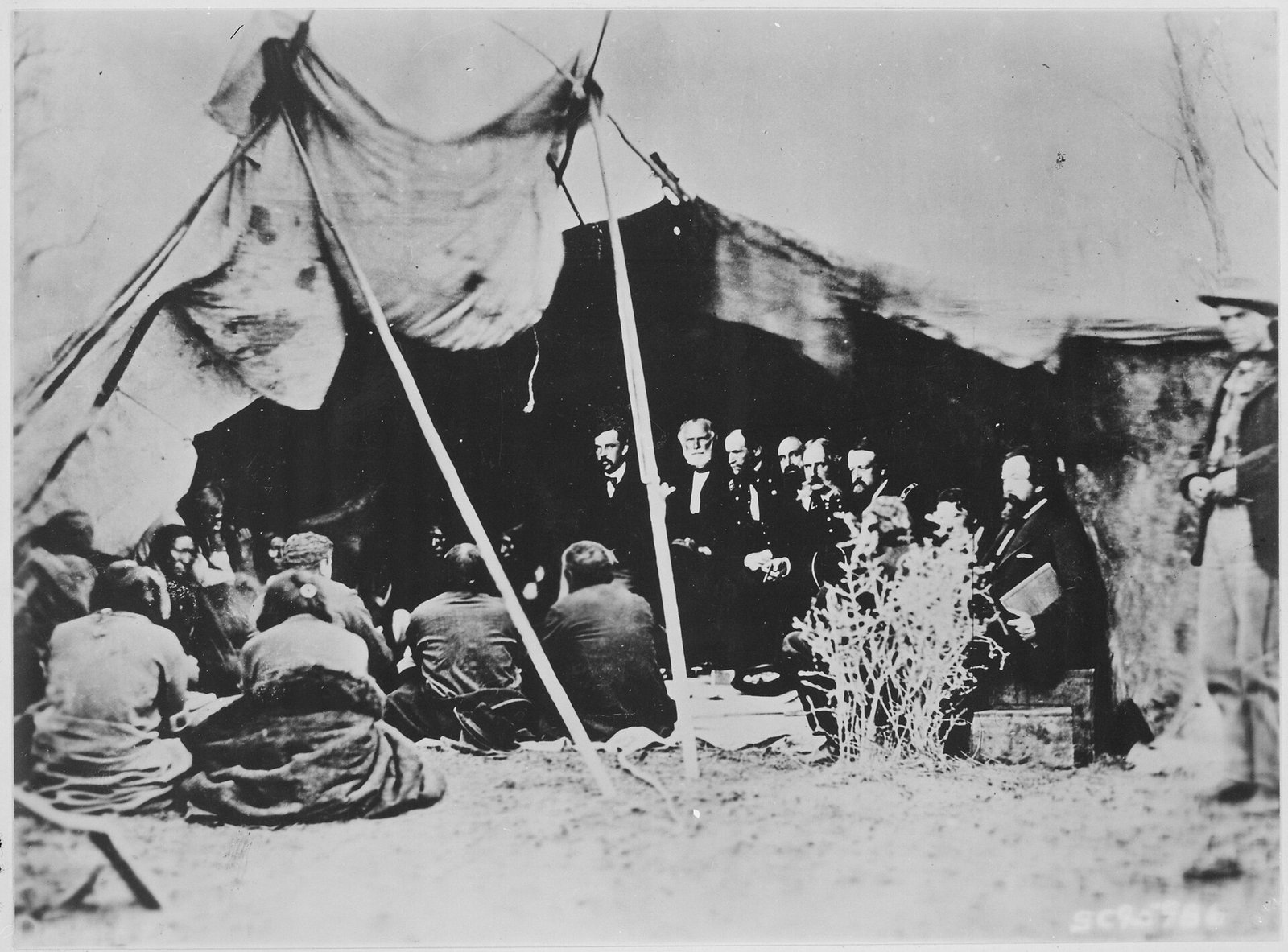
Between 1778 and 1871, the United States made hundreds of treaties with Native nations. Under the U.S. Constitution, treaties are “the supreme Law of the Land,” the same as treaties with France or Britain. In them, the United States promised land, payments, protection and peace.
Again and again, those promises were broken, sometimes within a few years, sometimes within months. Land was taken when gold was found, payments arrived late or never, and Congress rewrote agreements without the nations’ consent. Here are 10 broken treaties that shaped America.
1. The Treaty Of Fort Pitt (1778): The State That Never Was
The very first treaty the United States ever signed with a Native nation was made in the middle of the Revolutionary War. On September 17, 1778, at Fort Pitt (today’s Pittsburgh), American officials and the Lenape (Delaware) agreed that American troops could cross Lenape land to attack the British at Detroit.
In return, the treaty held out an extraordinary promise: the Lenape and other friendly nations might one day join the United States as a state of their own, with representation in Congress. It would have been the 14th state.
It never happened. Within weeks, the alliance began to fall apart. The Lenape leader White Eyes, the treaty’s strongest supporter, died two months later while guiding American troops, under circumstances that suggest he may have been killed by American soldiers. The promised state never came close to existing.
2. The Treaty Of Canandaigua (1794): The Treaty Washington Signed
On November 11, 1794, at Canandaigua, New York, representatives of President George Washington signed a treaty with the Haudenosaunee (Six Nations), including the Seneca leader Cornplanter. The United States promised that it would “never claim” the Seneca lands described in the treaty, nor disturb the Seneca in their use of them.
The treaty is still in force. Every year, the United States still sends the Six Nations a shipment of cotton cloth, as the treaty requires.
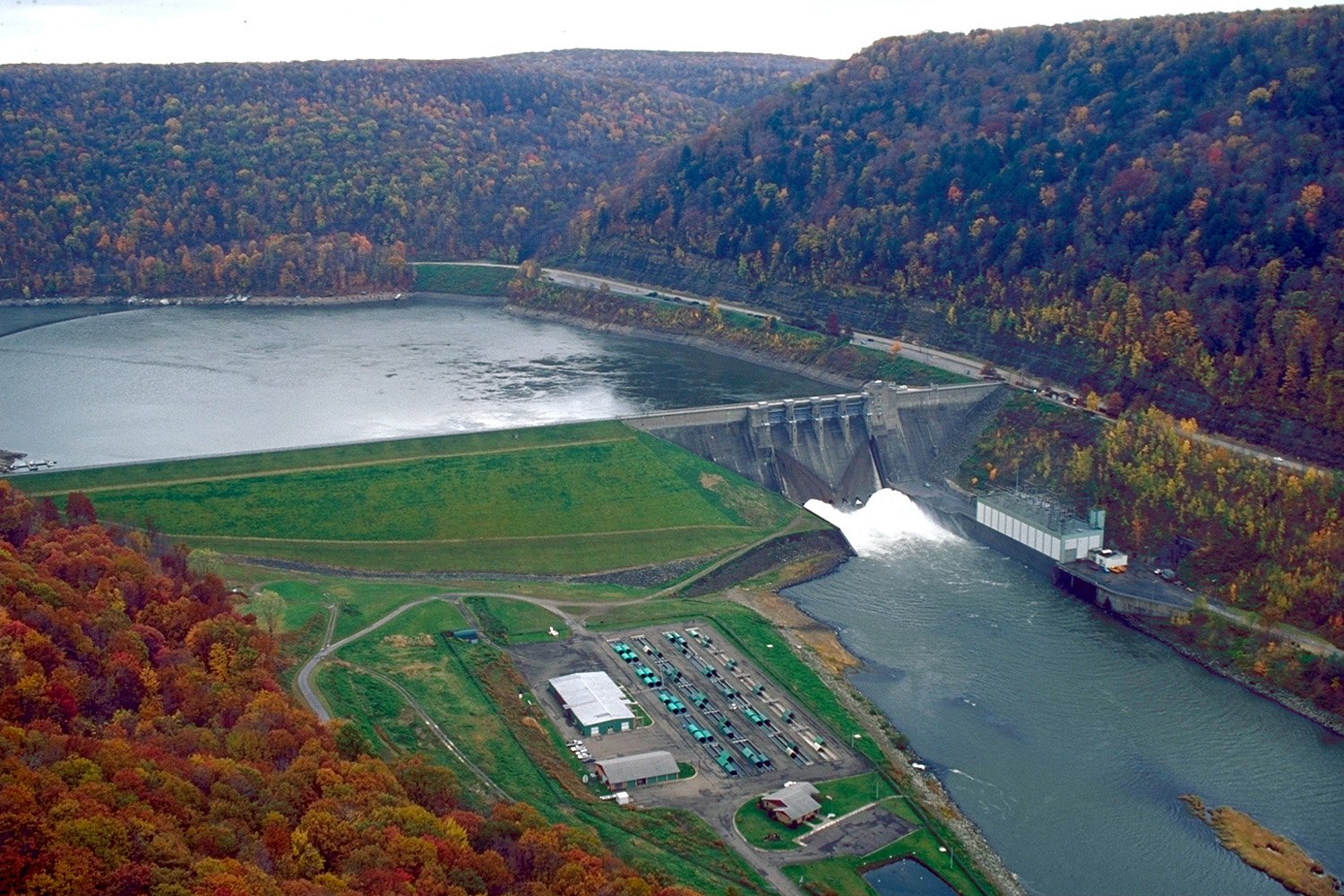
But in the early 1960s, the U.S. Army Corps of Engineers built the Kinzua Dam on the Allegheny River. The Seneca went to court to stop it and lost. When the reservoir filled, it flooded about 10,000 acres of the Seneca’s Allegany Reservation, along with the Cornplanter Tract in Pennsylvania, the last Seneca land in that state. Hundreds of people were forced from their homes, and graves, including Cornplanter’s, had to be moved. Congress later paid the Seneca Nation $15 million in compensation.
3. The Treaty Of Greenville (1795): A Line That Didn’t Hold
After the Native confederacy in the Ohio country was defeated at the Battle of Fallen Timbers in 1794, its leaders signed the Treaty of Greenville in August 1795. They gave up most of what is now Ohio in exchange for goods and yearly payments. In return, a clear boundary was drawn: the lands north and west of the “Greenville Treaty Line” would remain Native land.
The line held only briefly. Settlers kept pushing across it, and new treaties chipped away at it over the following years. A young Shawnee warrior named Tecumseh refused to sign at Greenville. Fifteen years later, he would build a confederacy of nations to stop the land loss once and for all.
4. The Cherokee Treaties And Worcester v. Georgia (1832)
In a series of treaties, including Hopewell in 1785 and Holston in 1791, the United States recognized the Cherokee Nation and guaranteed its remaining lands in the Southeast. The Cherokee built a capital, a written constitution, a newspaper and their own system of writing.
Then gold was found in Georgia, and the state passed laws seizing Cherokee land. The case reached the U.S. Supreme Court. In Worcester v. Georgia (1832), Chief Justice John Marshall ruled that Georgia’s laws over the Cherokee Nation were unconstitutional and void, because of the federal treaties.
President Andrew Jackson refused to enforce the ruling. In 1835, a small group of Cherokees with no authority from their government signed the Treaty of New Echota, giving up all Cherokee land in the East. The Cherokee Nation’s leaders protested, and thousands of Cherokees signed petitions against it, but the Senate ratified it anyway. In 1838, the Army forced the Cherokee west on the Trail of Tears. Thousands died.
5. The Fort Laramie Treaty Of 1851: Promises Cut By The Senate
In 1851, thousands of Lakota, Cheyenne, Arapaho, Crow and other Plains people gathered near Fort Laramie, in present-day Wyoming. In exchange for letting travelers pass safely along the Oregon Trail, the United States agreed to recognize their territories and pay them $50,000 a year in goods for 50 years.
Before ratifying the treaty, the U.S. Senate cut the payments from 50 years to 10, and the nations were asked to accept the change afterward. Then, in 1858, gold was found near Pikes Peak, on land the treaty had recognized as Cheyenne and Arapaho territory. Tens of thousands of miners poured in.
In 1861, a few Cheyenne and Arapaho chiefs signed the Treaty of Fort Wise, which shrank their land by roughly 90 percent. Many of their people rejected it. Three years later, in November 1864, Colorado troops attacked Black Kettle’s peaceful Cheyenne and Arapaho camp at Sand Creek, killing more than 200 people, most of them women, children and elders.
6. The Dakota Treaties Of 1851: Payments That Never Came
In 1851, in the treaties of Traverse des Sioux and Mendota, the Dakota people of Minnesota gave up most of their homeland, more than 20 million acres, in exchange for a reservation along the Minnesota River and yearly payments in cash and goods. Much of the money was signed over to traders for debts the Dakota disputed. Later, the government took back half the reservation.
By the summer of 1862, the payments were late, and the Dakota were going hungry. Traders refused to give food on credit. One trader, Andrew Myrick, is said to have told them to “eat grass,” though historians now question the exact words.
In August 1862, Dakota warriors went to war. The U.S.–Dakota War lasted about six weeks and killed hundreds of settlers and soldiers and many Dakota. Afterward, 38 Dakota men were hanged at Mankato on December 26, 1862, the largest mass execution in U.S. history. The Dakota were expelled from Minnesota. The payments had arrived at a nearby fort just one day before the war began.
7. The Nez Perce Treaties (1855 And 1863): The “Steal Treaty”
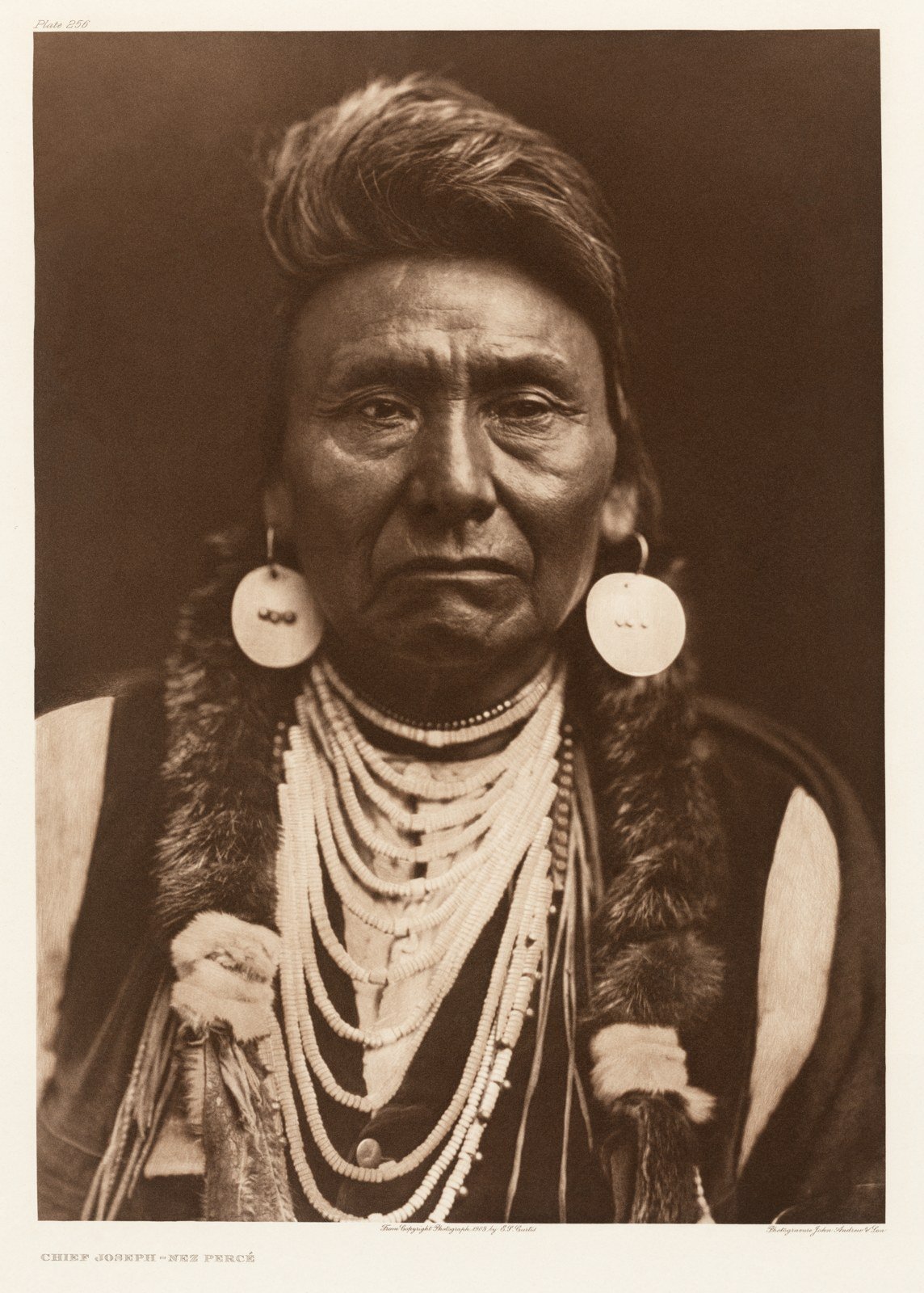
In 1855, the Nez Perce agreed to a reservation of about 7.5 million acres in Idaho, Oregon and Washington, including the Wallowa Valley, home of Chief Joseph’s band.
Then gold was discovered on the reservation in 1860. In 1863, the government demanded a new treaty that cut the reservation by about 90 percent, to around 750,000 acres. Many Nez Perce leaders walked out and refused to sign, but the treaty was signed by others whose own lands lay inside the new boundaries. The Nez Perce who refused still call it the “Steal Treaty.”
In 1877, the Army ordered the non-treaty bands, including Chief Joseph’s people, onto the smaller reservation. The result was the Nez Perce War and the 1,170-mile flight that ended with Joseph’s words: “I will fight no more forever.”
8. The Medicine Lodge Treaty (1867) And Lone Wolf v. Hitchcock
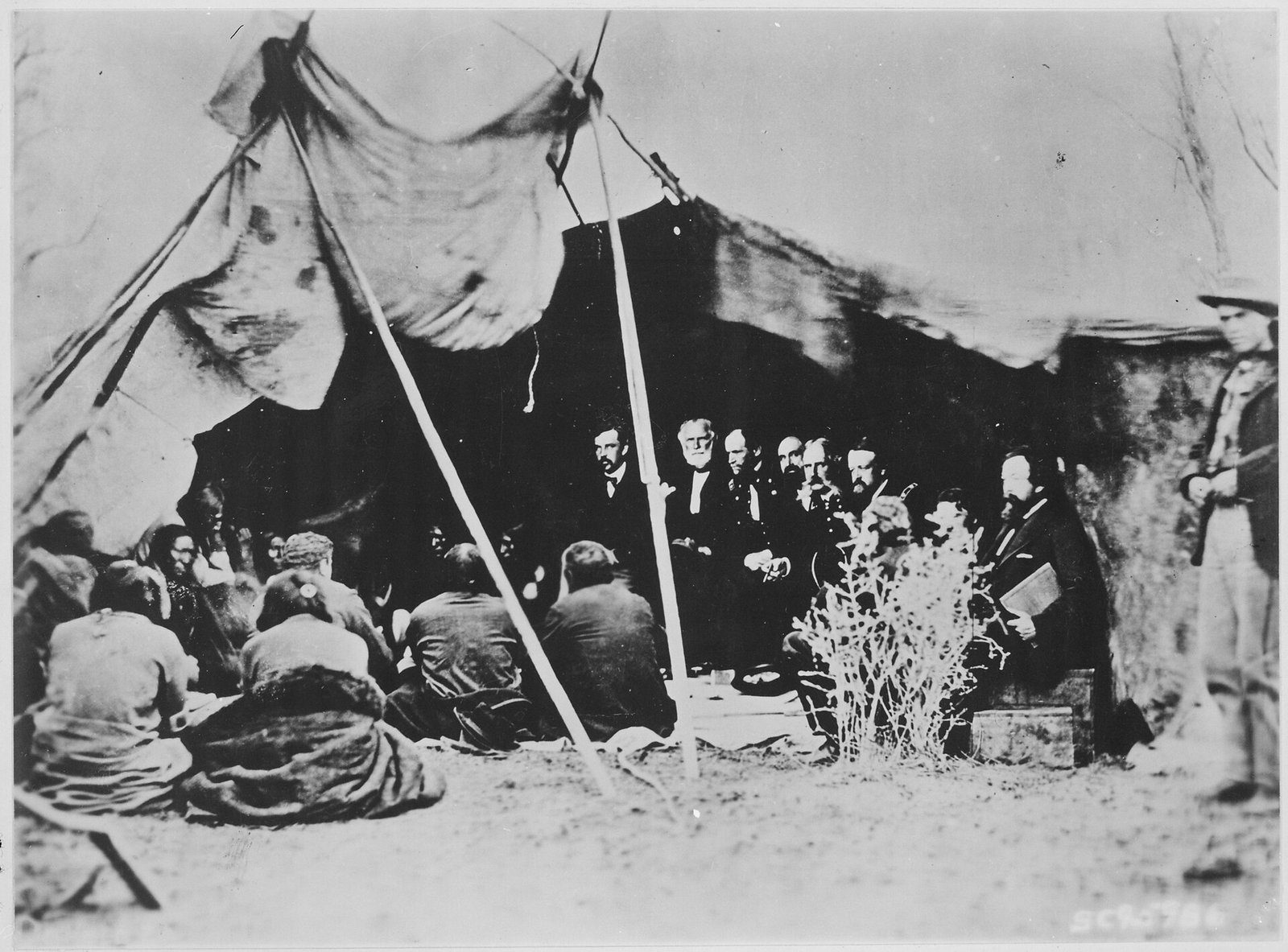
In 1867, at Medicine Lodge Creek in Kansas, the Kiowa, Comanche and Plains Apache agreed to a reservation in what is now Oklahoma. The treaty contained a key protection: no more of their land could be taken unless three-fourths of the adult men agreed.
In 1892, government commissioners collected signatures to sell off most of the reservation. They never got the three-fourths, and the Kiowa leader Lone Wolf said the signatures had been obtained by fraud. Congress approved the sale anyway.
Lone Wolf sued. In 1903, in Lone Wolf v. Hitchcock, the Supreme Court ruled against him. It said Congress had the power to change or break treaties with Native nations on its own, without their consent. That decision opened the way for millions more acres of Native land to be taken.
9. The Fort Laramie Treaty Of 1868: The Black Hills
After Red Cloud’s War, the United States signed a new treaty at Fort Laramie in 1868. It created the Great Sioux Reservation, including the Black Hills, sacred to the Lakota, for their “absolute and undisturbed use and occupation.” No part of it could be sold without the signatures of three-fourths of the adult men.
In 1874, George Armstrong Custer led an Army expedition into the Black Hills, and his men announced gold. Miners rushed in. After the Little Bighorn, in 1877, Congress took the Black Hills, based on an agreement signed by only about 10 percent of the Lakota men.
More than a century later, in 1980, the Supreme Court ruled in United States v. Sioux Nation of Indians that the Black Hills had been taken illegally. The ruling quoted an earlier court: “A more ripe and rank case of dishonorable dealings will never, in all probability, be found in our history.” The Court awarded more than $100 million. The Lakota refused the money, because accepting it would mean giving up the Black Hills. The fund has since grown to more than a billion dollars, and it remains untouched.
10. The Creek Treaties And McGirt v. Oklahoma (2020): A Promise Kept
After the Muscogee (Creek) Nation was forced west on its own Trail of Tears in the 1830s, treaties in 1832 and 1833 promised it a new permanent home in what is now Oklahoma. When Oklahoma became a state in 1907, the state acted as though the reservation no longer existed.
In 2020, a case called McGirt v. Oklahoma reached the Supreme Court. In a 5–4 decision, the Court ruled that Congress had never ended the Creek reservation, so it still legally exists, covering much of eastern Oklahoma, including most of the city of Tulsa. Justice Neil Gorsuch wrote for the majority: “Unlawful acts, performed long enough and with sufficient vigor, are never enough to amend the law.”
After nearly two centuries of broken promises, it was a reminder that the treaties still matter.
“The Supreme Law Of The Land”
Many of the treaties signed with Native nations are still legally in force today. Tribes still go to court to defend the fishing, hunting, water and land rights written into them, and sometimes they win. The story of America’s treaties with Native nations is not finished.
After reading about the broken treaties, read about the sacred Cheyenne warning Custer ignored. Then, discover 10 Native American leaders who never surrendered.