Some of the most famous Native leaders in history, including Crazy Horse, Sitting Bull, Geronimo and Chief Joseph, were eventually forced to surrender. Their people were starving, freezing or hunted, and surrender was the only way to save them.
But some leaders never gave in. They died fighting, escaped beyond the reach of armies, or were captured only through betrayal. Here are 10 Native American leaders who never surrendered.
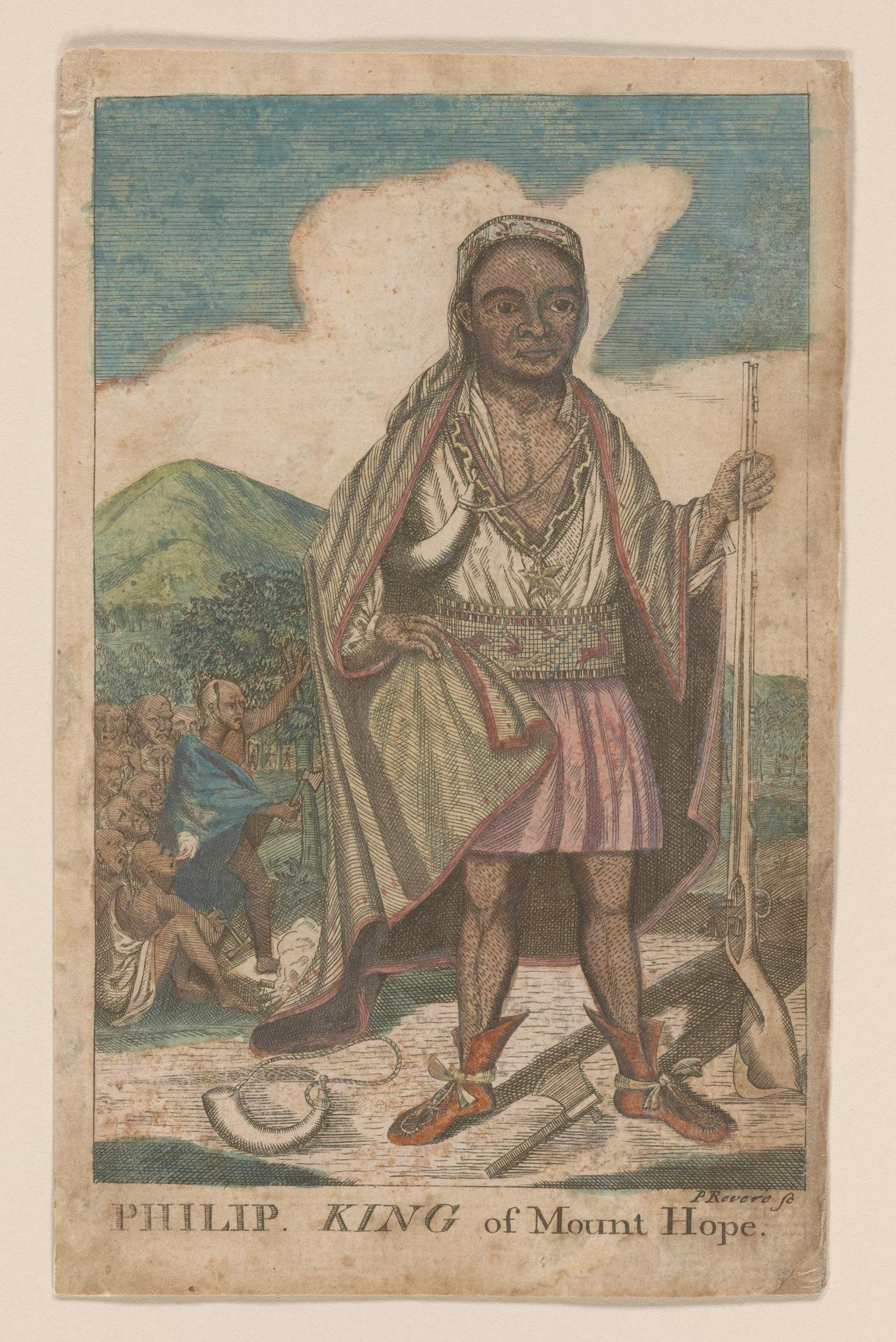
1. Metacom (King Philip), Wampanoag (Died 1676)
Metacom, whom the English called King Philip, was the son of Massasoit, the Wampanoag leader who had helped the Pilgrims survive at Plymouth. By the 1670s, English colonists had spread across Wampanoag land, and colonial courts were demanding that Metacom hand over his people’s weapons.
In 1675, he led an alliance of New England nations in a war against the colonies, known as King Philip’s War. It was one of the deadliest wars, for its size, in American history. Dozens of English towns were attacked, and thousands of people died on both sides.
Metacom never surrendered. On August 12, 1676, colonial forces cornered him in a swamp near his home at Mount Hope, in present-day Bristol, Rhode Island, and he was shot and killed by a Native man fighting for the English, John Alderman. The colonists displayed his head at Plymouth for more than 20 years.
2. Dragging Canoe, Cherokee (Died 1792)
In 1775, a group of land speculators led by Richard Henderson met Cherokee leaders at Sycamore Shoals, in present-day Tennessee, and bought around 20 million acres of Cherokee hunting grounds in Kentucky and Tennessee. Older chiefs, including Dragging Canoe’s own father, the respected diplomat Attakullakulla, agreed to the deal.
Dragging Canoe did not. According to tradition, he warned the buyers that they had bought a fair land, but would find its settlement “dark and bloody.” He broke away with his followers, who became known as the Chickamauga Cherokee, and moved southwest to towns near present-day Chattanooga.
For the next 17 years, he fought the American settlers moving onto Cherokee land, refusing the treaties his elders signed. He died in March 1792 at his town of Running Water, still at war. His followers made peace only two years after his death.
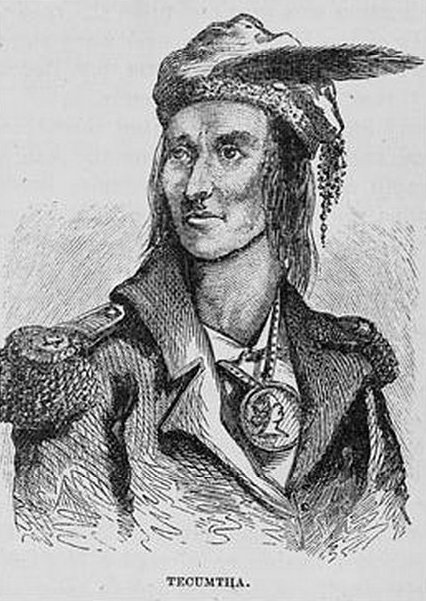
3. Tecumseh, Shawnee (Died 1813)
Tecumseh spent years traveling from the Great Lakes to the Gulf Coast, trying to unite Native nations into one confederacy that would stop the United States from taking any more land. He told Governor William Henry Harrison in 1810 that no single nation had the right to sell land that belonged to all.
When the War of 1812 began, Tecumseh allied with the British, hoping a British victory would protect a Native homeland. On October 5, 1813, at the Battle of the Thames in present-day Ontario, the British troops broke and retreated. Tecumseh and his warriors stayed and fought. He was killed in the battle.
His body was never identified with certainty. Some witnesses said his followers carried him away and buried him in a secret place. Where Tecumseh lies is still unknown.
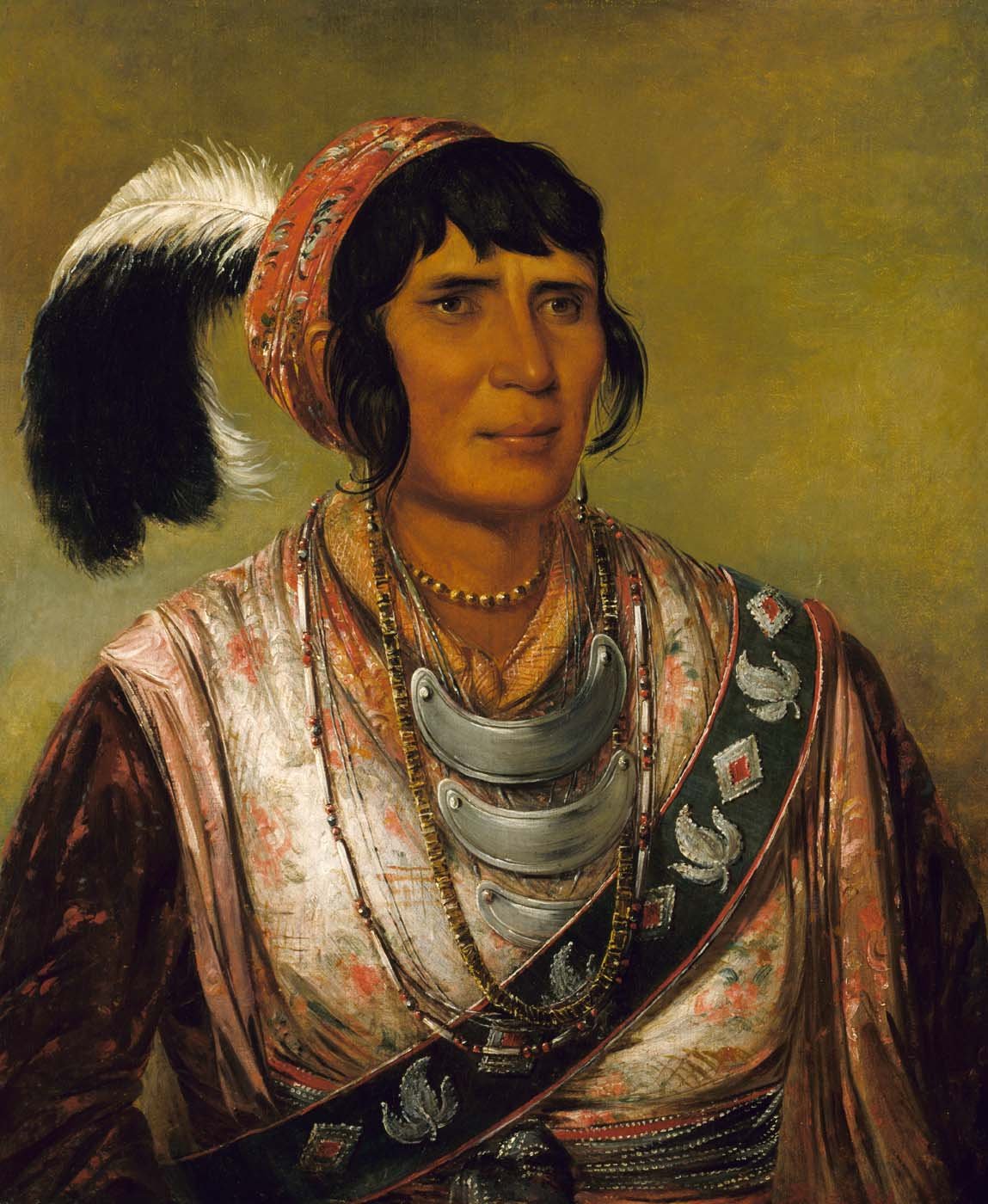
4. Osceola, Seminole (Died 1838)
In the 1830s, the U.S. government tried to force the Seminoles out of Florida and west to Indian Territory. A young war leader named Osceola became the face of their resistance. According to a famous story, when U.S. officials pressed Seminole leaders to sign a removal agreement, Osceola drove his knife through it. Historians debate whether that really happened, but his defiance was real.
During the Second Seminole War, he led warriors who repeatedly defeated or escaped the U.S. Army in the Florida swamps. In October 1837, he came to talks near St. Augustine under a white flag of truce, and on the orders of General Thomas Jesup, he was seized and taken prisoner. Even many Americans were outraged at the betrayal.
Osceola died as a prisoner at Fort Moultrie, South Carolina, on January 30, 1838, of illness. He had never surrendered.
5. Abiaka (Sam Jones), Seminole And Miccosukee (Died Around 1860s)
Abiaka, known to the Americans as Sam Jones, was an elderly medicine man and war leader during the Seminole Wars. While other leaders were captured, killed or shipped west, he refused to leave Florida. He moved deeper into the swamps of the Everglades and Big Cypress, and the Army could never catch him.
When the wars finally ended, Abiaka was the only major Seminole leader still in Florida, with a few hundred of his people. He died there, free, probably in the 1860s, in the Big Cypress country. Today’s Seminole Tribe of Florida and Miccosukee Tribe descend in part from the people who stayed with him. The Seminole Tribe of Florida still calls itself the “Unconquered.”
6. Mangas Coloradas, Chiricahua Apache (Died 1863)
Mangas Coloradas, whose name means “Red Sleeves” in Spanish, was a towering Chiricahua Apache leader who led his people for decades in the mountains of what are now New Mexico and Arizona. He was the father-in-law of the great Apache leader Cochise.
In January 1863, at about 70 years old, he agreed to meet U.S. soldiers under a white flag to talk about peace. Instead, he was seized and held at Fort McLane, in New Mexico. That night, he was killed by his guards, who claimed he was trying to escape. Most historians call his death a murder. Mangas Coloradas never surrendered. His killing turned many Apaches against the Americans for a generation.
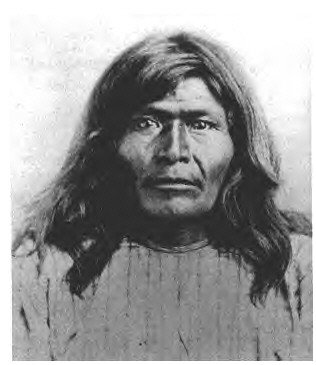
7. Victorio, Chihenne Apache (Died 1880)
Victorio led the Chihenne (Warm Springs) Apaches of southern New Mexico. His people asked only to live on their own homeland at Ojo Caliente. Instead, the government kept moving them, and in 1877 ordered them to the hot, crowded San Carlos reservation in Arizona.
In 1879, fearing arrest, Victorio left the reservation for good. For more than a year, with a small band of warriors, he outfought and outran U.S. and Mexican troops across New Mexico, Texas and northern Mexico.
In October 1880, Mexican soldiers trapped his band at Tres Castillos, in Chihuahua. Victorio and most of his warriors died there. According to some Apache accounts, he took his own life rather than be captured. He never surrendered.
8. White Bird, Nez Perce (Died 1892)
White Bird was one of the leaders of the Nez Perce during their famous 1,170-mile flight from the U.S. Army in 1877. When the Army finally surrounded their camp in the Bear Paw Mountains of Montana that October, Chief Joseph surrendered.
White Bird did not. On the night of the surrender, he slipped out of the camp with a group of his people and made his way north across the border to Canada, where Sitting Bull’s Lakota took them in.
White Bird never returned to the United States. He lived out his life near Pincher Creek, in what is now Alberta, and died there in 1892.
9. Massai, Chiricahua Apache (Died 1906)
In September 1886, after Geronimo’s final surrender, the U.S. government loaded hundreds of Chiricahua Apaches, including many who had never fought, onto trains bound for prison in Florida. Massai was one of them.
Somewhere in Missouri, Massai escaped from the train. Alone and on foot, he made his way back more than a thousand miles to the mountains of the Southwest. For years afterward, he lived free in the mountains along the Arizona–New Mexico border and in Mexico, one of the last free Apache fighters. He is believed to have died in New Mexico around 1906. His story inspired the 1954 film Apache.
10. Lautaro, Mapuche (Died 1557)
Lautaro was captured by the Spanish as a boy in Chile and made to tend the horses of Governor Pedro de Valdivia. He studied how the Spanish fought, escaped and returned to his people, the Mapuche.
On Christmas Day, 1553, he led the Mapuche to victory at Tucapel, where Valdivia himself was killed. For the next three years, Lautaro won battle after battle against the Spanish and marched north toward Santiago. In April 1557, Spanish troops under Francisco de Villagra launched a surprise attack on his camp at dawn near the Mataquito River. Lautaro was killed early in the fighting, still in his early twenties.
He never surrendered, and his people never did either. The Mapuche kept their independence from Spain for nearly three centuries.
Remembered By Their People
None of these leaders lived to see their people win back everything they had lost. But they are still remembered, by the Seminoles who call themselves the “Unconquered,” by the Apache and Nez Perce, by the Cherokee and Wampanoag, and by everyone who has heard their stories.
After reading about the leaders who never surrendered, read 10 powerful quotes from Native American leaders. Then, discover 10 battles where Native nations defeated the Spanish Empire.